7 Things the Most Interesting People All Have in Common
Be brief, be positive. Don’t be boring. Good advice when speaking about people and things …

Be brief, be positive. Don’t be boring. Good advice when speaking about people and things …
Tropic of Cancer is a novel by Henry Miller that has been described as “notorious for its candid sexuality” and as responsible for the “free speech that we now take for granted in literature”. It was first published in 1934 by the Obelisk Press in Paris, France, but this edition was banned in the United States. Its publication in 1961 in the U.S. by Grove Press led to obscenity trials that tested American laws on pornography in the early 1960s. In 1964, the U.S. Supreme Court declared the book non-obscene. It is widely regarded as an important masterpiece of 20th-century literature.
Not for the feint of heart…but a must have for any avid banned books collector, and absolute stomach turning classic!
Pick it up here (NSFW)


A year ago, I wrote my first essay at Thailand Footprint. You can read it here, if you like: I AM NOT A WRITER and Why the World Needs Them.
Since that time a fair number of people have told me, in not so enthusiastic tones, that there was a possibility I was wrong. Chris Coles was the first, before my blog ever appeared, “Maybe you’re a writer?” The artist said.
Months later I was at the Check Inn 99 for a rehearsal of THE ROCKY HORROR SHOW. At that rehearsal, Kevin Wood the singer, songwriter and musician sat down next to me and we were able to have a rare face to face conversation. As opposed to the long distance ones we’ve had many times while Ted Lewand and he played their tunes following the Sunday Jazz sessions. Some people call it heckling. I think conversation sounds more polite. “Are you a writer?” Kevin Wood asked me as we sat on one of the green couches near an artificial tree illuminated with tiny lights. “No.” I replied. Then I qualified it. “I could tell you I am a writer. But what you do, people cannot fake.” What I meant by that is, telling someone you are a writer is the easiest thing in the world. You could also tell people you are a musician. But eventually, people are going to expect you to play a song from time to time. And if you’re not very good at playing the guitar or covering Bob Marley’s, No Woman No Cry people will figure that out, real quick. Kevin and Ted are very good at what they do. They are professionals. They are paid, regularly, to sing and play instruments and have been for a long time. The audience can tell that they are professionals, quickly.
Yesterday I read a wonderful interview about the books and life of a superb writer who lives in Bangkok, whom I have never had the benefit of meeting. Just as I like to read a good book review done by a professional I also enjoy reading interviews about professional writers done by professional interviewers. I’m always hoping I might learn something. I learned a number of things in this interview, which you can read here: LAWRENCE OSBORNE: ‘Acclaim. I Don’t Notice It Much.’
There are many things I enjoyed about the interview. It is entertaining, insightful, witty, revealing and with just the right amounts of brutal honesty and self-deprecation. Toward the end of the interview Lawrence makes the following declaration: “Very few writers live here, of course. But that’s quite all right with me.” There are, I think, multiple ways those two sentences can be interpreted. I chose to think that he is quite accurate. When you compare Bangkok to New York City, I would wager far more writers live there and certainly write on a more varied array of themes than the writers do in Bangkok. One criticism I have seen of the expat writers in Bangkok is that you wouldn’t have two dozen writers in New York City living within walking distance of Times Square and having them all write about life in Times Square. That criticism seems valid to me.
The interview made my mind ponder who Lawrence Osborne would consider to be among those “very few writers” who live here? There are clues, if you know where to look. John Burdett would certainly be one. He’s published by Knopf and has had multiple printings of hardcover books numbering 75,000 and up. John lives here a lot of the time. Stephen Leather would be another writer who would qualify. I have heard the number 2 million books sold bandied about when it comes to Stephen’s back list and I have no reason to doubt it. If anything, it’s probably a much higher number now. I have read a few Stephen Leather books. He’s a fine writer. I particularly liked, The Chinaman and The Bombmaker. The author of A Killing Smile and the Vincent Calvino series would be another to make the list because Lawrence stated that in a different interview he did at The Bangkok Post, just over one year ago when he said, “Christopher G. Moore is a good writer”. Jerry Hopkins might be another that would make Osborne’s list. It’s doubtful Jerry’s propensity to be included among the bottom feeders of the world would be enough to dislodge him from the short list. Hopkins’ books have also sold in the millions – I’ve seen one estimate of 6 million total. From a journalism standpoint, Lawrence and Jerry have both done well in picking the high hanging fruit. There are, no doubt, potentially many other writers that would make Osborne’s list, which I am unaware of because of the limited scope of my literary education.
As good a writer as I think Lawrence Osborne is (and I think he is very good) I have some biases toward him. At my school the students who had Lawrence typed in on their birth certificate went by, Larry. He’s a Harvard guy. I am a product of the California State University system, as is Timothy Hallinan. Tim is another writer who, unquestionably, would make Osborne’s list, if he lived primarily in Bangkok but he doesn’t. Osborne is also a Brit and I’ve made it my life long quest to figure them out before I die.
It is to Lawrence whom I credit the theme for this blog post today: What is a writer? It’s a good question. It deserves contemplation and attempt at explanation.
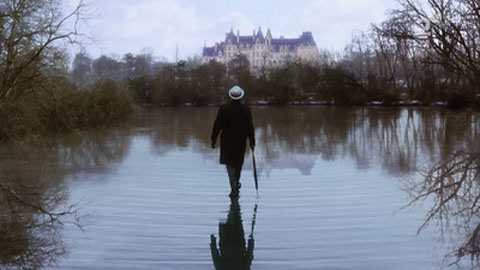
Here is the excellent reply from Lawrence Osborne in that interview with Rachael Cooke, found in the Sunday, April 13th edition of The Guardian, when he was asked why it took so long to find a publisher for his latest novel, The Forgiven:
Mostly, just that I was an outsider to the fiction world. Indeed, my American agent at the time urged me not to bother at all. In the end, I sent it myself to an editor I didn’t know late on a Friday night after a bottle of good but despair-ridden and lonely Chablis. A push of a button. The manuscript had been rejected by dozens of houses, even by editors I’d published books with. This was a last-chance gamble. He took it with him on the train home to New Jersey that night and somewhere in the darkened satanic mills of Newark or wherever he sent me a message saying that he was 30 pages in and that was enough. He offered for the book on Monday morning. – Lawrence Osborne
This process of rejection and acceptance, which Mr. Osborne describes so well, is missing among many of the writers of today. And that’s a shame. For them. In the age of self-publishing, Facebook author pages, fake book reviews and Twitter Follower purchases, one can become a writer in a day. That seems too quick, to me. It was the lifestyle of writers that I always found interesting and appealing to my sense of adventure and personal exploration. Start with Henry Miller. Add Jerry Hopkins. Stir in Christopher G. Moore, whether you like any of these guys books or not. For musical accompaniment I’ll take Timothy Hallinan who started his writing career as a songwriter for the band, BREAD before he wrote his Simeon Grist, Poke Rafferty and Junior Bender series. I include Lawrence Osborne on my list. All these men have led very interesting lives, even if they had never published a single word. Read about any of these men and you will read about rejection and acceptance, numerous times, in their lifetime as a writer.
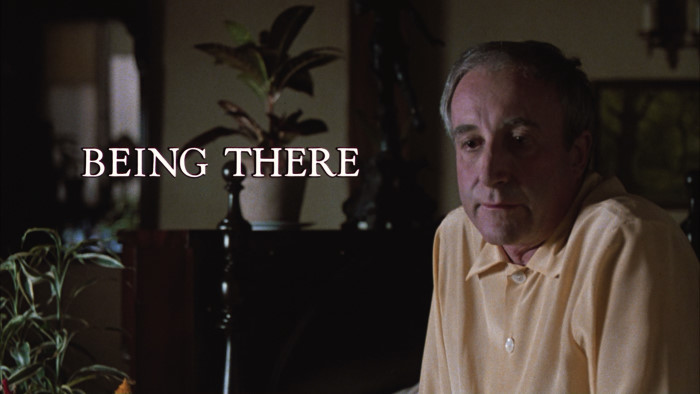
Just as, Chance the Gardener in Being There, likes to watch, I like to write. My business involves writing that pays well but isn’t very creative. My blogging is, at times, creative but doesn’t pay a dime. (Gop T-shirt sales notwithstanding). There is something to be said for the creative process. There is something to be said for creative people. There is much to be said in favor of the arts. That is one reason the very first blog posts made at Thailand Footprint were videos of Alfred Hitchcock on Happiness and John Cleese on Creativity.

Not too many Sunday’s ago I was sitting with a group at Check Inn 99. We were doing what groups do there: drinking, talking, laughing and listening to live music. It was the 6:00 p.m. to 8:00 p.m. time slot occupied at the stage by Ted Lewand and Kevin Wood. Ted turns to Kevin as only Ted can and says, somewhat sarcastically, “It doesn’t get any better than this.” I thought it was perfect. Because I genuinely felt Ted was absolutely right. It made me enjoy a good evening even more. So much so, in fact, that Kevin Wood addressed us at the microphone. “How is the book club doing this evening?” He said. And then it occurred to me that everyone at my table had written more than one book, except me – I’ve not written a single one. They were, John Gartland the performance poet whom I featured in this blog this year, Collin Piprell one of the first two people to leave a complimentary comment on this blog, 364 days ago and the author of several books including one I reviewed early on, KICKING DOGS and another I reference in a post called The Parks of My Life. And James A. Newman author of the Joe Dylan series and short stories too numerous to mention. James has appeared on this blog often. I am an honorary member of, The Book Club. John, Collin and James are all writers, to me. More importantly, they are my friends. I consider myself lucky to know them as people and writers.
Today is the one year anniversary of Thailand Footprint. A blog. That makes me, to many people, a blogger. And that is okay. I waited until the end of this essay to mention my journey around the sun. I figure anyone who got this far has probably read my blog before. To those of you who have, I want to thank you all the more. Just under one year ago, I took the time to single out the authors, in particular, for all the things that I have learned from them. The learning continues. I thanked all the authors, “except for the assholes”. I’d like to amend that. I’d like to thank everyone. Period. Because everyone, authors, musicians, actors, photographers, poets, surfers, Muay Thai fighters, waitresses and even gardeners can be our teachers if we are open to learning. After all, who hasn’t been an asshole during their lifetime? Certainly, not me.
“In the garden, growth has it seasons. First comes spring and summer, but then we have fall and winter. And then we get spring and summer again.” Chance the Gardener
In the past 12 months I have been very fortunate about, being there. And to be here, now. Voltaire and Henry Miller were pretty smart guys. I will be publishing a book within the next six to nine months based, in part, on what I learned from those two men. The title has been decided. Colin Cotterill has already agreed to do the cover art and design. The book cover will be great. Feel free to judge the contents based on the cover. It will be, mostly, selected essays and interviews taken from this blog. In addition, there will be a lengthy chapter about the colorful history of Check Inn 99.
When the book comes out, it should solidify my standing in, The Book Club, which meets irregularly at Check Inn 99 and Hemingway’s Bangkok. There are no illusions about it becoming a money-spinner. Will it make me a writer in the eyes of Lawrence Osborne? I doubt that it will and I believe that it shouldn’t. Will it make me a writer in the eyes of Kevin Wood? It might. If that happens, it doesn’t get any better than that.

.
This post also appears in the Chiang Mai City News and may be viewed by clicking the banner below:

.
There are certain writers in Thailand that if they were not writers they would make excellent fictional protagonists, because the real-life lives they lead would make for an interesting read. Joe Cummings is one such writer. As is our guest today, Tom Vater. There are many things I like about Tom Vater, the writer and the person. The latter has been known to drop off the grid from time to time, which no doubt helps the former. Tom has published three novels, THE DEVIL’S ROAD TO KATHMANDU, THE CAMBODIAN BOOK OF THE DEAD released by Crime Wave Press in Asia and Exhibit A world wide in 2013 and his latest, THE MAN WITH THE GOLDEN MIND set primarily in Laos, recently released by Exhibit A in the USA and UK as well as being available in Asia and online. Tom returned from the legendary setting of Mandalay in February of this year where he participated in the Irrawaddy Literary Festival and met at least one legend while there, Aung San Suu Kyi.
Tom Vater is the co-owner of Crime Wave Press, along with Hans Kemp. Crime Wave Press is a Hong Kong based English language crime fiction imprint.
In addition to his fictional works Tom has published several non-fiction books, including the critically acclaimed Sacred Skin and the more recent Burmese Light with photographer Hans Kemp. Tom has written for The Wall Street Journal, The Guardian, The Daily Telegraph, The South China Morning Post and Penthouse to name just some.
Tom is also the co-author of several documentary screenplays, most notably The Most Secret Place on Earth, a feature on the CIA’s covert war in 1960s Laos, which you will recognize in The Man with the Golden Mind. Thailand Footprint is pleased to have Tom Vater here today:
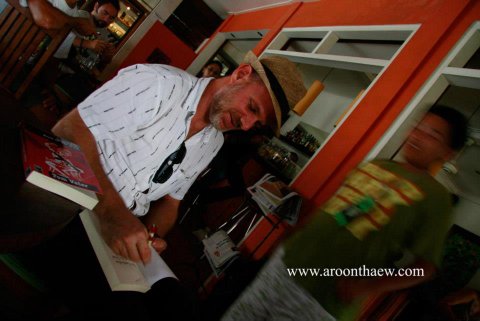
TF: What makes South East Asia a good setting for a crime novel?
TV: Given the culture of impunity that reigns even more freely in Asia than where I come from, or at least in a more visible manner, the amount of salacious material is never-ending. Open the papers and stories too hair-raising to be made up tumble from the pages every single day. SE Asia is a treasure trove of human divinity and depravity and as the weather is always good, a lot of it spills out into the open to be scooped up by writers, journalists or voyeurs. That said, almost anywhere is good to set a crime novel. I just happen to know this corner of the world a little.
TF: What book(s) or music influenced you growing up?
TV: Treasure Island was a big book for me. Long John Silver was and is one of my great literary heroes, a bad man, but not a man without compassion. My teenage years were taken up by Jack London, Edgar Allen Poe, William Golding, George Orwell and H.P. Lovecraft. Then I discovered the Beats – Kerouac, Bowles, Burroughs and Bukowski – and the Hardboiled Noirs –Chandler, Himes, Goodis, Thompson, Highsmith and Ross MacDonald… and everything changed.
But I also took an early liking to literary garbage – I obsessively read Enid Blyton’s adventure novels and still suffer from the fall-out.
When I was 14, I saw Elvin Jones play a show in my home town. After the first song they had to nail his drum kit to the stage. That always stayed with me.
But I didn’t get into Jazz until I was older. From the age of 8 or so, I listened to RocknRoll, and from 15, I tried to play in bands. I first got into Black Sabbath and Deep Purple and then advanced (or regressed, depending on your point of view) to Elvis, Jerry Lee Lewis, The Rolling Stones, The Velvet Underground, the MC5, The Stooges, Black Flag, The Cramps and CAN.
I always liked the monotony and repetitiveness of RocknRoll. Three minutes of high energy. Very different form of expression from fiction of course, but I somehow have an affinity for both.
TF: What’s the last record or book you can remember listening to or reading?
TV: I listened to Get Yer Ya-Ya’s Out by The Rolling Stones and Rubber Legs by The Stooges today. Also really into British band Fat White Family (http://noisey.vice.com/en_uk/blog/fat-white-family-touch-the-leather-music-video-premiere) at present. They got the spirit. Best bands I have seen in Bangkok recently are Degaruda, The Sangsom Massacre and Dead Town Trash.
I am reading The White Flamingo by James Newman, a sleazy slice of gutter-style Hardboiled with great Beat-style stream of un-consciousness writing.
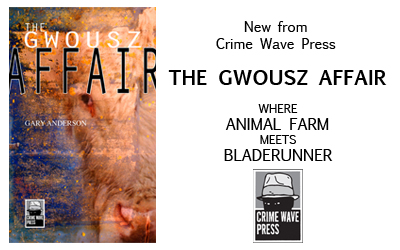
My other favorite recent read is The Gwousz Affair by Gary Anderson, a Sci Fi Noir novel Crime Wave Press has just put out. It’s set in 2042 and humans have made cows intelligent, the planet is run by bovines, the US government has moved to Nebraska, all humans are vegetarians and inter-species sex is permissible. Enter a hardboiled PI who is to find the killer of the female offspring of the bovine president. Think Animal Farm getting into bed with The Big Sleep and Bladerunner.
TF: Is there a book out there or laying around your home that you’ve been meaning to read but haven’t gotten around to it yet?
TV: There are stacks of those lying around. I’ve had a David Goodis and a Massimo Carlotto sitting on my shelf for months – no time to take a look yet. On the next long flight.
TF: Complete this sentence: Amazon.com is …
TV:…symptomatic of the way business has gone in the early 21st century.
TF: Make the case for fiction over non-fiction in 100 words or less.
TV: It’s often easier for me to get at a larger truth in fiction. And the process of writing fiction is the most beautifully obsessive skill I have. I basically move in with my characters and every day I start writing I find that they have done stuff during the night I didn’t ask them to do. In a way, the writing process becomes like an intense love affair, but with a whole bunch of people craving my attention while they slowly reveal themselves to me emotionally, physically and intellectually. When this happens, I am very, very happy.
TF: Tell our readers about your latest crime novel, The Man with the Golden Mind and why they should read it?
TV: Julia Rendel asks Detective Maier, whom I introduced in last year’s The Cambodian Book of the Dead, to investigate the twenty-five year old murder of her father, an East German cultural attaché who was killed near a fabled CIA airbase in central Laos in 1976. But before the detective can set off, his client is kidnapped right out of his arms. Maier follows Julia’s trail to the Laotian capital Vientiane, where he learns different parties, including his missing client are searching for a legendary CIA file crammed with Cold War secrets. But the real prize is the file’s author, a man codenamed Weltmeister, a former US and Vietnamese spy and assassin no one has seen for a quarter century.
Almost a decade ago, I co-wrote the screenplay to The Most Secret Place on Earth (http://www.youtube.com/watch?v=i8cIki7awN8) a feature documentary directed by my brother Marc Eberle, about the CIA in Laos. Between 1965 and 1973, the US secret service ran a clandestine war against the Laotian communists, secretly recruiting 30.000 ethnic minority mercenaries, many of whom died in battle. The agency partly financed its efforts with drugs and eventually bombed the country to bits.
During the making of the film, I met some of the people involved in that conflict – CIA case officers, Air America pilots, USAid staff, Hmong rebels, Thai mercenaries, journalists and academics and I always wanted to write a fictionalized account of what we felt was a war crime committed by the US that had almost been forgotten.
Oh, and in The Man with the Golden Mind, the most infamous former US Foreign Secretary makes a cameo appearance. Who’d want to miss that? As I said, in fiction it’s sometimes easier to go after larger truths than in non-fiction.

TF: Please tell me your three favorite dead authors? Or if you are feeling confident you can throw some live ones into the mix?
TV: Dead ones: Joseph Conrad, William Burroughs, Jim Thompson
Live ones: Katherine Dunne, Philip Kerr, Gary Anderson
TF: Tell me about your publishing house. What are the challenges of a boutique publisher in an Amazon age?
TV: I run Crime Wave Press (www.crimewavepress.com) with Hans Kemp and we have been publishing crime fiction, in eBook and POD format, for a year and a half now. We started off with Asian based titles, but soon noticed that we couldn’t find enough good manuscripts in the region to publish the number of books we need to make the enterprise worthwhile. That said, our Father Ananda Mysteries by Nick Wilgus, a series of clerical thrillers featuring a cop turned Buddhist monk in Thailand, are doing quite well, as does our international thriller Gaijin Cowgirl by Jame DiBiasio, and my first novel, republished by CWP, The Devil’s Road to Kathmandu, is selling ok and is also available in Spanish.
Now that we read submissions from all over the world, we are releasing titles more frequently, and – hallo writers out there – we are reading manuscripts at present – so get in touch.

Any subgenre of crime fiction will be considered, novels and novellas, but no True Crime, no short stories and no children’s books or graphic novels.
Crime Wave Press will be represented at both the London and Frankfurt book fair this year and we hope to make more international rights sales.
TF: What does The Year of the Horse have in store for you?
TV: I had a good start with Crime Wave Press invited to the Irrawaddy Literary Festival in Mandalay in February and The Man with the Golden Mind coming out a couple of weeks ago.
In the summer, American photographer Kraig Lieb will publish Cambodia: A Journey Through the Land of the Khmer, for which I wrote the text.
The next two Crime Wave Press titles, Death Sentences by Michael Zemecki, a personal (and fictional) account of a white supremacist on death row in the US – a kind of Ed Bunker meets Charles Bukowski at death’s door – and the first Detective Le Fanu Adventure The Madras Miasma by Brian Stoddart, a gripping crime novel set in 1920s British India, are in the pipeline.

Tom Vater on stage with Laura J. Snook in Cambodia
I’ll travel. I’ll play some music. I’ll write another novel.
Thanks very much, Kevin, for having me.
TF: Thank-you, Tom.
This interview also ran at Chiang Mai City News and may be found there by clicking the above banner
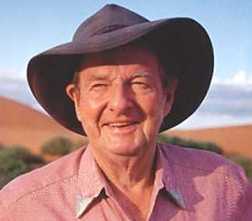
One week from today, Thailand Footprint will be one year old. That is a big deal to at least one person – me. I’ll recap the year a bit and publish one of the first things I wrote way back then – 365 days ago. I’ll tell you what I’ve learned and what I know. Whether you read it or not is, of course, always up to you. Thanks for stopping by as often as you have.
An interview with Tom Vater will be the last interview in this inaugural year. As I’ve said before, when Tom Vater talks, I listen. In this case I think you’ll want to read what he has to say. Look for that interview this coming Thursday.
Until then, here is a little ditty by Slim Dusty, a singer-songwriter from one of my top three favorite countries, Australia. Slim is no longer with us, reminding us we only get to look forward and back for so long.

Thailand Footprint is pleased to welcome Angela Savage to our Fast Track interview. Angela has strong ties to Thailand that go back almost thirty years. Like inaugural Fast Track interviewee, Andrew Nette, she resides in Melbourne, Australia. That’s not a coincidence as Angela and Andrew are partners and they chose The Lucky Country in which to raise their daughter. Angela has three novels set in Thailand in the Jayne Keeney P.I. series. They are: BEHIND THE NIGHT BAZAAR, set in Chiang Mai, THE HALF CHILD, set in Pattaya and THE DYING BEACH set in Krabi. She is a writer with a social conscience. You will get a good crime story and at least one message in an Angela Savage novel. Here is how Andrew Nette described Angela’s work ethic:
“She works incredibly hard to give readers an insight into what it’s like to live in Thailand, for foreigners and Thais, with all the blood, sweat, tears, beauty and – as is usually the case for expatriates – embarrassing social faux pas that this can entail.”
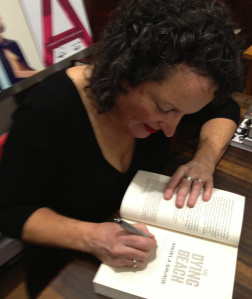
Angela Savage at the book launch for The Dying Beach
Welcome, Angela Savage:
TF: Is Australia still The Lucky Country and if so, why?
AS: The simple answer is yes – provided you’re not Indigenous, homeless or an asylum seeker. Among the non-Indigenous population, Australia’s health and wellbeing indicators are up there with the best of them; life expectancy is among the highest in the world. We’ve weathered the GFC better than most – all of which begs the question, why are we so damn mean? Our current treatment of asylum seekers is shameful. Peace and prosperity appear to have made Australians paranoid rather than comfortable, a situation not helped by the absence of visionary political leadership.
End of rant.
TF: What book(s) or music influenced you growing up?
AS: My grandfather, nicknamed ‘Banjo Savage’, worked as a musician on cruise ships in the 1920s, and taught me to sing what my mother referred to as ‘drunks’ songs’ – ballads about passion, pain and death – when I was still a toddler. Mum attempted to counter these early influences with liturgical music, but somehow Kenny Rogers managed to slip through the cracks, bringing more songs about passion, pain and death. The ideal musical education for an aspiring crime writer, really.
TF: What’s the last record or book you can remember listening to or reading?
Among my most memorable recent reads are two collections of short stories: Sightseeing by Rattawut Lapcharoensap, set in Thailand; and Holiday in Cambodia by Laura Jean McKay, set in Cambodia.
Music-wise, I’ve been listening to Bruce Springsteen and the E Street Band live at the Hammersmith Odeon in London, 1975. They sound remarkably like they did in Melbourne in February, 2014.
TF: Is there a book out there or laying around your home that you’ve been meaning to read but haven’t gotten around to it yet?
AS: I’ve been meaning to read Vikas Swarup’s Six Suspects, the sequel to his excellent Q&A, which was made into the film Slumdog Millionaire. Timothy Hallinan’s The Queen of Patpong is also towards the top of my TBR [To Be Read] pile.
TF: Complete this sentence: Amazon.com is …
AS: …a convenient place for Kindle users to buy books. I do use a Kindle for travel, but I still read mostly paperbacks.
TF: Make the case for fiction over non-fiction in 100 words or less.
AS: Non-fiction is only ever as strange as the truth, and can only take you places that exist. Fiction is not bound by such limitations. Fiction sets you free.
TF: Please tell me your three favorite dead authors? Or if you are feeling confident you can throw some live ones into the mix?
AS: Favourite dead authors: Angela Carter, Raymond Chandler, Oscar Wilde.
Favourite authors still living: Barbara Kingsolver, Simone Lazaroo, Honey Brown, Wendy James, Megan Abbott, Garry Disher, David Whish-Wilson and Andrew Nette.
TF: How important is setting in a crime novel? What is it about Thailand in general and Chiang Mai in particular that makes it such a great setting for a crime novel?
AS: I think it was the events of 1992 that first fired my imagination about Thailand as a setting for crime fiction. After spending several idyllic days on Koh Samet, my partner and I happened to be in Bangkok in May when the Thai army opened fire on demonstrators at Sanam Luang. The fact that the surface calm and beauty of the country could erupt so suddenly into violence proved irresistible to me as a writer. In addition, the coexistence in Thailand of old and new, tradition and modernity, religion and consumerism, parochialism and globalisation provides so many riches for a fiction writer to mine.
Thailand is not merely the backdrop to my crime novels, but a character. the stories I write couldn’t take place anywhere else.
As a non-Thai writer, I challenge myself not to only expose Thailand’s seedy underbelly but to also showcase the beauty of the country. Chiang Mai was the setting for my first novel, Behind the Night Bazaar, because it has both. My Australian expat PI character, Jayne Keeney, alludes to this towards the end of the novel when she reflects that, “while Chiang Mai might have an ugly side, the light that afternoon was at its most flattering.”

I set my second novel The Half-Child in Pattaya, which is not the country’s most attractive location—one character refers to it as ‘Thailand’s own Sodom and Gomorrah’. I balanced this by having a character come from Kanchanaburi, allowing me to take the reader to some Thailand’s ‘wild west’.
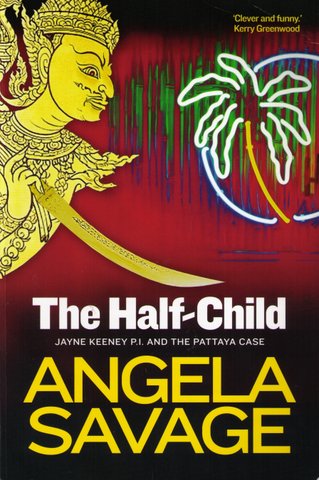
By contrast, my third novel, The Dying Beach, is set in Krabi, a stunning location. I don’t know what it is about crime writers that sees us visit beautiful places and start mentally populating the landscape with dead bodies, but that’s what happened when I visited Krabi on holidays. I guess it’s our way of paying tribute to a place.

TF: What does The Year of the Horse have in store for you?
AS: As someone born in The Year of the Horse, I am looking forward to 2014.

Setting is important to crime fiction author, Angela Savage
AS: I’ve recently enrolled in a PhD in Creative Writing in order to spend the next three years writing full-time. I’m working on a novel set in Australia and Thailand that deals with commercial surrogacy between the two countries. I’m also hoping to finish off the fourth book in the Jayne Keeney PI series, set in Bangkok during the financial crisis of 1997.
TF: Thank-you, Angela for being our guest at Thailand Footprint. I hope you get a chance to put your feet on Thailand sand again in the near future.
Angela Savage is a Melbourne-based crime writer, who has lived and traveled extensively in Asia. Her first novel, Behind the Night Bazaar won the 2004 Victorian Premier’s Literary Award for an unpublished manuscript and was shortlisted for the Ned Kelly Award for Best First Book. Her second novel, The Half-Child, was shortlisted for Best Crime Fiction. Angela is a winner of the Scarlett Stiletto Award for short crime fiction. Her latest novel is The Dying Beach.

I learned today that Robert Carraher died recently of cancer. We shared some things in common. He liked music and books. Timothy Hallinan was one of his favorite authors. It was just a little over one year ago that it was suggested by author Lisa Brackmann that I contact Robert after I shared with her my desire to start a blog about books and music and people. “You should talk to Robert Carraher.” Lisa Brackmann said. So I did. And I was glad I did. Because he was very helpful. He was an accomplished book reviewer. I enjoyed his reviews, a lot. My first review on this blog was for Zero Hour in Phnom Penh. Robert took the time to leave a positive comment. A short and affirmative, positive comment. At the time I replied, it was like being a stand-up comedian and having Jerry Seinfeld nod his head up and down after your routine and say, “Funny.” It meant a lot to me. And he took the time. So now I am returning the favor. We had many private messages back and forth. He shared his advice. I listened. One bit of advice I remember in particular: “It’s not about us, Kevin. Always remember that.” It tied in perfectly with the Henry Miller tag line I use often, “Forget yourself.” I never met Robert Carraher face to face, although it would have been welcome by me and likewise by him. He was a smoker. I wish he wasn’t. I have friends that have smoked and quit. I’m glad they have quit. I have others who still smoke. I wish they would quit. Thank-you, Robert Carraher for your sage advice and humor. And your passion for books and music and living. It was all very much appreciated.

”Tomorrow I will discover Sunset Boulevard. Eurhythmic dancing, ball-room dancing, tap dancing, artistic photography, ordinary photography, lousy photography, electro-fever treatment, internal douche treatment, ultra- violet treatment, elocution lessons, psychic readings, institutes of religion, astrological demonstrations, hands read, feet manicured, elbows massaged, faces lifted, warts removed, fat reduced, insteps raised, corsets fitted, busts vibrated, corns removed, hair dyed, glasses fitted, soda jerked, hangovers cured, headaches driven away, flatulence dissipated, limousines rented, the future made clear, the war made comprehensible, octane made higher and butane lower, drive in and get indigestion, flush the kidneys, get a cheap car-wash, stay-awake pills and go-to-sleep pills, Chinese herbs are very good for you and without a Coca-Cola life is unthinkable.” Henry Miller (1891-1980), U.S. author. “Soirée in Hollywood,”
Thailand Footprint is pleased to introduce a new feature. The Fast Track Interview. Any resemblance to Paul D. Brazill’s Short Sharp Interview feature found at PaulDBrazzill.wordpress.com is purely coincidental. Any alternative theories will be defended vigorously, in a court of law or circus depending on country of jurisdiction.
Thailand Footprint is even more pleased that Australian pulp fiction writer, Andrew Nette is our inaugural Fast Track interviewee. Andrew has strong ties to Thailand, Cambodia and the region although he currently resides in a country I like a great deal, and a city I would like to visit one day, Melbourne, Australia.
His web site, PULP CURRY – where he writes about pulp, culture and crime among other topics, makes my Top Five Favorite crime fiction sites to visit on the world wide web.
Andrew Nette is one of the founders of Crime Factory Publications, a small Melbourne-based press specialising in crime fiction. He co-editors its magazine Crime Factory, and co-edited its publication Hard Labour, an anthology of Australian short crime fiction, and LEE, an anthology of fiction inspired by American cinema icon Lee Marvin.
His short fiction has appeared in a number of print and on-line publications, including Beat to a Pulp, Hardboiled 3, Shotgun Honey Presents: Both Barrels, Blood and Tacos, The One That Got Away, Phnom Penh Noir and Crime Factory Hard Labour.
Andrew is also on the committee of management for the Australian Crime Writers Association. He has been known to tip a pint at Queen Victoria Pub and make an appearance at Check Inn 99 when visiting Bangkok, Thailand. I am pleased to welcome Andrew here today:

Pulp fiction author and scholar, Andrew Nette
TF: Is Australia still, The Lucky Country and if so, why?
AN: It’s important to note it has never been the lucky country for some, particularly our Indigenous people who are the original inhabitants of Australia, many of whom still live in Third World conditions.
That said, yes, Australia is still one of the luckiest and most comfortable countries in the world. At the same time, I’ve thought for a while now that we are slowly becoming a much more unequal country. A lot of the values and structures we see as uniquely Australian, for example, our sense of egalitarianism, are started to slip away. With respect to my USA friends, we are starting to see some of the emergence of many of the not so positive trends we see in the States, such a growing inequality in income distribution and polarized, increasing shrill political debate.
It’s important to note that when it was first coined in the sixties, one strong aspect of the term ‘the lucky country’, related to Australia’s abundant natural resources. This is a positive in that it has enabled us to weather economic storms that have engulfed other Western countries. There’s also a negative connotation. Our reliance on being a quarry for overseas nations has stifled our ability to plan ahead and think of more innovative solutions to maintaining our economy, and has engendered complacency in our outlook.
TF: What book(s) or music influenced you growing up?
AN: Without doubt, the books that most influenced me growing up were the pulp and crime novels read by my father.
Along with a lot of men in the fifties and sixties, Dad loved Carter Brown and Larry Kent. He also had a thing for Mickey Spillane, John MacDonald and Ian Fleming. I still have his collection of early James Bond paperbacks, saved from what would no doubt have been one of Mum’s frequent op shop culls. I’ve read them all several times.
Even as a child, Dad’s collection of crime paperbacks fascinated me. Their lurid cover art, the seamy cadence of titles like Nobody Loves a Loser and Bid the Babe Bye-Bye.
I spent many hours in my teens thumbing through all these books. This, in turn, led to progressively longer forays on my bike in search of second hand bookshops to feed my desire for paperback thrills. These shops seemed to be almost always hidden down a side street or deep in the bowels of a suburban arcade. They were darkly lit and smelt musty. The more crammed and chaotic, the happier I was. It gave me a chance to rummage. A curtained off section where the adults only stuff was kept was even better, adding to the furtive and mysterious nature of my expeditions.
All this contributed to my joy in reading. Certainly it’s responsible for my particular love of crime fiction. It also led, eventually, to my interest in the history of pulp publishing.
TF: What’s the last record or book you can remember listening to or reading?
AN: I recently saw Bruce Springsteen in Melbourne and was listening to a lot of his stuff in preparation for the concert. The album that really stands out is Bruce Springsteen and the E Street Band, Hammersmith Odeon, London, ’75. It has all the classics, including my favourite Springsteen tracks, ‘Tenth Avenue Freeze-Out’ and ‘It’s Hard to be a Saint in the City’ (I also love the version of that song done by David Bowie).
TF: Is there a book out there or laying around your home that you’ve been meaning to read but haven’t gotten around to it yet?
AN: There’s many, but the one that comes to mind is Ryzard Kapuscinski: A Life by Artur Domoslawski. Kapuscinski was a globe trotting Polish journalist in the seventies and eighties. In addition to, literally, going where others would not or could not go, his writing developed a wonderful magical realistic quality in order to get around the Polish censors. He was one of my heroes, a hard-edged humanist and a wonderful journalist.
He was also the subject of great controversy. As with virtually anyone in the former Soviet Block who was able to undertake significant creative endeavors that attracted positive attention in the West, without running foul of the authorities, some claim he was a spy for the Polish Government. There may be some grain of truth in this, although not in the way people who make this accusation mean it. Kapuscinski, and people like him, lived under an all-consuming police state. I doubt there were many prominent intellectuals and writers who did not, at some time, have to feed something to the security services, it’s the nature of living under a dictatorship. That’s very different from being a conscious and active ‘spy’ or intelligence operative.
TF: Complete this sentence: Amazon.com is…
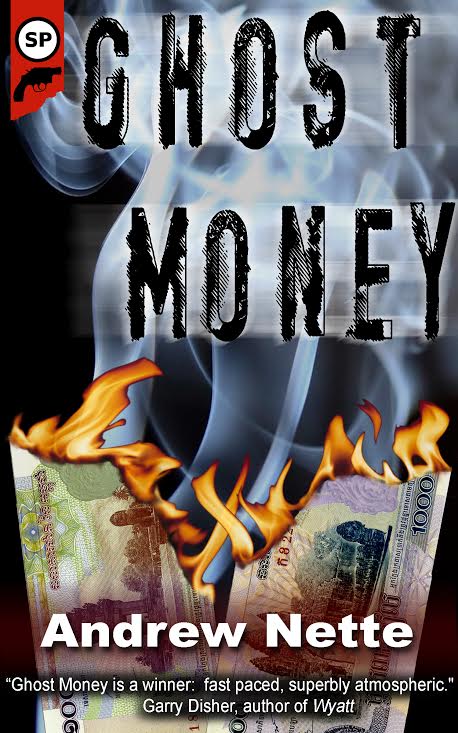
AN: Both an opportunity and a threat for writers. It’s also probably an inevitable development so we need to learn to live with it. Personally, it’s been positive for me in that it’s given me a chance to help spread the word about my 2012 book, Ghost Money.
Personally, I see Amazon as no better or worse than any other big company. I think the concerns about Amazon, such as its labour standards and impact on bookshops, are important and need to be debated. I find it amusing, however, when people criticize Amazon but think nothing about doing their shopping at a major supermarket chain or using some other major commercial operation for a good or service.
TF: Make the case for fiction over non-fiction in 100 words or less.
AN: Both are important. Both have their place.
TF: Please tell me your three favorite dead authors? Or if you are feeling confident you can throw some live ones into the mix?
AN: In terms of dead authors, I can’t go past Charles Willeford, Jim Thompson, James Crumley and Donald Westlake. Westlake’s Parker books, which he wrote under the pseudonym Richard Stark, probably remains my favourite all time crime fiction series
There’s a long list of contemporary crime writers whose work I admire, but special mention would go to Megan Abbott, David Peace, James Ellroy, Dennis Lehane and Donald Ray Pollock. In terms of the Australian end of things, I am a huge fan of Garry Disher and the West Australian crime writer, David Whish Wilson.
TF: Tell me about your publishing house. What are the challenges of a boutique publisher in an Amazon age?
AN: Crime Factory was first launched as a print magazine in 2000. It went for nine issues and was incredibly influential before a combination of factors resulted in the editor pulling the plug on it in 2003. It was rebooted as on-line magazine in PDF, Kindle and print on demand format in early 2010. Crime Factory Publications has three Australian editors, Cameron Ashley, Liam Jose. Another guy, Jimmy Callaway, is based in the US.
We decided to establish as a small publishing house in late 2011 because we think there’s a gap in the Australian market for darker crime fiction. We put out longer form material, anthologies and novellas. Eventually we want to move into novels, but we’re a long way from that.
Our material is niche and primarily digital. While that eliminates a lot of problems, distribution is still a challenge, as is marking our selves out from the pack. A lot of complexities also arise as a result of the fact that we are small and try and work in the USA and Australia.
TF: What does the The Year of the Horse have in store for you?
AN: In the next month or so I’ll finish my second novel. I don’t talk about work in progress and won’t make an exception here except to say it’s a totally different main character to the one that appeared in my first book, Ghost Money, and a totally different setting (although part of the book is set in Asia). There’s also a few other projects in the pipeline which will hopefully see the light of day soon.
TF: Thank-you, Andrew Nette for your time. Best of luck in 2014.
Andrew Nette is a Melbourne crime writer, reviewer and pulp scholar. He is one of the editors at Crime Factory Publications. His short fiction has appeared in a number of print and on-line publications. His first novel, Ghost Money, was published in 2012. His online home is www.pulpcurry.com You can find him on Twitter at @Pulpcurry
I like Chris Coles. The artist and the man. It’s been over 10 years since we first met at a meeting place less than a football field away from Baccara Bar on Soi Cowboy, where James A. Newman, Alasdair McLeod and I recently went to see Chris and his art on Friday the 14th. I wrote a previous piece about Baccara Bar last week partially titled: The Art of Seduction or the Art of the Deal?

That first meeting occurred because I had stumbled upon the art of Chris Coles on one of his web sites: Chris Coles Gallery Expressionist Art. I found the art interesting a decade ago. I still do, today. I surmised the man painting about the bright lights and big city of Bangkok might be equally interesting. We arranged to meet. When Chris arrived for that initial meeting I was sitting with a group of 5 or 6 guys around a table. I introduced Chris to the others and conversation ensued. Some interesting. Some mundane. It was always lively, to me, when Chris spoke. I remember thinking, “This guy is the smartest guy in the room.” The fact that the room was the outdoor bar at Tilac on Soi Cowboy, which had 50 or more people scattered about, drinking fluids under a polluted Bangkok night sky didn’t matter. Chris talked about his time in California and the movie business. The big budget film, Cutthroat Island, brought him to the Island of Phuket and eventually Bangkok, where the former Maine resident now calls home. Chris is like the carriage horse of a different color in the movie, The Wizard of Oz. Chris Coles pulls his own weight. There is only one of him and he is it.
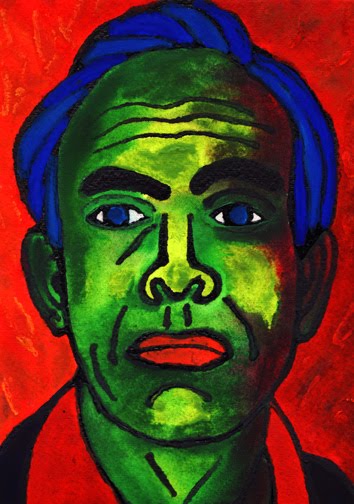
Meetings with Chris are always memorable. There was a mid-day meal at SUDA restaurant years ago where Chris informed me at our lunch table, “You need to buy, VERY THAI.” A book written by Philip Cornwel-Smith and now in its second edition, with additional photographs by John Goss. After we finished eating we walked to the Time Square Building on Sukumvit 12 and went up the escalator to Asia Books on the second floor. That Asia Books store is now gone. But I still own VERY THAI thanks to Chris Coles. It is a great book about everyday popular culture in Thailand.

Three years ago, Chris Coles had his art shown at Koi Gallery on Sukhumvit 31. An art exhibition called: Color of Day/Color of Night. One half of the gallery was filled with traditional impressionist paintings of trees and flowers. The other side was filled with the large and loud expressionist art of Chris Coles, in the self described style of Emil Nolde, Otto Dix and George Grosz. Coles’ art made the more favorable impression, on me. Chris was spread pretty thin that evening but still made time for me and I met some interesting people on a hot Bangkok night.
Another time I took my wife to hear Father Joe Maier speak, the American Catholic priest that lives and works in the Klong Toey slums. We had a dinner table reservation. Chris Coles was sitting at the bar in the packed Foreign Correspondent’s Club of Thailand. After Father Maier finished his very entertaining speaking engagement, Chris came over to our table, despite the fact he probably knew over 50% of the people in the large room. He spent thirty minutes talking to my wife about painting, colors, medium, style and art. My wife appreciated it and so did I. She had begun taking art classes at our community college in California. Chris had seen some of her work and shared his experiences and enthusiasm. Memorable table conversation, again.

Chris Coles Painting – 2:00 a.m. Street 51 Phnom Penh Night
More recently, I was just about to leave the Check Inn 99 in the early hours of the evening on a Sunday, after listening to Jazz for many hours, when in walks Chris Coles carrying one of his large acrylic paintings. Chris stood for awhile, holding the painting, looking for the owner, Chris Catto-Smith. They went and hung the painting and Chris eventually came back and joined our table. This is an image of the painting Chris Coles brought with him on that Bangkok night, which is displayed at Check Inn 99:

That prompted a call to my wife, “Honey, I’ll be home later than I said. Chris Coles just arrived.” She understood. She likes Chris too. Chris is the kind of friend that will let you know when you have put on an extra 10 pounds. He’s also encouraging – to my wife, to me and to others. As Chris puts it in the video interview with James A. Newman, “You need to bring something to the Bangkok night. And then make something out of it.” I appreciate Chris Coles. I also like and appreciate the fact that he has some critics. Show me a man with critics and I will show you a man with accomplishments.
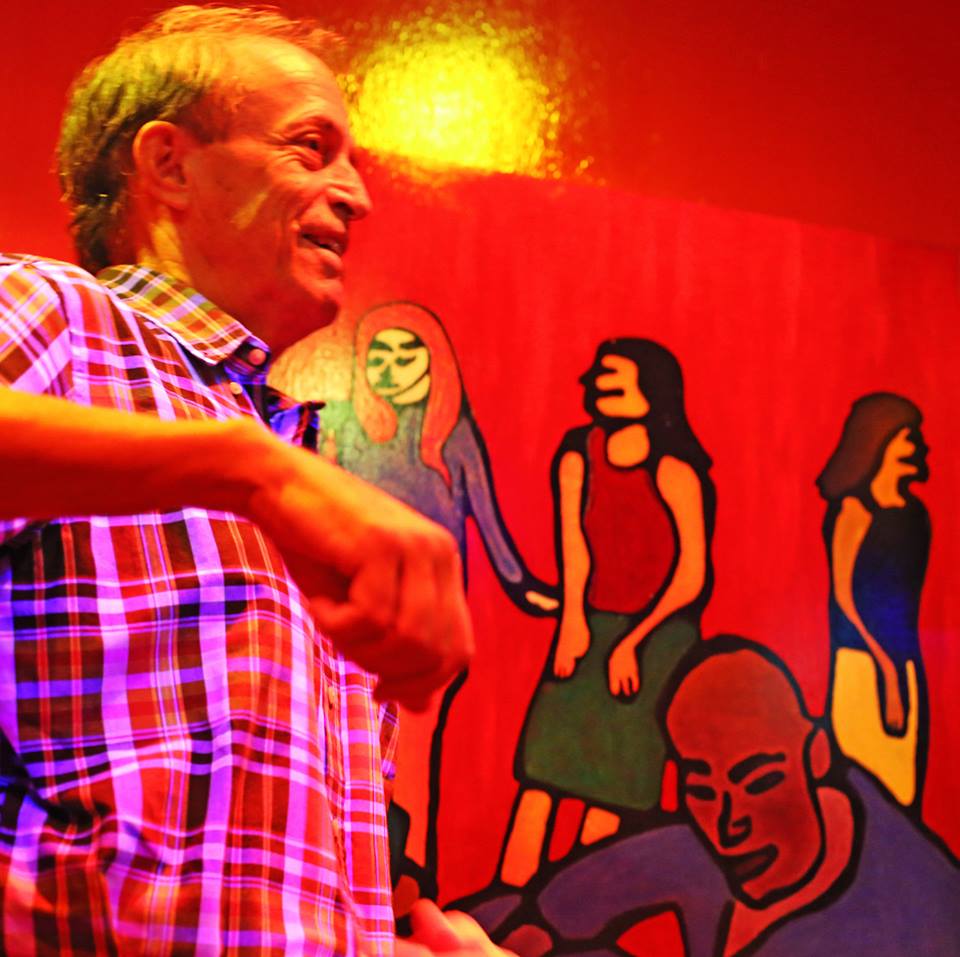
Chris Coles stands next to one of his accomplishments at Baccara Bar in Bangkok, Thailand
Fast forward to Friday the 14th. Our group of four had just finished eating our dinners at Queen Victoria Pub. Big dinners. Bangers and Mash kind of dinners. We were to meet Chris at Baccara on Soi Cowboy. One of three infamous Entertainment Zones catering to foreign tourists and expats living in Bangkok. Someone joked that no one has ever seen Chris eat dinner, which may explain how he maintains his weight better than most in the City of Angels. Chris is not a starving artist, by any means. But he certainly knows how to paint the overweight, contrary and even the ugly side of life. Chris Coles paints Bangkok realities, not American fantasy. Thomas Kinkade he is not. The art made by the Ivy League graduate and father of an M.I.T grad daughter has been exhibited in at least four countries. His clientele is diverse, ranging from Baccara owner Patrick to people close to the Royal family, well known authors, art collectors and even a blogger or two.

“I like using distortion, sharply contrasting, often rather ugly images, disharmonious colors and a rough technique.” Chris Coles – artist and author of Navigating the Bangkok Noir

The above Chris Coles painting is not one of the four that hangs in Baccara Bar on Soi Cowboy. It depicts the front porch of Baccara at 2:30 a.m., after Soi Cowboy has mostly finished being what Chris describes as another, “long, hot, frenzied night.”
Chris Coles was waiting outside when we arrived, at a table in front of Baccara Bar, wearing one of his trademark plaid shirts and Levi 501 jeans. We had permission from the owner, Patrick to photograph inside and videotape outside; we had Chris Coles for a tour guide, he had agreed to a video interview and it was Friday night in Bangkok City. No one was talking politics and no one was complaining.
We went to the second floor of Baccara, where three of Coles’ paintings are showcased. The first floor and second floor of Baccara are quite different in atmosphere. If you have trouble making up your mind where to spend your time you need only look through the glass ceiling or glass floor, depending on your point of view. To get to the second floor one must climb up a spiral staircase, where at the top you will see this Chris Coles painting: [Addendum: fire on 2nd and third floor of Baccara Bar in early May, 2014 destroy three of four Chris Coles paintings – see them here].

Author, James A. Newman on the left. Artist, Chris Coles on the Right. Painting of the Bangkok night – center stage at Baccara Bar in Bangkok, Thailand. (Photograph by Alasdair McLeod)
James A. Newman, who writes about the entertainment zones in entertaining fashion interviews Chris Coles on video, in the thick of the Red Night Zone. Sit back and enjoy this revealing segment from the interview put together by Alasdair McLeod. You’ll learn what motivates Chris Coles to paint the Bangkok night, whether he goes looking for his subjects or makes them up at times? The thought behind the atmosphere at Baccara and whether a pulp fiction writer drinks white wine or red? The Bangkok night can be a big nightmare or a big party. But like any good party you are invited to, as Chris Coles suggests, it’s never a bad idea to bring something to it.
You can learn more about Chris Coles and his art at his blog: BANGKOK NOIR – CHRIS COLES EXPRESSIONIST ART IN THE BANGKOK NIGHT
This post may also be seen at Chiang Mai City News by clicking the above banner

 Thailand Footprint: Impressions left by the books, people, places and music of Thailand and South East Asia
I recently added this to my Audible.com library and hope to report on it later this year. This shows the original cover and art work of Henry Miller’s, Tropic of Cancer. Note the bottom warning: Not To Be Imported Into Great Britain Or U.S.A. – How times change in sixty years.