Thailand Footprint: The People, Things, Literature, and Music of Thailand and the Region

Posts from the ‘Bangkok’ category

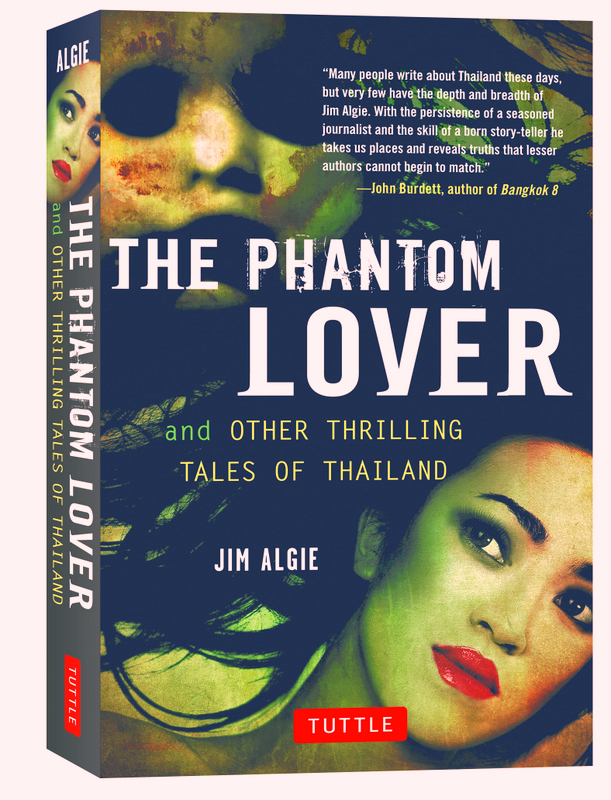
Jim Algie has done what many do not believe in and fewer still achieve. He has reincarnated himself and stayed alive in the process. The former punk rocker from Canada, known in those days as Blake Cheetah, spent eleven years playing bass guitar and touring with various bands before deciding to change careers at the tender age of twenty-eight. An age that Jimi Hendrix and Jim Morrison never reached. After a two year stint in Spain, where his focus on writing accelerated, Algie found himself in Bangkok, Thailand with the intention of heading to Taipei. In Jim’s case the road to Bangkok was paved with good intentions as Thailand has now been his home for over twenty years. During that time he did a lot of observation and investigation of all things not mundane in the kingdom. As with any good detective, he hit a few dead ends along the way. But as the saying goes, patience is its own reward. Jim Algie patiently studied what was in front of him and sought adventures off the beaten path. The outcome produced enough material to publish a variety of short stories, earning the writer several awards, including a Bram Stolker Award – a recognition presented by the Horror Writers Association for “superior achievement” in dark fantasy and horror writing.  Jim Algie has had two books traditionally published, BIZARRE THAILAND: Tales of Crime, Sex and Black Magic (Marshall Cavendish 2012) a collection of non-fiction stories and his recent collection of  fictitious writing, THE PHANTOM LOVER and Other Thrilling Tales Of Thailand (Tuttle Publishing 2014). Jim’s also an accomplished journalist, editor and travel writer; he has contributed to many periodicals and travel guidebooks. Jim  is the author of “Tuttle Travel Pack Thailand.” I am pleased to welcome Jim Algie here today.
.
Algie2000
TF: What makes Southeast Asia a good setting for writing?
.

JA: It’s all the myriad paradoxes and extreme juxtapositions. You’ve got these ancient sites like Angkor Wat and the Temple of Dawn, as well as hyper modern malls; there’s incredible hospitality jostling with every sort of barbarity; you’ve got arcane superstitions counterbalanced by a whole new wave of thinkers and artists; some of the most colourful festivals I have ever seen in stunning contrast to the shabbiest urban blight. And then there’s the hotpot of ethnicities and all sorts of eccentric expats. So you’re never short of stories, backdrops and characters.

TF: What books and or music  influenced you growing up?

JA: My first writing influences were Edgar Allan Poe and Jack London. My taste in tunes also strayed towards the darker side of the spectrum, with Alice Cooper, Black Sabbath and the New York Dolls leading the savage wolf pack. Even today I still revere those bands and authors.

TF: What’s the last record you can remember listening to?

JA: I’ve been listening to Wilco again, and their scandal-plagued magnum opus, Yankee Hotel Foxtrot. It’s one of those rare instances when a group actually took no shit from the corporate rectums of the music business. Their label dropped them because they thought the album was anti-commercial, then the band sold it back to a different subsidiary of the same company for even more money and it became the biggest-selling album of their career. To my ears, Wilco is the best American band of the past 20 years, and Jeff Tweedy is America’s greatest singer and songwriter since the late Kurt Cobain and Paul Westerberg of The Replacements.

TF: Tell our readers about the musical chapters of your life. Your ability allowed you to travel a bit. Where did you go? What did you experience that stays with you from that time?

JA: For the first out-of-town shows we played with a surf-punk band called the Malibu Kens, we had to drive 200 miles to the city of Calgary in western Canada, to play four sets a night for seven nights in a row at a skidrow tavern called The Calgarian to largely hostile or indifferent crowds of truckers, junkies, alkies, wretched-looking prostitutes and a few punks who also hung out there. All four of us stayed in a small, mildew-smelling room, full of silverfish and other vermin, in the hotel. During one gig, a guy got stabbed to death in the bathroom and his bloody handprints could be seen on the walls for months afterwards. Another night there was a 20-men-and-4-whores brawl in the bar with people smacking each other over the head with chairs and tables while we played. For a bunch of middle-class boys, still only 18 and 19, that was our indoctrination – our baptism of hellfire – and real life on the dark side of the street.

Blake Cheetah

Jim Algie (far right) during his Blake Cheetah days

TF: Is there a book laying around your home that you haven’t gotten around to reading?

JA: Many, but the new biography of China’s Great Reformer, Deng Xiaping, is especially huge and daunting.

TF: Complete this sentence.  I write to

JA:  … communicate something to the world and myself that cannot be communicated in any other way or through any other medium.

TF: Make the case for fiction over non-fiction in 207 words or less.

JA: What’s missing from so much journalism and non-fiction is a sense of humanism and heart. When journalists strain for superlatives they resort to the same geriatric clichés about “triumphs of the human spirit” or “tragic demises” or “losing battles against cancer” while labeling serial murderers as “monsters.”  Dead language does not elicit any lively reactions. One of my favorite parts of Timothy Hallinan’s Breathing Water, a superbly suspenseful Bangkok thriller in his Poke Rafferty series, is how the Thai cop and his wife deal with her terminal illness. In journalism these days, human-interest stories are disappearing in place of celebrity gossip and business stories. By contrast all great works of fiction put people first and human concerns at their core.

To borrow another example from Breathing Water, Tim has a great paragraph about how the light in Bangkok around dusk, which is the protagonist’s favorite time of day and mine too, changes about five different times. I sensed that was true, but it really opened my eyes to something that I hadn’t seen before. In this way, fiction and poetry enrich our lives and perceptions. By contrast, in most non-fiction – except for maybe memoirs – the editor would cut all those descriptive details as irrelevant.

TF: Tell us about your latest collection of stories, The Phantom Lover and Other Thrilling Tales of Thailand, and why book lovers should read it?

phantom-lover-455JA: If they don’t read it I can’t say their lives will be greatly impoverished or they will come down with any loathsome diseases, but those who are interested in Thailand and SE Asia will find a different set of stories and characters, often with Thai protagonists, that deliver some different insights into the lives of young high-society women, ancient folklore with modern twists, the rural downtrodden, and what will probably remain the biggest natural disaster of our lifetimes, the 2004 Asian tsunami.

TF: Please tell me about your current favorite dead author.

JA: Raymond Carver. I just reread a kind of greatest hits’ collection of his short fiction called Where I’m Calling From. He was the most heralded short fiction author when I was studying Creative Writing in the late 80s. So I wanted to revisit those stories to see how he achieved those incredible effects with the most unadorned prose and lack of sensationalism combined with very ordinary characters caught up in entirely plausible situations. “Errand,” his story about the death of Anton Chekhov, whom was the writer he was most often compared to, and which he wrote while dying of a similar disease, is one of the great masterpieces of contemporary literature. It’s most likely way beyond anything I could ever achieve, but there’s no point in aspiring to mediocrity. There’s already enough of that on TV as it is.

TF: What is your approach for a book launch? You’ve had two now – for Bizarre Thailand and The Phantom Lover. Were they similar or different?

JA: I am not an orator. I don’t do readings or impersonations. So my approach is similar. I present a slide show of travel pics, book covers, personal shots, “Hell Money Banknotes” from the Chinese Festival of the Hungry Ghosts, and talk about all sorts of influences that were melded together to form some of the stories, from serial slayers like Ted Bundy and Jeffrey Dahmer, to lesbian erotica, European artworks, snake-handling shows in Thailand and black magic from the time of Angkor Wat.

Jim Algie Shadow

Jim Algie and shadow at The Phantom Lover Book Launch at WTF Bar

TF: Let’s talk about shadows and demons.  Just because they are fun to discuss. How important are they to a writer? Are they one and the same thing? Should a writer have demons of his own in order to create fictional ones? If a writer hasn’t struggled with his shadows or demons is he/she in denial? 

JA: Everyone has their own shadows and demons. Since we can’t talk about them in polite company we have to find other outlets like books, music, TV shows and films. From any artist’s perspective the demons are slippery and the shadows immaterial, so they are not easy to write or sing about. Either it comes off like macho bravado or like self-pitying whining. Ultimately, you need to strike a balance between the two and not give any easy solutions or sermons about conquering them. For the most part, I try to stay away from those first-person confessional sorts of stories, though I did write one long novella, “Obituary for the Khaosan Road Outlaws and Imposters,” in the last book that features some demon wrestling and shadow hunting.

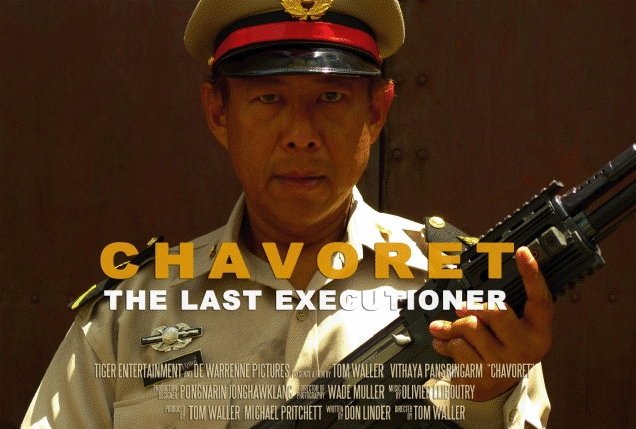
TF: You were a drinking buddy of Thailand’s last executioner, Chavoret Jaruboon and attended his funeral in 2012 after he died of cancer. Chavoret was personally responsible for executing 55 inmates. I understand a movie about his life has just been released; can you tell me about it?
lastexecutioner

JA: I just reviewed the film for the Bangkok Post. (Biopic Takes No Prisoners) It’s a pretty accurate depiction of his life from being a teenage rock ‘n’ roller to becoming a prison guard, so he could take care of his family, and then working his way up to executioner. As I mentioned in the review, “conflicted characters make the best protagonists and hinges for dramatic tension,” so that’s why I’ve written about him in Bizarre Thailand: Tales of Crime, Sex and Black Magic, as well as the Phantom Lover collection. He was a fascinating man,  deeply tormented by guilt and karma, but in Thailand, and this is not mentioned in either the film or in my books, the executioner can be seen as an heroic figure, too, freeing prisoners from their bad karma to be reborn again. Tellingly, the death chamber at Bang Kwang Central Prison is referred to in Buddhist terms as the “room to end all suffering.”

TF: Any plans for the Year of the Horse?

JA: As with every previous year I am trying really hard not to die, and to finish some new books and a bunch of stories. Here it is July already and I’m still breathing, making toast and typing words on a keyboard, so I take these gifts as good omens.

TF: I’ll toast to all that. Thanks, Jim.

ALgie One Foot

An inquisitive Jim Algie

For more information about Jim Algie and his writings go to: www.jimalgie.club


CityLife
This post may also be seen at Chiang Mai City News by clicking the above banner


Leave a comment

JerryHawaii

“I hope I see you today, I’m meeting Jerry Hopkins there at 3:00 p.m.” The message came from, Will Yaryan another former  NorCal resident.  It was all the motivation I needed to get to the Sunday Jazz at CheckInn99 late last year. I had never met Jerry before but I had heard a lot about him, in addition to reading some of his books and knowing about many others. A passage he wrote in one of those books, Bangkok Babylon, had altered the course of many an afternoon and evening for me in Bangkok, Thailand. I wanted to thank him. I grabbed the book as I headed out the door.

Jimi-Hendrix-The-Jimi-Hendrix-406539

When I arrived at CheckInn99, Dr. Will and Jerry Hopkins were already there, listening to the sounds of William Wait on saxophone, Keith Nolan on keyboards and other talented musicians. Will Yaryan is a former record company public relations man with Atlantic Records. His friendship with Jerry Hopkins goes back 40 years. Will introduced me straight away and I learned Jerry and I have at least one thing in common, which didn’t make the conversation easy but it was always interesting. Jerry and I are both deaf in one ear and the good ears don’t always align well. During a break in the jam session, Keith Nolan joined in on the conversation. The subject was music and everybody there liked it. At one point Keith told me the batteries were dead on his camera and asked me if I would mind taking a picture of him with Jerry, using my camera phone? Done. You can see that picture on Keith’s Facebook page where he adds the words, “Jerry Hopkins – A gracious legend.” I agree with Keith Nolan’s assessment of Jerry Hopkins. What makes a man a legend? That’s a difficult question to answer. For starters Jerry Hopkins published the best selling biographies of Jim Morrison of The Doors, Elvis Presley and Jimi Hendrix. In addition he’s penned biographies for David Bowie, Don Ho, Yoko Ono and almost, Raquel Welch. Hopkins is the author of 40 books, including a definitive book on the Hula. He is also the author of an unpublished work,The History of The Condom. The most recent book I have purchased, written by Jerry Hopkins is, ROMANCING THE EAST: A Literary ODYSSEY from the Heart of Darkness to the River Kwai.  (Tuttle Publishing –  Singapore – 2012). A wonderful read so far, spanning 150 years of literature in Asia and featuring those who have traveled here during that time.

RomancinEast

But it takes more than books to make a legend. He also had two stints as a correspondent for Rolling Stone – once in London and once in L.A. and served as contributing editor for the iconic magazine for 20 years. His stories are legendary and enchanting. On that first day I heard about his time as chief “kook booker” for The Steve Allen Show, where he met Frank Zappa for the first time. About thirty minutes into the conversation I handed Jerry my copy of Bangkok Babylon. Rather than have him sign in the standard place I asked him if he would read a passage on page 16, which had meant so much to me since I first read it almost 10 years ago. He did. And as he did he chuckled, signed the page, still smiling and said, “It’s true. It’s good advice.” The passage reads:

When in Bangkok, do what your mama told you never to do. Talk to a stranger.

Bangkok Babylon

I next saw Jerry Hopkins one week later. It was the evening of Bangkok Night of Noir, Sunday January 5th, 2014. I was at a table that included Collin Piprell, author of Kicking Dogs among many others and a longtime acquaintance of Jerry’s. There was an open chair next to me. Jerry sat down and ordered some food and drink. One of the featured authors for the evening saw Jerry and came over to shake his hand and tell him how pleased he was to see him at the event. “Kevin told me about it last week.” said the man whose books have sold in the millions. I got a kick out of Jerry’s reply on a couple of levels. One, I was glad Jerry remembered my name from a week ago. Two, I couldn’t remember telling him about Night of Noir, although I am sure I did. Jerry may need a hearing aid but his memory, short term and long term, is just fine. If you read Bangkok Babylon, which is about the real-life exploits of Bangkok’s Legendary expatriates, you will learn that Jerry Hopkins likes to have a good time. So I wasn’t completely surprised when at a little after 9:00 p.m. for a scheduled 7:30 p.m. start, Jerry stood up. “You leaving, Jerry?” I asked. “Yea. I hate Filipina cover bands.” And just like that the person who has been described as a real life Forrest Gump, for being in the right place at the right time, went up the tunnel leading to Sukhumvit Road. Unlike the Forrest in the movie, Jerry didn’t seem a little tired and I didn’t think he was going home, now.

Thailand Confidential by Jerry Hopkins

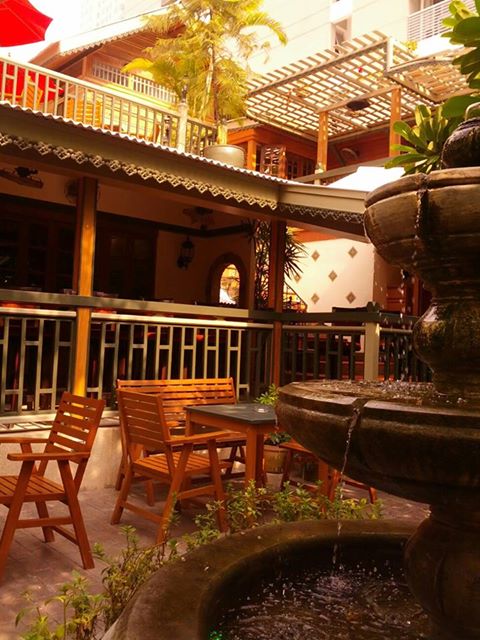
After those two occasions at CheckInn99, I wrote Will Yaryan telling him I’d very much like to interview Jerry and suggested that the three of us get together for a lunch meeting. I wanted Will to come along because I thought it would be fun and suggested a restaurant where we could meet.. Will wrote back: “Jerry says, the food there is no good.” Jerry has appeared on Anthony Bourdain’s popular cooking and travel shows, not once but twice. The first time he was responsible for the footage that shows Tony on the second floor of Nana Plaza as the show’s credits roll. The second time Tony and Jerry pull up to a restaurant in a longboat  – again Jerry’s idea. In addition Jerry has written books titled: Strange Foods and Extreme Cuisine. On his web site http://www.jerryhopkins.com there is a picture of him eating a deep fried baby frog. I figured he was entitled to call the dining shots. We settled on Hemingway’s Bangkok on Sukhumvit 14, outdoors by the fountain, along with a date and time.

HEMINGWAY'S

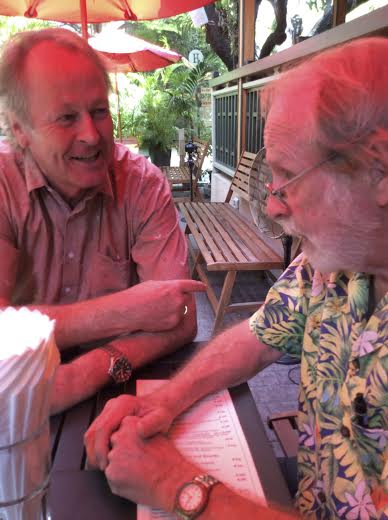
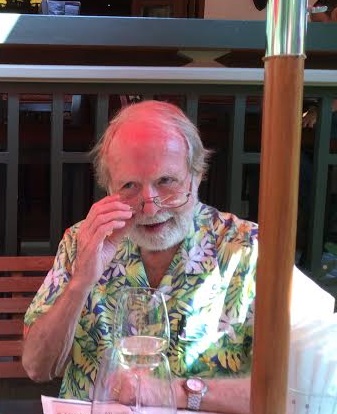
Jerry and Will arrived on time. Jerry looking fit in his trademark Hawaiian shirt, well groomed beard, large spectacles and sparking blue eyes. For a man of 78 years, with four wives, two grown children, triple bypass heart surgery, a heart attack and pacemaker in his bio, he looked damn good.

Jerry Hopkins on the left, Will Yaryan, long time friend and former West Coast PR Man for Atlantic Records

Jerry Hopkins with Will Yaryan, a long time friend and former West Coast PR Man for Atlantic Records

All my previous interviews had been via email, so I was a bit of a fish out of water in the company of a career journalist and distinguished author, even if he has described himself as a whore monger and bottom feeder at times. Jerry always maintains a comfortable, if not joyful manner and soon apologized for leaving early on the Night of Noir, explaining that a friend of his had opened a bar nearby and reiterated his feelings for Pinay singers.  Jerry Hopkins likes all kinds of music but not all music.  My temptation, when in the company of a rock n’ roll legend was to talk about sex, drugs and rock n’ roll and I told Jerry so. But I thought I’d be clever, so I asked Jerry, since you are the journalist, what would you talk about with Jerry Hopkins if you were interviewing Jerry? “Sex, drugs, and rock n’ roll, of course.” Jerry said, somewhat incredulously. Now I was feeling better.

JerryKevin

Curiosity may have killed the cat but it has helped Jerry Hopkins see the world. There is a quote attributed to Yogi Berra that goes, “When you see a fork in the road, take it!” Jerry struck me as the kind of guy that would take that fork, every time. In addition, when he comes to the same fork a second time, he’ll go left if he’d previously gone right. Jerry Hopkins would be a fascinating person even without his fascination for transsexuals or lady boys as they are known in Thailand. I was curious where and when that fascination began. As Jerry tells it, he was in Hawaii around 1989 when he saw what he described as a vision walking on the other side of the street. Jerry did what Jerry does, he crossed that street and made an introduction to a very “beautiful creature”. They went to a nearby bar. Jerry wanted to know her story, “Well, I was born a boy.”  Jerry then sits up straight to demonstrate how she thrust out her artificial but perfect breasts and told him, “And now, I’m a man!” That relationship remained friends only. But that meeting led to the introduction of another transsexual, Vannessa whom Jerry unashamedly admits to falling in love with and sharing his bed with during those Hawaii years. And oh, by the way, she was a hooker to boot, working the Chinatown beat on the island of Oahu. Jerry told a story about his live-in lover hitch-hiking home and arriving with a large box of donuts in one hand, received from a grateful bakery truck driver as a tip for services rendered and a pair of high heels in the other. It was 6:00 a.m. and Jerry was sipping his morning coffee. If you were looking for Ward and June Cleaver, you’re in the wrong neighborhood or perhaps the wrong galaxy. The whole time Jerry speaks he has a gleam in his blue eyes.

Jerry Hopkins Hemingway's Bangkok Jerry Hopkins Image Jerry Hopkins Thailand Jerry Hopkins Thailand Footprint

Jerry Hopkins at Hemingway’s Bangkok, Thailand

There was pretty much no subject Jerry was unwilling to get into, except, perhaps wife talk, but I didn’t really press him on that subject since there was so much else to talk about.  Even his bad experiences, if you can call them that, are memorable. The originally authorized biography to be done of Raquel Welch doesn’t get done when a terse letter arrives from an attorney representing the sex symbol. The biography is never made but you cannot take away all the memories Jerry has of being in Rio de Janeiro with Raquel and being treated like royalty. Another time, Jerry is hit while walking in the crosswalk in those Hawaii years. His injuries are serious. But it is during his convalescence that he decides when he can ambulate again he will go to divorce court, as they had already been to bankruptcy court and start the next chapter in his life, which leads to Bangkok, Thailand.

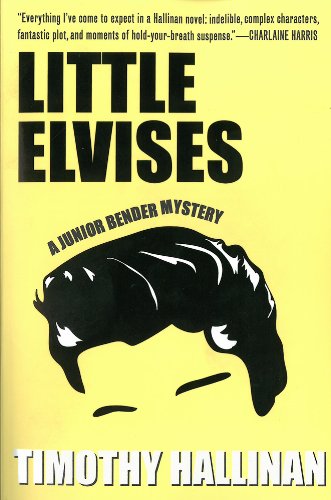
“Jerry Hopkins’, NO ONE HERE GETS OUT ALIVE sets the standards for rock biographies and Jerry’s just as good in person.” Timothy Hallinan, author of Little Elvises

LittleElvises

Hopkins rock biography, NO ONE HERE GETS OUT ALIVE about the iconic Doors lead singer, Jim Morrison has been translated into at least 16 languages. It was the first rock biography that made it to #1 on the New York Times Best Sellers List. It made the list again when the Oliver Stone movie, The Doors was released in 1991. Those facts are pretty well established. I found it more interesting to learn from Jerry that the first topless bar he ever went to was with The Doors lead man in Los Angeles. Hopkins told me Morrison was nothing like the person the press portrayed him to be. “Jim had read more books than any rock star I had ever met.”  It was Morrison who was the fan of Elvis Presley, more than Jerry and encouraged him to write the biography. One reason the first Elvis biography has a dedication to Jim Morrison, who never lived long enough to see it published. Dead of a heroin overdose in Paris at age twenty-seven.

The Biography of Jim Morrison by Jerry Hopkins

When you get three hours of Jerry’s time, which is what I got at Hemingway’s restaurant in Bangkok, it’s not a matter of getting enough material suitable for print, it’s a question of what the hell am I going to leave out? Trust me, I am leaving out plenty and it is not your typical cutting room floor stuff. It would make most people’s highlight reel. The Groucho meet Lenny story has been written before, when Jerry introduces the famous Marx brother to Lenny Bruce. But perhaps lessor known is Jerry being in the audience when Harpo, the Marx brother who never spoke, grabs a microphone on stage and says to the crowd, “As I was saying …”. What was the response? I ask Jerry. “The place just erupted.” Among the biographies that get discussed but not written by Jerry, in addition to the one of Raquel Welch, is one for the famous rock concert promoter Bill Graham, whom Jerry spoke with about the possibility more than once. Bill died many years later in a 1991 helicopter crash.

In the course of the interview I notice that Jerry Hopkins, the legend, is wearing the same pair of shoes he wore the first two times I saw him at CheckInn99. They are, Blue Suede Shoes. As in the the rock n’ roll standard written by Carl Perkins and recorded by Elvis Presley, among many other rock legends. Jerry Hopkins biographies of Elvis Presley are so closely linked to the musician that in 2007 Jerry was flown in by the Presley estate to participate in Elvis activities at Graceland in Memphis, Tennessee and Honolulu in February, 2013. The shoes Jerry is wearing cannot be a coincidence. How many people do you know who wear blue suede shoes? I mention them to Jerry about two hours into our lunch. “I’ve got the title for this interview, already” I say, pointing under the table, “A Conversation with the Man in The Blue Suede Shoes.” Jerry smiles for the 100th or so time that day and says, “You’re the first one to notice in quite awhile. I like it.”

ElvisABiographyHopkins

If you look up, SEX, DRUGS, and ROCK N ROLL in your Urban Dictionary you’ll read the term is a nickname for the lifestyle of rock stars. You’ll also see that of the three rock examples used, Elvis Presley is #1: Died of a drug overdose. I learned from Jerry Hopkins that Jim Morrison’s drug of choice was alcohol. Jim telling Jerry once, “It’s suicide, one drink at a time.” As for Jerry’s own lifestyle, it has been comfortable. When I alluded to his 2013 interview, WHEN YOU’RE STRANGE in Post Magazine and asked him how much money he did put up his nose over the years, Jerry peered at me over his glasses and said, “Not that much.”

You cannot leave out the time Jerry speaks of a Billy Preston concert to be held on Sunset Boulevard at a club that escapes me at the moment, but don’t worry, Jerry will remember. The concert was to be filmed. To get Billy’s true fans and to create the proper authenticity it was decided to bus in some of the residents of nearby Watts, California. The date was August 3, 1966, just a little over one year after the famous Watts riots, which occurred in the summer of 1965. On the way to the concert Jerry hears, on his car radio, that Lenny Bruce has died. He takes that fork in the road again to Lenny’s house. When he arrives, Lenny is in the bathroom, dead, naked and the police are letting people have a look see, two at a time. The crowd in Lenny’s Hollywood Blvd. home begins to grow. Jerry tells me at that moment he thinks, “It’s time to go to Billy’s concert.” And he went.

JerryKevin2

What is Jerry Hopkins working on now, you may be wondering? He is researching a book in which he will profile 25 kathoey (lady boy) sex workers. That should bring a whole new context to the Joe Friday line, “Just the facts, ma’am.”

Elvis+Presley+-+The+Final+Years+-+

Jerry Hopkins also penned a third biography of the King called, Elvis in Hawaii

I’m no psychologist but it seems to me the mentally healthy way to go through life’s journey, is thinking the Hopkins way. Be curious. Ask questions. Cross the road if you see something you’ve never seen before. Stop and see the two-headed cow, if someone takes the time to advertise one. You never know what else you might see for one quarter more? Stand in front of the Fun Zone mirror and enjoy the distortions. Jerry will be careful in his next life, maybe. Having a good time is still important to Jerry Hopkins. The Thailand resident now splits his time between the craziness of Bangkok and the quiet of his family home near the Cambodian border in Surin with his wife, fruit trees, ponds, fish, frogs and many guests. Getting the facts right is also important to Jerry. As it is to every good journalist. Toward the end of my questioning, listening and laughing session, I reported back to Jerry, incorrectly, that I was glad he was having just as good a time, now, as any other time in his life. Jerry looked at me as if I was deaf in one ear, “I said, better!”

That he did. That he did. Who would want to be disagreeable with a gracious legend, anyway?

jerrywithelephant

Jerry Hopkins in Thailand

.

CityLife

This post also ran at Chiang Mai City News on March 6th, 2014 and may be seen there by clicking the banner, above

3 Comments

I first became aware of Christopher Minko and the Khmer musicians who make up the band Krom when the lyrics to some of their songs appeared in Phnom Penh Noir (Heaven Lake Press – 2012) edited by Christopher G. Moore. The more you learn about the Minko and Krom story the more you are drawn to it. Christopher Minko was born and raised in the country that rightfully has earned the moniker of, “The Lucky County”, Australia. Music was emphasized at an early age; his mother being a concert pianist. He now lives in what could easily be cast as one of the unluckiest countries, working with people who were not born into fortune but have found ways to make their lives a success, despite enormous obstacles.

MinkoGuitar

I have long been a fan of lyrics as stand alone works of art, so I was perfectly comfortable with the idea of musical lyrics appearing in a book of noir short stories. I was comfortable with the idea, but the actual lyrics created occasional discomfort. It never occurred to me, at the time, that was part of the Krom message and the Minko plan. Christopher Minko screams what few dare to whisper. Because to whisper his messages would be to acknowledge the existence of a dark abyss not occupying a fictional world but a real one. And that gets many of us, including me, out of our comfort zone. Here is an excerpt from the lyrics of one such song, which can be found on the last two pages of Phnom Penh Noir titled, TANGO TRAFFIC TANGO:

PPN-cover

The cattle class

Of ancient Men

Are greeted with open arms

Welcome to our daughters

We breed them on our farms

Ripe for human trafficking

We sell their innocent charms

Yea, air traffic

Rail traffic

Road traffic

And human trafficking

Where money and sex are king

Yea, human trafficking

Where money and sex are king

So welcome to our daughters

We breed them on our farms

Open up and take them

In your aging sagging arms

Yea, welcome to our daughters

We breed them on our farms

So thank goodness or badness or darkness, or whatever you wish to call it, because somebody or something needs to get us out of our comfort zone more often. One of those people is Christopher Minko, the lead man for the noir band Krom with a Khmer edge, whom I welcome here today for a lengthy two-part interview:

Minko

KC: Christopher Minko, welcome to Thailand Footprint.  I’m an old basketball junkie. And although my playing days are well behind me, I continue to think it is a great game and see the beauty in it. In basketball you have 5 starters. On the court, they need to get along, to be unselfish, to cooperate, and to acknowledge they are part of something bigger than themselves. After the game is over, they can get along together or not. It doesn’t really matter. At the professional level , these are referred to as a one taxi team or a five taxi team.  My question to you is, does the principal apply to bands? Is it necessary to get along with each other after you finish playing or can you play well on stage and then go your separate ways after the gig? Have you played with mostly one taxi bands, five taxi bands or a combination in your career? And finally how would you characterize Krom, on and off the stage?

CM: Kevin – firstly – my appreciation along with  thanks from Krom – it’s a great blog site you are maintaining and we are honoured at the interview – You first question – a tough question indeed – I’ve been  a professional musician a number of times in this rather twisted life of mine to date – The early 80’s were spent playing with cult Australian Band “The Bachelors from Prague” which was without doubt 5 different cabs combined with the folly of egoistical youth – great band but we split when one half wanted to go Tijuana Brass whilst personally I was along the lines of that gentleman deviant Chet Baker (at that time I played both trumpet and guitar) – the split could be slightly compared to the current state of Thai politics insofar that friendships were certainly shattered (not all) –however a violent breakup it wasn’t.

Now Krom – that’s a very different story – believe it or not –as I am nearing 60 years of age – I am now working in the most professional band I have ever worked with – In one way very much a one taxi band – tight ,well rehearsed, disciplined, cohesive and very professional – there are many that say the live shows are even better than the CD’s (we appreciate that compliment…) however there are some very interesting points about Krom that create the unique signature Krom sound. It’s also important to note that both Sophea Chamroeun (Krom co-founder / songwriter and lead vocals) and Sopheak Chamroeun (lead vocals) have studied Cambodian traditional dance and music under the best of masters since they were 12 through the international acclaimed “Cambodian Living Arts Program” plus both are recent graduates of the Royal University of Fine Arts in Phnom Penh – they both have a very professional work ethic and approach to their work with Krom.

MinkoKrom1

Hey: Can’t forget my good friend and musical colleague, multi-instrumentalist, Jimmy B who is the fourth member of Krom and understands my music better than most.

Krom4

So – to Kromthings: Firstly – Let me get this one out of the way before I start – I have little to no time for whiteboy bands or musicians trying to play the music of another culture (in this case Cambodian music) –for  me the resulting sound of white boys playing Khmer music sounds clichéd and tacky plus locals just do it better – that’s just the way it is – and I have a deep love and respect for Khmer music  – therefore, I would never dare, out of respect, to tamper with this remarkable music created by Cambodians – That now said –  Krom is, and always will be, a Phnom Penh based bi-lingual band (Khmer and English) playing original compositions – the key to the original music of Krom is the following formula which is not easy to do from a composers viewpoint as you have to have your ego well under control to allow this to happen with your compositions –  noting also –  once in a while remarkable musical partnerships of unique productivity evolve – such is the relationship between Sophea Chamroeun, the Krom lead vocalist, and I – Sophea seems to just totally understand where I am coming from with the Krom music – however I digress – back to the Krom formula – for 3 years now Kromsongs simply pour out of me (there is a reason for that explained at the end of this answer) – what I do is record the guitar foundations of a Krom song, put it on a memory stick and then hand it to Sophea without saying a word or even  humming a suggested melody riff (this is where one puts the ego in a box and closes the lid) – Sophea goes away and totally on her own creates the Khmer lyrics and vocal melody without any influence whatsoever from me – All I can say is that she has never ever let me (or Krom) down in this regard and I am always  so surprised (and usually very excited) at what  sounds she builds around the delta blues picking of my guitar work and compositions – I use the same principle of respect with our Khmer producer, Sarin Chhuon, who then also adds his own unique Khmer interpretation of the master tapes and at the end you have the rather unique signature sound that is Krom.

I should also mention the social issues that Krom touches on within many of the Krom lyrics with a focus on the ever ongoing tragedy of sexual trafficking and sexually slavery which is prolific in South East Asia along with being nurtured and developed as a major industry by the very corrupt ruling elites of the South East Asian nations who are willing , as I sing in The Kromsong “Tango Traffic Tango” – “to sell their daughters” – sorry – but that’s the harsh brutal (mostly denied) truth about these societies and it needs to be sung about –   that’s simply part of what Krom do.

Sophea and Sopheak, in theier own way, are very courageous individuals and represent the first wave of (dare I say) protest singers or singers of songs of social justice, to come out of Cambodia – interesting development indeed.

Something also of great relevance to Krom is the ongoing Noir related themes  (Kroms debut 2012 album is suitably titled “Songs from the Noir”)– apart from a rather Noir life led, ouch – there are rather dark sides to the Minko story that should remain unspoken for a variety of reasons…(Ah ain’t no saint…)  –  all Krom lyrics are very personal and there is a true (and often very dark) story or seven within all Kromsongs. I should also acknowledge renowned Bangkok based Noir author, Christopher G. Moore, and our ongoing friendship which has resulted in me using words from Christopher’s novels in the Krom song, the Ying and other songs. I believe Christopher Moore should be acknowledged for his lead role in the development of the now internationally recognized and growing creative movement known as South East Asia Noir – Many of us involved in the Noir movement ,including the 2ndgeneration of  Asian Noir writers such as Tom Vater and other recent newcomers, are deeply indebted to Moore for his decades of effort to promote and develop SE Asian Noir as a recognized creative genre.

And noting your Blog site’s title, Thailand Footprint  – allow me to make a personal reference to Thailand:   My wife who came from Thailand and the mother of my now 20 year old daughter passed away 3 years ago – as a result of her death and the associated personal grief, I returned to my musical roots  – out of something so sad (her passing) came Krom – A remarkable woman from Bangkok who left a unique legacy called Krom…………….

MinkoDaughter

Christopher Minko shown with his beautiful 20 year old daughter

KC:  Thanks for being so candid, Christopher. I expected nothing less. Shifting gears for a moment, talk to me about your role in disability awareness and disability sports in Cambodia.

CM: Ah – the Disability work  – easy answer to that one: “Keeps a man’s feet firmly on the ground and properly humble” – 18 years have been spent working with rural based Cambodians with a Disability via sports and other small scale  socio economic developmental projects based on poverty alleviation –These persons with a Disability are truly inspiring people who put one’s own life very much into a proper less selfish perspective – an ongoing humbling experience whereby I have truly learnt one core rule about life – “we are all disabled” –  (after all – who the hell has the ferkin right to define normality ?). Disability sports are still very embryonic in Cambodia however we have reached great heights over the years, despite the odds, including reaching current No 2 in the world in Volleyball (Men’s – beating Australia, Canada, USA, Korea and everyone else,(except for the goddam Germans – that’s yet to happen but it will – rest assured)

At the moment my disability work focuses on assisting women with a more severe disability (women in wheelchairs) through wheelchair basketball – an exceptional program of women successfully rebuilding their lives through a highly disciplined  – note the word – discipline – No touchy feely bullshit is allowed in our programs – If you don’t pull your weight – we throw you out – this philosophy / methodology works wonders (much to the horror of the horrid politically correct NGO world and their endless fruitless hugging workshops…)…) and we now have 32 highly committed women, 16 of whom will, for the first time ever, represent Cambodia at the Korea 2014 Asia Para games

Most of all – like I said – keeps a bloke very humble…………….probably keep doing this work part time until I die as its simply remarkable work with very dignified people who have so little – yet have so much  – you can see the impact and strength of the women in the photos

In their own odd way, somehow, the disability / social justice work and the music of Krom go beautifully hand in hand

MinkoChair

KC: It’s interesting to me how you stated the disability / social justice work you do in Cambodia and the music of Krom go beautifully together. I can understand how that would be the case. That leads to an idea you and I have discussed before and it seems appropriate to discuss here. That is the possibility of a Goodwill wheelchair basketball game being held in Thailand between the Cambodian women’s team and the Thailand women’s team. Let’s talk about why it is such a good idea. Maybe we can get the ball rolling so to speak to make that happen. And of course a Krom gig in Thailand after the game is over would be doubly nice as well. I can think of so many reasons why a game of sport like that makes sense. But right now a lot of things that don’t make much sense to me are happening in Bangkok. Let’s not talk negative politics, for now, tell me your reasons why a wheelchair basketball game held in Thailand, sometime in 2014, would be a win/win for the two countries no matter what the score may read when the actual game is over?

Bball

CM: Both Krom and the Women’s Wheelchair Project are linked to social justice / poverty alleviation, and a very interesting note: sexual trafficking + sexual abuse are also a common theme – few realize that sexual abuse against Cambodian women with a Disability is 7 times higher than with non disabled women – they are easier to exploit – many of the CNVLD women are survivors of this form of abuse.

Your question / Query is perfect timing

Bball2

We all know that Sport can be a  powerful vehicle when it comes  to fostering healing goodwill and harmony amongst nations( and often within a nation for that matter…) one only has to refer to Mr Mandela and his use of sports a as mechanism to heal wounds between black and white south Africans as an excellent example of this . All of us recognize the long and ever ongoing animosity between Thailand and Cambodia so what better way to start the ball rolling than to organize that the Cambodian Women’s wheelchair basketball team go to Thailand – back to the perfect timing of your question – right now I have Cambodia’s first ever National Women’s Wheelchair Basketball team in place (recently selected by international experts) – they have had three coaching tenures under foreign coaches (from OZ and USA)over the past 2 years as part their development however they have never played on an international standard indoor court (polished wood or high tech sports floor surface) – As you know the CNVLD is supported by the ICRC and we do have the funds in place for transporting the team to Thailand and back to Cambodia – what we are looking for is an organization / and – or – individuals who could host such a visit – 15 persons in total – 12 of whom are women with a disability –  and host this group for 4-7 days including identifying and organizing a proper sports venue to train and what would be even better – Is there a Thai Women’s Wheelchair basketball that would like to compete against our team? – we are ready to come – just need to find reliable partners at the Thai end who can assist with the organization / hosting – and it doesn’t matter where in Thailand ! – note – Its essential that the Cambodian team practice on an international standard court before they compete internationally,  for the first time ever, at the Korea Asia Para Games – Oct 2014.  Such a project would be as you say, definite win-win for both nations and one would hope that this would lead to an annual exchange between Thai and Cambodian athletes with a disability including Thai athletes also coming over to Battambang for training and competition sessions with CNVLD athletes– I’ve long wanted this to happen also given my long term and close relationship to both Thailand and Cambodia – 2 nations, that , from all aspects – economically, socially, and culturally –urgently  need to start working closer on a positive level with each other –I’d truly appreciate any assistance your readers may be able to offer with such a potential goodwill visit and value that you have raised this issue – as said – we are ready to roll ! ( ……….and win…)

And – YES –off course, for many personal, historical and other reasons, I would love to see Krom performing in Bangkok – after all many of the Kromsongs emanate from this truly remarkable city and we are honoured that Christopher G Moore has already agreed to MC the historic debut of “Krom in Bangkok” when we get there (hopefully soon)

NoirSongs

KC: A wheelchair basketball game between the two countries with some Krom music afterwards would sure beat the games being played in Bangkok presently and the noise being made, which is not music to anybody’s ears I know.  I’ll make a few phone calls this month myself. We’re going to call it a day here. Part 2 of Thailand Footprint’s Christopher Minko interview will run tomorrow and deal heavily with social justice issues in Cambodia and the region, particularly human trafficking. Christopher Minko doesn’t pull any punches. You may not agree with everything he says, but you better have your facts in order if you plan to disagree. Stay tuned. But until then you can check out Minko and Krom at the links below. To fully appreciate them, they must be listened to. So have a listen to Mango Madness, Monsoon Sadness by Krom on one of their YouTube videos:

Krom albums: Neon Dark / Songs from the Noir are available via ITUNES / CD Baby / AMAZON / SPOTIFY

Krom on You Tube: http://www.youtube.com/user/themekongsessions/videos

Krom on Face book: https://www.facebook.com/KromSong

@Kromsong on Twitter: https://twitter.com/#!/kromsong

Official website: http://www.themekongsessions.com/

CityLife

This interview may also be seen at Chiang Mai City News by clicking the above banner

1 Comment
Can you picture your favorite Thomas Kinkade painting? That was a trick question. Can you picture ANY Thomas Kinkade painting? If you can do either, you’ll need to deviate 180 degrees from where you are to enter the bleak, dark world Jim Algie has painted, with brutal honesty, in his fine collection of short stories, THE PHANTOM LOVER and Other Thrilling Tales of Thailand. (Tuttle Publishing, Singapore 2014). ​The book has been available in Thailand bookstores since the beginning of the year. The Amazon.com release date was February 4, 2014, available in paperback or ebook format.
.
The Phantom Lover and Other Thrilling Tales of Thailand by Jim Algie
The Phantom Lover is composed of 9 stories; the shortest being a mere 10 pages about a love affair regarding a male feline temptress with a hair fetish – The Vicious Little Monk. The longest and last is, Tsunami at 113 pages or over 1/3 of the book’s 319 total pages, detailing the devastation – physical and emotional – of the 2004 earthquake and subsequent destructive waves, set in Phuket, Thailand. While the first 8 can  be read in any order, Tsunami is best read last as it uniquely serves as an epilogue, returning many of the previously read characters we have gotten to know in an ambitious, imperfect and entertaining novella-like finale.
.
The book starts off well, with a personal favorite: Death Kiss of a King Cobra Show, featuring a Thai snake charmer, Yai. For this dear farang reader Algie’s writing style is refreshing in that he creates believable back stories for the Thai people we may have seen many times but never gotten to know or sadly, made no effort to know. Algie’s prose makes us glad we finally did, whether it is a fictional or semi-true tale – the blanks are filled in beautifully. It came as no surprise to me that the two blurbs on the book are from Thailand’s A List of fictional prose, John Burdett and Christopher G. Moore. Yes, the book has the occasional jar head, bar girl, writer/English teacher that doesn’t stretch the reader’s imagination much, but even they tend to be rougher, tougher and more emotionally intelligent than your standard fare. It is the unique Thai characters, like Yai, that stand out for me in this Haunted Mansion ride of a book.
.
The Legendary Nobody, creates a believable character and biography for Thailand’s infamous mass murderer, See Ouey. Mr. Ouey is now famously preserved at the Songkran Niyomsane Forensic Medicine Museum located in Bangkok’s Siriraj Hospital. Another real life character that stands out is found in, Life and Death Sentences. A story about Chaovaret Juruboon, whom Algie memorializes in the beginning as: a rock n’ roller, a drinking buddy and Thailand’s last executioner. Both characters are fascinating based on information anyone could Google but it’s the details, some imagined and some true, filled in by Algie, which gave this reader such an entertaining ride. You may feel nauseated on occasion but you’re glad the ticket stub is in your pocket.
.
Algie’s brush strokes include a once innocent bar girl who connived retaliation for all the wrongs inflicted upon her by the sordid, perverse and deviant behavior that exists in the Land of Smiles. It ends badly for one customer. Others describe fruit fornicators, necrophilia jokes, criminal philanthropists, a conflicted photojournalist, an honest but corrupt Bangladeshi human trafficker, and farangs living with their illusions and denials. Or worse yet, not living with them.
.
Carl Jung was purported to have said, “Knowing your own darkness is the best method for knowing the darkness of other people.” If true, Jim Algie’s shadow must be pitch black and if not a constant companion a friend he can call upon, when needed. In all that darkness are characters trying to make sense of what appears to be a senseless world, sometimes with sardonic wit, sarcasm and black humor other times with the old reliable’s of kindness and caring coupled with an occasional bout of optimism and faith.
.
My nit with Algie’s story telling is that he places some great lines in the narrative that would read well in dialogue. As a result the book is dialogue light. An example in Tsunami, a paragraph starts out with: Big tragedies ask huge questions. It concludes with more narrative around a crackling campfire scene about: God and country, death, democracy and in the end what it all came back to was good friends, family loyalties, and the simple dignity of doing an honest day’s work for an honest day’s pay.  Those are moments that convey good values but where I would have liked to have seen more conversation going on as you can read later in the story when Wade confronts a gloomy Yves:
.
 “No offense, bud, but I’m kinda getting the feeling that you’ve, uh … lost it.”
.
The exchanges from that point on are great at recapping the effects and affects a mass tragedy like the Tsunami of 2004 had on hundreds of thousands of people. Of all the stories my favorite was, The Obituary for the Kaosan Road Outlaws and Imposters. It recalled a time on Khaosan Road in Bangkok, before it became trendy, when people still used pay phones. The back packers, adventurers and petty crooks who lived there found the living was cheap but not always easy. The 47 page story is a ripper of a yarn about the lives and inhabitants of what is now mostly a bygone era in Bangkok. The scene at the airport depicting the commission of an international felony in a pre-technology boarding pass scam is superb. You feel the fear as you read about the knocking knees.
.
The Phantom Lover and Other Thrilling Tales of Thailand has something for almost everybody. If you’re the one with the Thomas Kinkade painting above your couch you’ll probably want to give it a pass. But if your tastes run closer to an oil painting by an artist with a severed ear, a Henry Miller watercolor, a Dali pen and ink, a Chris Coles acrylic or even a thumb-tacked poster of Dogs Playing Poker, these thrilling tales are framed beautifully and make for a great read.
For more information about Jim Algie and his books go to: www.jimalgie.club
.
CityLife
This post may also be found at Chiang Mai City News by clicking the above banner
Leave a comment

In my last post over one week ago, I signed off with a limerick that had deaf and blind policemen and a quote from Ringo Starr. It seems Bangkok got some of the former but not much peace since we left on January 15th, 2014 for Luang Prabang, Laos.

DSC00256

We flew into Luang Prabang airport via Bangkok Airways on a twin prop 72 seater, which had 45 on board. Flight time was a little under 2 hours – a smooth flight – cost per person from Bangkok bt 11,000 round trip.
DSC00423
Guest houses can be had for $10 US a night. The highend goes for $150-$200 US. I took the middle path again and got a river view ground floor with front yard for bt 1,100 per night plus 20% tax or right around $40 US per night.

DSC00271
As I commented on my Facebook account, you have to appreciate a Buddhist country with a communist history, which has guest houses that put The Holy Bible alongside John Burdett’s BANGKOK 8. First impressions were all favorable of Laos. But it was early into trip.
DSC00385
The first day we got up before the roosters out front were crowing, about 5:45 a.m. to see the monk procession receiving morning alms which Luang Prabang is known for. A when in Rome event but one that did not dissapoint as the Bangkok political unrest caused a dip in tourist arrivals. Less is more, big time, in this case.
DSC00383
We’ll have to leave the foot masseuse as a Flash Gordon cliff hanger. I’m writing this post on my Google Nexus 5 phone. As much as I love the phone the internet speed at the French bakery and coffee shop is too slow to continue much longer.
IMG_20140122_190949
On the second day a foot massage was in order. At one point I asked the masseuse whatshe thought of her Chinese neighbors? “Here is better”, she said. I have to concur with her wisdom for right now. At the same time, I hope the politicos in Bangkok start listening to Ringo Starr, soon, before things go from bad to worse.
DSC00717
Our planned six night stay in Luang Prabang has been extended, by choice, to thirteen. Five more to go. Another post will come before I return to the uncertainity of Bangkok, which is now under a State of Emergency for the remainder of 60 days. Life goes on, slowly, in Luang Prabang.

Leave a comment

Cara Black is one of a number of talented authors published by SoHo Crime, an imprint of SoHo Publishing. They include none other than Colin Cotterill creator of the Dr. Siri series set in Laos, Timothy Hallinan author of five and soon to be six Poke Rafferty novels set in Thailand and Lisa Brackmann author of the critically acclaimed ROCK PAPER TIGER and HOUR OF THE RAT set in China. Coincidentally or not all of the above authors have been extremely nice and cooperative to me. You can go to Cara Black’s author page at SoHo Crime by clicking the picture below.

logo-soho-crime@2x

It is my pleasure to welcome Cara Black back to Thailand and to Thailand Footprint.

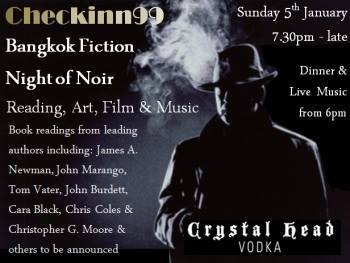
KC: Thank-you for agreeing to this interview on such short notice. I’m looking forward to being in the audience for the Night of Noir event to be held January 5th, 2014 at the Check Inn 99 in Bangkok. It should be fun. I found it interesting to learn that you spent some time in Thailand in the 1970s. What are your recollections of Thailand and Thai people from that time? How has the country changed and how have the people changed, if they have?

CB: I look forward to the Night of Noir and meeting you, too Kevin. To your question (and it really dates me) I lived in Bangkok for five months – way past my visa –  when the Viet Nam War was in full swing. After traveling from India and running short of cash a fellow traveler – also staying at the Atlanta Hotel – advised me to ‘Go to Patpong and look for a hostess job’. The second bar I tried, a large Chinese one, hired me on the spot as the only foreign hostess. Bangkok then had few high rises, no BTS and the tuk tuk’s were bicycle powered. Every morning on the Soi the monks came with their bowls for alms – that hasn’t changed – and I remember in the evening before work everyone putting offerings before the shrine at the next corner. Bangkok was such a quiet place – apart from the adrenalin charged GI’s on R+R  from battle duty in Viet Nam. One evening everyone on the Soi was excited – my Thai was very limited – something about a boat and offering. Finally the lady on the Soi from whom I bought my Som Tom and Sticky Rice every day explained with laughter and sign language to take a tuk tuk to Chao Praya. The river was full of lantern boats with candles for Loy Kratong. Amazing. People prayed before launching them into the water. I’ve never forgotten the glittering lighted lanterns floating by the thousands past the temples.  The warmth and gracefulness of the Thai people stayed with me and I’ve found it again.

KC: Those are wonderful recollections, Cara. They will help explain the attraction Thailand still holds today for many.  I’ve just finished reading my first Aimee Leduc Investigation novel – MURDER BELOW MONTPARNASEE. But it is your 13th in the series. And the 14th, MURDER IN PIGALLE is due to hit the book shops in March of 2014. Raymond Chandler wrote a total of 7 Philip Marlowe novels, I believe, back in another era and another time as far as publishing. Your goal is to write 20 Aimee Leduc Investigation novels. What do you like about writing a long series of novels involving Aimee. What difficulties, if any, does it pose writing a lengthy series?

CB: I never intended to write a series, much less set in Paris, I was thrilled to get published. That still feels incredible and I count myself lucky.  In Murder in the Marais, my first book, I was passionate to write about the story I’d heard from my friend’s mother who was a hidden Jewish girl during the German Occupation. Using that theme to explore the less known side of collaboration, the grey areas I needed a detective. She needed to be half-American because I couldn’t write as a French woman – I can’t even tie my scarf the right way – but Aimée in the detective mold made famous by Chandler is a lone wolf, neither fish nor fowl, an outsider yet part of a Paris I saw. Every book in the series – at its core – explores social issues, mores, traces of old colonialism and often the ethnic areas I stumble upon in Paris.  Paris has twenty arrondissements, each with a distinctive flavor and ambiance, which still excites me. I feel fortunate to have the chance to write stories of the places, the people who inhabit these particular slices of Paris and research the history that pervades the cobblestones. To keep a series fresh and yet familiar to readers who want to spend time again with the characters who must grow and change is a challenge I never envisioned but I love it.

KC: Your energy comes across in your writing and also here, today. A younger Aimee Leduc reminds me of the cool girl I would have been attracted to but afraid to ask to dance in High School. Aimee likes the bad boys and may have a tattoo or three. Tell me about Aimee’s romantic interests in the past and from which novel(s) readers can find them?

CB: In the first three books Aimée’s gotten involved in an on again off again affair with Yves, a French journalist who she keeps saying goodbye to on the boulevard Saint Germain or on Cairo street corners. She’s drawn to him like metal filings to a magnet – the traveling foreign correspondent, a bad boy and unavailable as her best friend Martine keeps telling her. In Murder on the Rue de Paradis, set in the tenth arrondissement their relationship takes a turn on the Canal St. Martin. I can’t reveal much but decisive and heart rending come to mind. In Murder in the Bastille, she’s treated by Guy, an eye surgeon with whom she develops a relationship in later books (Murder in Clichy, Murder in Montmartre). But he’s the type who wants her to settle down, become a doctor’s wife, give luncheons and live in Neuilly. Not Aimée’s style at all.  Aimée’s vowed never to become involved with a ‘Flic’ a French cop (she knows it’s a hard life and killer on relationships – her father was a former flic) but Melac, a detective in the elite Brigade Criminelle, homicide squad in Paris treats her as a suspect in Murder on the Ile Saint-Louis (where she lives) becomes more than she bargained for. Things get complicated from there on.  She’s got an air of je ne sais quoi, handles a Beretta, finds haute couture at the flea market – all the things I’ve experienced and some I’d like to. And along with it Aimée’s personal life – her boyfriends, the sense of belonging she’s always looking for which reflects the young Parisiennes I know who even though chic, slim and with cheekbones that could slice paper have relationship trouble.

MurderParadise

KC: Can you tell me when your love of Paris began? What is the attraction for you, if you can explain it to me?

CB: My Father was a Francophile – loved good food and wine and Jacques Tati movies. He sent me to a French school in California with old French nuns back in the day when they wore headgear like the Flying Nun. We learned – what I later found out to be – an archaic form of French. I had so many expectations and ideas of what France would be like that the first time I arrived in Paris it felt familiar yet different. Hitting Paris with a backpack to find the wafting scents of butter from the boulangerie,  the apricot sunset painting the roof tiles, the quai’s with bookstalls lining  the Seine, the narrow cobbled streets with women clattering on high heels sealed it for me. I fell in love with the City of Light, which has turned into a long running affair. I love the Parisians – cynical one minute, caring the next, passionate over everything and full of contradictions. That keeps me coming back hoping someday I’ll understand them…but mystery and elusiveness like any good affair keeps it alive.

KC: When was the last time you smoked a cigar?

CB: Last October in Paris outside a cafe – a Cuban Cohibo.

author-01

KC: That trumps my Wolf Brothers Crook after the 49ers Super Bowl XVI victory. And I doubt you’d be impressed that it was rum soaked, so let’s change the subject. Anais Nin has one of my favorite quotes on writing:  “We write to taste life twice, in the moment and in retrospect.” She and Henry Miller get a mention in Murder Below Montparnasse.  I like many of the quotes Henry has on writing. Feel free to comment on either of those two writers, if you’d like, but I’d like to know how you would complete the sentence: We write …

CB: We write to give a voice to those who aren’t heard.

PS That’s funny, Kevin I have that saying above my computer!

KC: I like your sentence. It ties right in with the best advice I ever got from Henry Miller. “Forget yourself.” How long will you be in Thailand? Where have you been and where will you go?

CB: I’m in Thailand with my family and two others – ten of us in total! We’re visiting my husband’s old schoolfriend who’s stationed in Bangkok with the UN World Food Program. We stayed with him in Bangkok, visited Siam Reap and Angkor Wat and Beang Mealea temples in Cambodia – amazing – then on to Koh Lanta for beach time and where they film a French reality show. We’ll be back in Bangkok for the Night of Noir.

KC: Tell me the best reason I should go back and read #1 in the Aimee Leduc Series, where it all began for you, MURDER IN THE MARAIS?

CB: If you like to start at the beginning of a series and meet Aimée Leduc, her dog  Miles Davis, a bichon frise who live in a frayed around the edges 17th century townhouse on the Ile Saint-Louis and René Friant, a dwarf, her partner it’s a good place to launch. As I mentioned above this story was inspired by the experiences of my friend’s mother’s – a young hidden Jewish girl during WWII. Her experiences haunted me for years after I heard them. The book took me three and a half years to write – of course I was learning and discovering the process of writing. I think in writing, I tried to make sense of that past time, that world at war on everyday people, the dichotomies and the choices between right and wrong. But what if right and wrong weren’t clear when one’s trying to survive and live to the next day? And what if that choice to survive comes back to haunt you fifty years later in the City of Light?

KC: You’ve made a good case for me. And those Miles Davis references in MURDER BELOW MONTPARNASSE take on a whole new context. Thank-you Cara Black, again, for doing this interview during the holiday season. See you at the Night of Noir. 

nightofnoirlineup

This interview can also be seen at Chiang Mai City News by clicking the banner below:

CityLife

Leave a comment

henrymillerlaughing

“Develop an interest in life as you see it; the people, things, literature, music – the world is so rich, simply throbbing with rich treasures, beautiful souls and interesting people. Forget yourself.”
― Henry Miller

Everything starts with an idea. I have long believed that. The thing is, it doesn’t even have to be an original idea. In the case of this blog the genesis came from the Henry Miller quote, above. I figured Henry was a lot smarter than me. Being around people smarter than I am has never bothered me. In my business I seek them out and hire them. With friendships it’s an added bonus.

Let’s take a look at Thailand Footprint’s first year, Miller style. You can click on most of the pictures to take you to the discussed post or do a search on the site, if you like.

PEOPLE:

malcolm-with-his-three-sonsHenry Miller would have liked Malcolm Gault-Williams, shown with his three sons. I am sure of that. Malcolm now lives up country near the Laos border, he is engaged in a life long project, LEGENDARY SURFERS. Malcolm was featured in the first ever interview at Thailand Footprint: EACH ONE HIS OWN DIRECTION EACH ONE HIS OWN WAY kon-lá tít kon-lá taang / คนละทิศคนละทาง

mook

Mook, the smiling waitress at the Soi 4 German restaurant in Pattaya whom I recounted the rather remarkable story of having my gold chain ripped off my neck by a 150 lb katoey as I drank a cup of coffee by the sea, only to get it back twenty minutes later, in the middle of a growing crowd, which included a few men in brown or Pattaya Policemen. A memorable evening where I explain why I love Thailand and learn that the word Mook in Thai means pearl.

milleronForgettingYourselfThere was the essay I wrote about Henry Miller called, Forget Yourself, What did Henry Miller mean? In that essay I pay tribute to an old friend, Dick, that passed away of a heart attack at age 76. I discuss that forgetting yourself is never easy but almost always worth it.

melissarayhotchilliTwo of the three most popular posts, traffic wise, had nothing to do with literature or music. It was all about Muay Thai. They both featured Muay Ying Champion Melissa Ray and the second one featured charismatic MAX Muay Thai Champion Hotchilli Ntg, who recently took home a $15,000 US purse in a four man tournament in which he finished second to a long time Champion.  A special thanks to Bangkok photographer, Eric Nelson for those two posts in particular.

Thom Locke

Author, T. (Thom) Hunt Locke

matt-carrell

Author, Matt Carrell

For me personally it was a great year as I was able to get to to know many of the Bangkok authors whose books I had read over the years. But equally rewarding was making contact with out of town authors face to face after I had featured them at Thailand Footprint. One thing we can be sure of, Henry Miller would have preferred face to face over Facebook every time. My author collection has grown and so has my friendship collection. There are a lot of benefits to following Henry’s advice. I have gotten to know American , Thom Hunt Locke, whom I did an interview called, Jim Thompson is Alive! A Sam Collins Mystery. Thom has a new novel out now, The Chiang Mai Chronicle, with a new protagonist, Declan Power. I was also able to meet British author, Matt Carrell author of Thai Kiss among others, whom I featured in an essay called, Nobody Loves Goliath, about Amazon.com. Both are interesting men with second careers other than authors and a passion for writing and living life to the fullest.

There are also three fellow bloggers who helped me out a lot in 2013 before I ever published a single post and have always been supportive. I thank Robert Carraher of The Dirty Lowdown,  a book and music review site, Voicu Minea Simamdan of http://www.Simandan.com – Writer, Archer, Travelor and Trevor Bide of http://www.engagingthailand.com ,  a site about Thailand culture, travel,  cooking and much more.

THINGS:

sheraton-grande-sukhumvit=coach

Some of the memorable things in 2013 included the couch at The Living Room located at the Sheraton on Sukhumvit 12 in Bangkok. It was from a couch that we watched Steve Cannon play another thing, the trumpet. I wrote an essay about earning the couch. Henry Miller earned the couch most days, I reckon. It is always a worthy goal. One I will shoot for more often in 2014.

sexy_uniform

Thai University uniforms are things. I didn’t write the popular satirical essay on the Thai University uniform, Kaewmala did. She of http://www.thaiwomantalks.com . She kindly allowed me to re-post it. Henry Miller would have been against University uniforms and in favor of short skirts, if I had to take a guess.

suan-rot-fai-1-300x225

Parks are some of my favorite things and I wrote about them in 2013 in The Parks of My Life. This is Suan Rot Fai, my favorite local park in Bangkok.

hemingways (1)

The fountain at Hemingway’s restaurant on Sukhumvit 14 is a thing and a perfect meeting place for friends. Owner Craig Bianchini and General Manager Damian Mackay have always been helpful and friendly about the restaurant named after the famous American writer, which is modeled after his Key West, Florida home.

fertility-shrineShrines are things and no one finds more interesting things than Jim Algie, one of many Footprint Makers featured on this blog. His book, Bizarre Thailand, is filled with things Henry Miller or anyone would find interesting.

Joe-D's-ToilettA toilette is a thing of necessity. Who could forget a personal favorite of mine in 2013, Gop’s interview with that prickly protagonist, Joe Dylan when he decided to go tubing at Koh Samui Health Resort and Spa after taking a slide on Zone ice after solving the White Flamingo caper down in Fun City? Quite a few of you, apparently. That’s why I am here, to remind you. The White Flamingo novel by James A. Newman has been charting regularly in the noir rankings at Amazon, no doubt due to Gop’s probing questions and the piles of publicity it created.

Soi Cowboy w Flamingo by Chris Coles

Two more of my favorite things in 2013, speaking of famous plastic birds.  This one is at the Check Inn 99 alongside the painting, Soi Cowboy by Chris Coles.

LITERATURE & MUSIC:

We’ve covered literature already this month with my list of favorite fiction and non-fiction for 2013. A revue of musical venues will be done in April. So I now turn to the first annual Thailand Footprint Makers of the Year Award. To the persons who have promoted literature and the arts of Thailand above and beyond the call of duty for the betterment of anyone with a dram of common sense and sense of appreciation. Drum roll please …

FOOTPRINT MAKERS OF THE YEAR FOR 2013 at Thailand Footprint

Let me tell you what these two men share in common, before I discuss them individually. Neither of them could have predicted 15 years ago what they are doing today. They get up most every day and get to work. They also have time for fun. They both love Bangkok and do not get back to their home countries that often. They both capture moments at every opportunity. They appreciate what the other one does. They have the same first name. They are Check Inn 99 owner, Chris Catto-Smith and artist and author of Navigating the Bangkok Noir, Chris Coles.

ChrisCattoSmithBB

2013 Footprint Maker of the Year – Chris Catto-Smith

Just some of the highlights for the former Royal Air Force jet fighter-pilot from Australia, Chris Catto-Smith in 2013: hosting Night of Noir; bringing The Rocky Horror Show to Bangkok; The Blues Brothers Show featuring Keith Nolan and company; Casablanca Night; Dean Barrett China Night and of course, Music of the Heart Band pretty much 7 nights a week. If you’ve never been to Check Inn 99 when you get to Bangkok, go. If you’ve been, you know. He could not do it without his wife, Mook who runs the show while raising their two children. Two full time jobs, done well.

Chris Coles

2013 Footprint Maker of the Year , Chris Coles (Photo Credit  Aroon Thaewchaturat)

American, Chris Coles is a former Ivy League guy, a former Hollywood big budget movie production manager. He has now been making a documentary on the Bangkok Night for over a decade one painting at a time. Author of Navigating the Bangkok Noir, Chris has spoken at the Foreign Correspondents Club of Bangkok, had art gallery showings in several different countries and can always be counted on to give an entertaining presentation highlighted by his own art and commentary. Chris is as comfortable in front of a camera as he is in front of a canvas. Google some of his YouTube interviews. You will be entertained. Chris Coles expressionist art works are impressive in volume and content. More impressive to me is that I have seen Chris Coles be encouraging to people in the arts time and again and to me personally.

His Soi Cowboy painting at Check Inn 99 is already iconic. Chris Catto-Smith received a big bucks offer for it and to his credit refused to sell it. It’s hard to imagine the place without it now. Like the plastic flamingos they all found a perfect home. Likewise, I cannot think of two better Footprint Makers to be singled out in 2013 at Thailand Footprint. Thank-you, gentlemen. Your gift certificates for a foot massage and dinner at Hemingway’s restaurant await you. Congratulations.

checkinn99bogie

Thanks for reading Thailand Footprint in 2013. May 2014 be the beginning of a beautiful year for everyone. With no civil war in Thailand, for everyone’s sake.

2 Comments

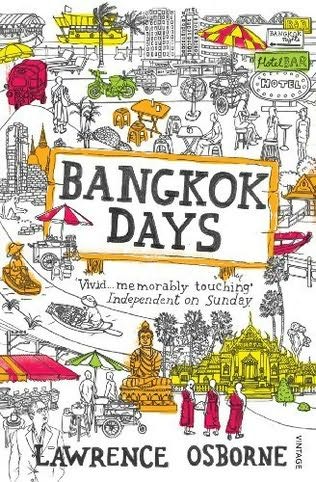
For the reader looking for eloquent writing, BANGKOK DAYS by Lawrence Osborne

Bangkok Days

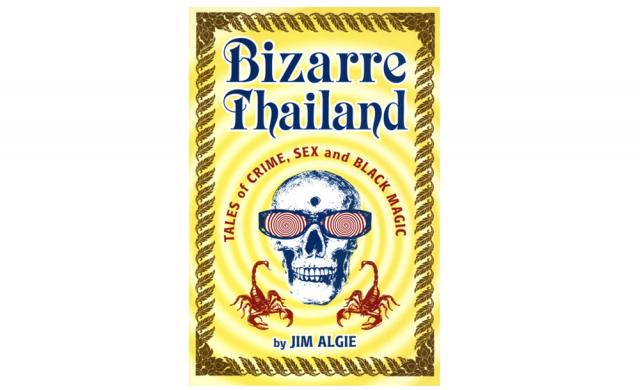
For the reader looking for the bizarre, BIZARRE THAILAND by Jim Algie

Bizarre-Thailand-Cover_383_0

For the reader looking for beautiful writing and photo-journalism, BURMESE LIGHT by Hans Kemp and Tom Vater

burmese-light-cover-front-large

For the reader looking for intelligent writing, FEAR AND LOATHING IN BANGKOK by Christopher G. Moore

Fear and Loathing in Bangkok2

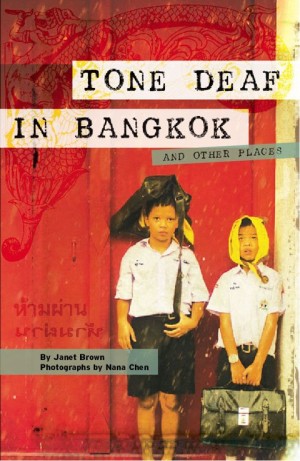
For the reader looking for honest writing from a female’s perspective, TONE DEAF IN BANGKOK by Janet Brown

Tone Deaf

For the reader looking for spiritual writing, THAI MEDITATIONS: An Introduction to Buddhism and Mindfulness by James Alexander

Thai Meditations

For the reader who just got off the plane at Suvarnabhumi Airport looking for survival writing, WATCHING THE THAIS by Tom Tuohy

Watching the Thais

There you have them. A non-fiction book for every member of your family. Happy Holidays from Thailand Footprint.

2 Comments

A good article from Time Magazine, which explains the role of Thailand’s military and their influence in Thai politics …

Leave a comment

Dean Barrett was one of the first two authors, living in Thailand, whose name I knew and could spell for you when I first arrived in the Land of Smiles in the early 21stCentury. He was not, however, one of the first ½ dozen “Bangkok authors” that I read. I can explain: let’s face it, Dean seemed like he was having too much fun in Bangkok to be a good writer. From the first time he was pointed out to me in a second story Nana Plaza establishment 10 years ago, to his five minute YouTube video: Dean Barrett’s Guide to Soi Cowboy, to a few years ago when he climbed into a boxing ring for a charity event, at a time when a lot of guys his age were playing shuffleboard in Florida and collecting their Social Security checks, Dean enjoys life. Not to mention that one of his two web sites, with the dominatrix on the Enter page, will trigger the porn blocking software on any computer in China.

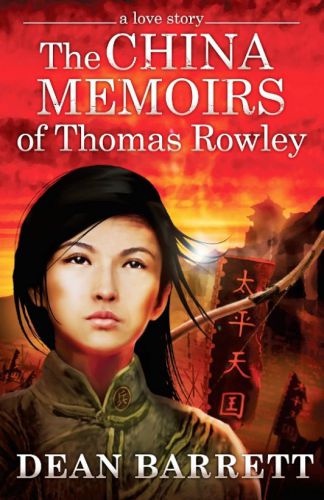
RowleyCover

The first time I saw Dean’s Star Ratings on Amazon, I was surprised how highly his books were rated. I’m not sure why I was surprised, I still hadn’t read any of his books. I suppose I wanted my authors pudgy, with pale skin, bottle rimmed glasses and home alone, writing 12 hours a day for my benefit. Stephen King, I knew, was a good writer, even if not a personal favorite. Dean Barrett, I still had my doubts. One should not judge a book by its cover but I made some judgments, based on the titles of Dean’s books. If Groucho Marx didn’t want to join any club that would have him as a member, I wasn’t sure that I wanted to allot my valuable reading time to any author that liked so many clubs. Hey, we all have our biases. I was wrong. Dean Barrett writes well.

Let’s take a look at some of the names and the star ratings of Dean’s books on Amazon:

Memoirs of a Bangkok Warrior – 18 reviews.  Average rating: 4.53

Kingdom of Make-Believe – Thirty-five reviews. Average rating: 4.55

Permanent Damage – Six reviews. Average rating: 4.66

Skytrain to Murder – Nine reviews. Average rating: 4.44

The Go Go Dancer who Stole My Viagra & other Poetic Tragedies of Thailand – Six reviews. Average rating: 4.66

Murder at the Horney Toad Bar & other Outrageous Tales of Thailand. One review. Rating: 5.0

Murder In China Red (set in NYC). Twelve reviews. Average rating: 4.91

I have since read three of Dean’s books from the above list and have enjoyed them all. I also like his poetry. Keep in mind, Dean Barrett is old school. These reviews are real reviews, written by real people who actually took the time to read the book they reviewed.

There are other aspects about Dean’s writing not as widely known as, say, his YouTube video. Dean was a professional writer in New York City for many years as a librettist and lyricist. His credentials are too long to mention here. I have a theory about talent and self-deprecation: only the talented are good at it. Dean Barrett is good at self-deprecating humor. He is also a first class public speaker. If you have an opportunity to hear him speak about literature, go. He is well read, well-traveled, erudite, honest and humble. He’s John Grisham with a more interesting personal life and a few less books sold than John.

Another lessor known aspect to Dean’s writing career are his historical fiction books set in China. His talent coupled with his background as a Chinese linguist with the Army Security Agency during the Vietnam War made his China novels a fun discovery. The first Barrett novel I ever read in the Chinese historical fiction genre was, Hangman’s Point. And, in case you are wondering, sixteen Amazon reviews. Average rating: 4.93. As James A. Newman once pointed out, Dean’s work has been studied in libraries and read in bars. Hangman’s Point is a great, 533 pages in hardback edition, historical fiction novel, which will be read 100 years from now, probably in both.

Dean’s latest book is one I read recently: THE CHINA MEMOIRS OF THOMAS ROWLEY. (Village East Books. New York 2013). It is unlike any previous Dean Barrett fiction I have ever read. It is a historical fiction, love story, with plenty of erotica. I’ve never been a particular fan of reading erotica fiction, since I stopped reading, The Penthouse Letters thirty-five years ago. Some of the erotica scenes I enjoyed more than others. Set in 19thCentury China and finishing in early 20th Century New York City – 1922. It is a story that takes place during a tumultuous period in China’s history – the Taiping Rebellion. Women warriors were common, known as “the silken armies.” I always enjoy the historical and literary aspects of Dean’s novels, which pay close attention to detail. The love story was fascinating in how it evolved. Dean also has a knack for writing female fight scenes better than any author I can recall, perhaps because he finds a way to have women fighting. Why not? It was realistic and well written. The ending was believable and satisfying. There were no loose ends. If you want to try an outside the box Dean Barrett novel, read: The China Memoirs of Thomas Rowley.

Dean Barrett writes mysteries, among other novels. But he is not mysterious. He is as straight a shooter as you will find. You may not like what he tells you, but you can be sure he will tell you the truth, according to Dean. Be prepared.

Author Dean Barrett

Dean Barrett, author of The China Memoirs of Thomas Rowley and many others

 If you are in the area, Dean Barrett will be giving a breakfast talk this coming Sunday, December 8th, on THE CHINA MEMOIRS OF THOMAS ROWLEY at Tavern by the Sea, Amari Orchard Pattaya, 240 Moo 5, Pattaya Naklua Rd. Bang Lamung, Chonburi (Pattaya) 20150. Breakfast starts at 9:30 a.m. Dean Speaks at 10:30 a.m. For more details contact Dean via his Facebook site or atwww.deanbarrettmystery.com    

This author profile was originally published in the Chiang Mai City News and may be viewed there by clicking the banner below:

CityLife

Leave a comment