Thailand Footprint: The People, Things, Literature, and Music of Thailand and the Region

Archive for ‘April, 2014’

Spirit House


Last week I wrote an essay titled in part, WHAT IS A WRITER? If you had to choose a picture of someone to put next to the definition of writer in a dictionary one choice could very well be, Stirling Silliphant, the Oscar award winning writer for the screenplay, IN THE HEAT OF THE NIGHT. Stirling was, in a word, prolific.

In television he wrote for shows from The Mickey Mouse Club, Alfred Hitchcock Presents, Route 66 and The Naked City to name just some. He worked with dozens of Hollywood legends including Bruce Lee.
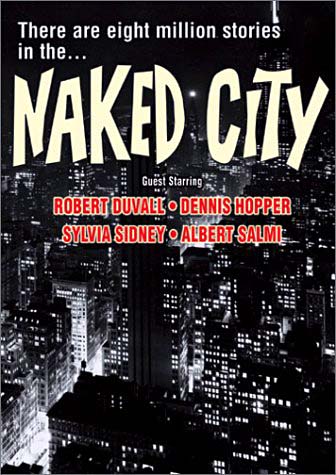
 

Naked_city_(1958)


Stirling was also the creator of LONGSTREET, which I remember watching as a kid. It was unusual in that it featured a blind detective played by James Franciscus.

longstreet1


His movie credits are equally impressive.My favorite Hollywood story about Stirling was when he was the screen writer on Route 66. They were shooting in San Antonio, Texas and the producers told Stirling if he could come up with another episode set in San Antonio, they could save $100,000 instead of returning the whole crew back to Dallas, Texas. In short order – hours that never reached 3 figures – Stirling wrote a new episode of Route 66. They flew in the guest star, shot the episode where they were and saved a huge sum of money, at the time, in the process. Stirling to the rescue.

Route 66

Stirling Silliphant left large footprints wherever he lived and he chose to live in Bangkok, Thailand for the Third Act of his life. A quote by Stirling Silliphant is featured in one of my favorite posts, NEVER GO TO THAILAND … And The Reasons I love It. The quote comes from the excellent book by Jerry Hopkins featuring legendary Bangkok expatriates titled BANGKOK BABYLON. It’s a great quote and it is worth repeating here:

I came to Thailand to die. I needed to be surprised. I wanted to be shocked. Bangkok is unpredictable and it delivers if you give it a chance. Even the small adventures are memorable. – Stirling Silliphant   
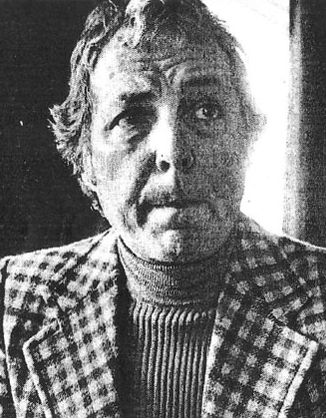
SilliphantStirling Silliphant – Born January 16th 1918 Died April 26th 1996

Stirling did die in Thailand 18 years ago today of prostate cancer. There are many things I love about Thailand and Thai people. One of them is their beliefs about death and spirits. It is not my desire to make an argument for or against those beliefs, I choose only to celebrate them. My own personal beliefs are that Stirling Silliphant had a spirit and it is plainly evident to me that his spirit lives on.

It got me thinking about what kind of Spirit House Stirling should have? He earned a classy one if my opinion matters, like the Chris Coles image of a Spirit House above. In memory of the life of this talented writer, who set out to die in Bangkok and lived an extraordinary life for 78 years before he did, Thailand Footprint celebrates the spirit of Stirling Silliphant on the 18th anniversary of his death. It occurred at a Bangkok hospital. Everyone dies but not everyone lives like Stirling did.

So today I am going to imagine some things that might be useful to place in a Spirit House custom built for Stirling.

Whether a Spirit House is seen as containing the actual spirit of a loved one or as a nook for honoring the still-fresh memories of the family is just a matter of vantage point. – Alasdair McLeod, Bangkok writer, photographer and videographer

These are some of the things I would place in my imaginary Spirit House for the spirit of Stirling Silliphant to enjoy for eternity:

1. A miniature Smith Corona typewriter and a mini-pallet of typing paper.

Smith

2. A mini stretch limousine to represent his Hollywood days, with a fully stocked mini bar in the back.

Limo

3. A small notepad and a good pen. One that can handle the heat of Bangkok City.

4. A miniature statue of Oscar. Why not?

Oscar Statue_300

5. A memento of the Little Oscar mobile, a car driven by a dwarf named Little Oscar, which Stirling must have seen often in his Southern California days in the 1960s, as I did growing up there during that time.

220px-OurDog

6. His own personal 7 11 Convenience store because I want eternity to be convenient for Stirling’s spirit.
images


7. A bottle of good drinking water and a Coca Cola placed out front every day. It’s important to keep hydrated even for spirits. None of that red Fanta stuff for Stirling.

8. A good neighborhood bar for Stirling to meet up at. Something likes Joe Jost found in Long Beach, California that attracted working class people and celebrities alike.
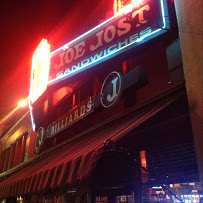
Joe's Jost

9. A mini tuk tuk for the shorter trips.

tuk_tuk

10. Figurines of Thai ladies from all classes, upper, middle and lower. This will create a little tension from time to time and perhaps some conflict, which is good for any writer living forever in the Big Weird.

carving

11. A mini pool table. I don’t know if he played pool but I bet he had friends that did and the spirits of Stirling’s friends will no doubt drop in from time to time.

mini-pool-table-game

12. A box of matches. The good kind with the wooden sticks to represent the creative flame of Stirling that still burns on.

wooden-20match-20sticks_10468508_250x250

13. A good book to read, which he couldn’t have read before, to remind him a bit of The Naked City on those hot Bangkok nights.

For The Dead

So that’s my baker’s dozen items and thoughts on the life and spirit of Bangkok expatriate, Stirling Silliphant. If you have something you’d like to add to Stirling’s House, feel free to drop a comment here. Space is still available. And eternity is a long time.

flame


This post also appears at Chiang Mai City News and may be found there by clicking the banner below:

CityLife


2 Comments

Anzac Day


In two days a special day at a special place: Anzac Dusk Music Salute. I fell in love with the country of Australia on my first visit in 1986. I’ve visited there a total of six times now. The national spirit of mate-ship is not an advertising campaign. It is real. As is the Anzac Spirit. If you are an Australian or New Zealander living in Bangkok and would like to pay your respects to the fallen, you will not find a better place to do so than, Check Inn 99. And if you are just an Australian or Kiwi at heart, join in too.

I don’t publish a lot of videos on this blog. Conventional wisdom says, “Don’t.” Sometimes you have to say, the hell with conventional wisdom. The above video was filmed at the 2013 Anzac Day at Check Inn 99. I also recommend the YouTube video of Chris Catto-Smith singing, “And the Band Played Waltzing Mathilda.” This post is out of respect for the fallen of one of the historically great allies of the USA. The fighting men and women of New Zealand and Australia. And to all the fallen of all colors and countries.


1 Comment

JDMotorCy

The Commonwealth of Nations have been well represented at Thailand Footprint with authors from the United Kingdom, Canada and Australia written about and discussed here often. Author, John Daysh from New Zealand becomes the first Kiwi to be interviewed at Thailand Footprint but he will not be the last. John is a sixth generation New Zealander through his maternal blood lines and the Great, Great, Great, Grandson of John Daysh whom arrived in New Zealand in 1841 from Hamshire, England. Just two years after the Treaty of Waitangi which granted Britain dual sovereignty (with the indigenous Maori) over New Zealand. He is a proud New Zealander who knows Thailand well. The setting for his backpacker/crime/love story novel, Cut Out The Middleman is southern Thailand and London, based, in part, on John’s own exploration and extensive travels. Thailand Footprint is pleased to have John Daysh here today checking in from God’s country on Easter Sunday:

TF: Why is New Zealand known as The God Zone and how is it different than the zones found in Bangkok?  

JDCourse

JD: I guess it comes from a mix of arrogance, honesty, pride and naivety.  NZ is a lovely country to live in.  Stunningly beautiful and wonderfully uncomplicated.  But it is also incredibly detached and insular.  That is where it is similar to Bangkok; or how Thais are similar to Kiwis.  The vast majority of Kiwis wouldn’t be able to determine the difference between a Korean, a Thai, a Chinese or a Japanese.  Same as most Thais can’t tell the cultural difference between an American, a Swede, an Aussie or a German.  New Zealand has always been geographically isolated from the rest of the world and that has insulated the minds of many in that there is a sense that we are untouched or unsullied by the problems that face the rest of the world.  It is as if our clean, green, unpolluted environment mirrors our mentality.    I remember coming home for a holiday when I was living in China and the lead story on the 6 o’clock news was about how a postie (mail delivery dude on a bicycle) was refusing to deliver mail to a particular street because he felt intimidated by the dogs barking at him from behind their fences (a legal requirement for dog owners).  I didn’t know whether to be annoyed, amused or envious.  On the most popular news website in New Zealand, World News sits below National News, Sports News, Weather, Entertainment News and What’s on TV.  Ignorance is bliss. And it is.  Living in New Zealand has been compared to living in England in the 1950’s.  It is a fair comparison outside the big cities.  And I guess that is what I love and hate about living here.  Beautifully simple but agonizingly unsurprising. It is the perfect place to raise a family.

TF: What books influenced you growing up?

JD: I read everything Hemingway wrote by the time I was fourteen.  I had read everything Stephen King had written by the time I was fifteen and I have read every book of his since.  Hemingway’s stoicism and concise style resonated strongly with me and King’s wild imagination and amazing characterisation captured me completely.  From there I moved onto Kerouac and the Beat Generation and then Kesey introduced me to a mode of critical thought that sent me towards dystopian literature.  George Orwell and Aldous Huxley became my new champions.  That all happened before I went on to study literature at university and all of those writers still influence me today in the way I see the world and interact with it.

TF: Is there a book out there or laying around your home that you’ve been meaning to read but haven’t gotten around to it yet?

JD: Christopher G. Moore’s ‘The Marriage Tree’.  Reading is such a guilty pleasure at times.  Mostly I am reading submissions or editing novels (or reading articles on the bloody internet) and it doesn’t leave a whole lot of time for reading for pleasure.  Maybe tonight.

TF:Complete this sentence: Amazon.com is …

JD: A vast jungle full of beauty, adventure, danger, and fecal matter.

TF: Make the case for fiction over non-fiction in 100 words or less.

JD: Fiction is an escape and it is limitless but it is more real than non-fiction.  Fiction explores experience and tells stories and opens doors to the imagination and infinite creativity.  Fiction exposes the reality of individuals in boundless form.  It delves and depicts and infuses our lives with the truths of others.  Fiction is a gift from the storyteller to the reader.  Fiction is more honest than non-fiction.

TF: Tell our readers about your last novel, Cut Out the Middleman? 

COTMMFinal


JD: It is the story of a disillusioned traveler who ‘finds’ himself in Thailand and ends up running a beach bar on a remote island where he gets caught up in the drug trade.  He tries to navigate a safe path amongst psychopaths, drug addicts, whores and hippies in attempt to heal himself and find love.

TF: Please tell me your three favorite dead authors? Or if you are feeling confident you can throw some live ones into the mix?

JD: Ernest Hemingway, George Orwell, Aldous Huxley.  James A. Newman, Stephen King, James Austin Farrell.

TF: Tell me about your publishing house. What excites you about it? What about it is a drag? 

SPP

JD: Spanking Pulp Press is something that James Newman and I cobbled together out of our frustration with the world of publishing and our love of pulp fiction.  Our primary aim is to support promising writers and bring pulp fiction back into the mainstream.  The excitement comes firstly from being able to work with James Newman who I consider to be one of the finest gentlemen I’ve met and one of the finest literary talents around.  The man is a pulp genius. Secondly, it gives me the chance to work with some fantastic writers and also hone my editing skills, and hopefully make me a better writer.  The opportunity to be James’ editor and co-publisher was just too good to pass up.  Then I got to work with one of my heroes, Phillip Wiley, and James Austin Farrell who I truly believe will achieve literary greatness in time.  Plus hanging out with Thailand’s most famous private eye, Warren Olson, has been amazing as we work on a set of four novels and his upcoming memoir, The Private Detective.  Then from old hands to young bucks; Simon Palmer is our latest signing and he is going to turn some heads for sure.

What is a drag?  Only having so many hours in a day.  We have been very lucky in that we had an influx of quality submissions quite early on.  But that means that some good books and writers have to wait while James and I take it one book at a time to ensure we are putting out the best books we can.  My biggest stress is knowing that some damn fine writers are waiting on me to get to their book.  I wish time would drag so I could get more done.

TF: What does the The Year of the Horse have in store for you?

JD: Editing, editing, editing.  We aim to have another ten books out this year.  Plus I’m trying to finish a novel I’ve be in and out of over the past few years.  “Like a Moth to a Flame” will be ready by the time I hit Bangkok in December/January for a book signing and the next Bangkok Night of Noir at the Check Inn 99.  Fingers crossed.

TF: Thanks, John. I look forward to that happening. In the meantime, good luck on lowering that golf handicap of yours between books. 


CityLife


This interview may also be seen at Chiang Mai City News by clicking the above banner.


Leave a comment

Be brief, be positive. Don’t be boring. Good advice when speaking about people and things …

Leave a comment

I recently added this to my Audible.com library and hope to report on it later this year. This shows the original cover and art work of Henry Miller’s, Tropic of Cancer. Note the bottom warning: Not To Be Imported Into Great Britain Or U.S.A. – How times change in sixty years.

bannedbookshop's avatarBanned Book Shop

Tropic of Cancer is a novel by Henry Miller that has been described as “notorious for its candid sexuality” and as responsible for the “free speech that we now take for granted in literature”. It was first published in 1934 by the Obelisk Press in Paris, France, but this edition was banned in the United States. Its publication in 1961 in the U.S. by Grove Press led to obscenity trials that tested American laws on pornography in the early 1960s. In 1964, the U.S. Supreme Court declared the book non-obscene. It is widely regarded as an important masterpiece of 20th-century literature.

Not for the feint of heart…but a must have for any avid banned books collector, and absolute stomach turning classic!

Pick it up here (NSFW)

TropicOfCancer

View original post

4 Comments

BEING_THERE-5

A year ago, I wrote my first essay at Thailand Footprint. You can read it here, if you like: I AM NOT A WRITER and Why the World Needs Them.

Since that time a fair number of people have told me, in not so enthusiastic tones, that there was a possibility I was wrong. Chris Coles was the first, before my blog ever appeared, “Maybe you’re a writer?” The artist said.

Months later I was at the Check Inn 99 for a rehearsal of THE ROCKY HORROR SHOW. At that rehearsal, Kevin Wood the singer, songwriter and musician sat down next to me and we were able to have a rare face to face conversation. As opposed to the long distance ones we’ve had many times while Ted Lewand and he played their tunes following the Sunday Jazz sessions. Some people call it heckling. I think conversation sounds more polite. “Are you a writer?” Kevin Wood asked me as we sat on one of the green couches near an artificial tree illuminated with tiny lights. “No.” I replied. Then I qualified it. “I could tell you I am a writer. But what you do, people cannot fake.” What I meant by that is, telling someone you are a writer is the easiest thing in the world. You could also tell people you are a musician. But eventually, people are going to expect you to play a song from time to time. And if you’re not very good at playing the guitar or covering Bob Marley’s, No Woman No Cry people will figure that out, real quick. Kevin and Ted are very good at what they do. They are professionals. They are paid, regularly, to sing and play instruments and have been for a long time. The audience can tell that they are professionals, quickly.

Yesterday I read a wonderful interview about the books and life of a superb writer who lives in Bangkok, whom I have never had the benefit of meeting. Just as I like to read a good book review done by a professional I also enjoy reading interviews about professional writers done by professional interviewers. I’m always hoping I might learn something. I learned a number of things in this interview, which you can read here: LAWRENCE OSBORNE: ‘Acclaim. I Don’t Notice It Much.’ 

There are many things I enjoyed about the interview. It is entertaining, insightful, witty, revealing and with just the right amounts of brutal honesty and self-deprecation. Toward the end of the interview Lawrence makes the following declaration: “Very few writers live here, of course. But that’s quite all right with me.” There are, I think, multiple ways those two sentences can be interpreted. I chose to think that he is quite accurate. When you compare Bangkok to New York City, I would wager far more writers live there and certainly write on a more varied array of themes than the writers do in Bangkok. One criticism I have seen of the expat writers in Bangkok is that you wouldn’t have two dozen writers in New York City living within walking distance of Times Square and having them all write about life in Times Square. That criticism seems valid to me.  

The interview made my mind ponder who Lawrence Osborne would consider to be among those “very few writers” who live here? There are clues, if you know where to look. John Burdett would certainly be one. He’s published by Knopf and has had multiple printings of hardcover books numbering 75,000 and up. John lives here a lot of the time. Stephen Leather would be another writer who would qualify. I have heard the number 2 million books sold bandied about when it comes to Stephen’s back list and I have no reason to doubt it. If anything, it’s probably a much higher number now. I have read a few Stephen Leather books. He’s a fine writer. I particularly liked, The Chinaman and The Bombmaker. The author of A Killing Smile and the Vincent Calvino series would be another to make the list because Lawrence stated that in a different interview he did at The Bangkok Post, just over one year ago when he said, “Christopher G. Moore is a good writer”. Jerry Hopkins might be another that would make Osborne’s list. It’s doubtful Jerry’s propensity to be included among the bottom feeders of the world would be enough to dislodge him from the short list. Hopkins’ books have also sold in the millions – I’ve seen one estimate of 6 million total. From a journalism standpoint, Lawrence and Jerry have both done well in picking the high hanging fruit. There are, no doubt, potentially many other writers that would make Osborne’s list, which I am unaware of because of the limited scope of my literary education.

As good a writer as I think Lawrence Osborne is (and I think he is very good) I have some biases toward him. At my school the students who had Lawrence typed in on their birth certificate went by, Larry. He’s a Harvard guy. I am a product of the California State University system, as is Timothy Hallinan. Tim is another writer who, unquestionably, would make Osborne’s list, if he lived primarily in Bangkok but he doesn’t. Osborne is also a Brit and I’ve made it my life long quest to figure them out before I die.

It is to Lawrence whom I credit the theme for this blog post today: What is a writer? It’s a good question. It deserves contemplation and attempt at explanation.

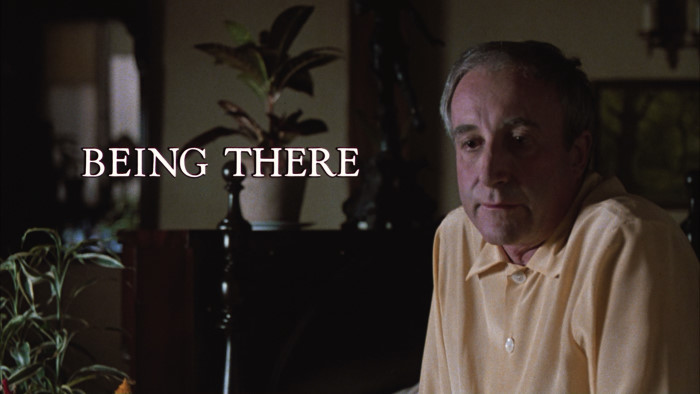
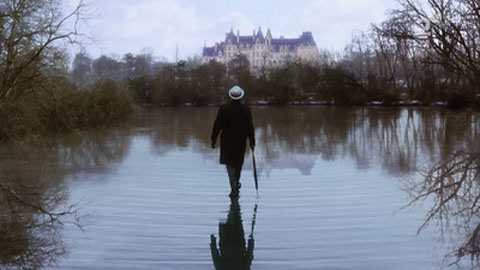
Being There

Here is the excellent reply from Lawrence Osborne in that interview with Rachael Cooke, found in the Sunday, April 13th edition of The Guardian, when he was asked why it took so long to find a publisher for his latest novel, The Forgiven:

Mostly, just that I was an outsider to the fiction world. Indeed, my American agent at the time urged me not to bother at all. In the end, I sent it myself to an editor I didn’t know late on a Friday night after a bottle of good but despair-ridden and lonely Chablis. A push of a button. The manuscript had been rejected by dozens of houses, even by editors I’d published books with. This was a last-chance gamble. He took it with him on the train home to New Jersey that night and somewhere in the darkened satanic mills of Newark or wherever he sent me a message saying that he was 30 pages in and that was enough. He offered for the book on Monday morning. – Lawrence Osborne

This process of rejection and acceptance, which Mr. Osborne describes so well, is missing among many of the writers of today. And that’s a shame. For them. In the age of self-publishing, Facebook author pages, fake book reviews and Twitter Follower purchases, one can become a writer in a day. That seems too quick, to me. It was the lifestyle of writers that I always found interesting and appealing to my sense of adventure and personal exploration. Start with Henry Miller. Add Jerry Hopkins. Stir in Christopher G. Moore, whether you like any of these guys books or not. For musical accompaniment I’ll take Timothy Hallinan who started his writing career as a songwriter for the band, BREAD before he wrote his Simeon Grist, Poke Rafferty and Junior Bender series. I include Lawrence Osborne on my list. All these men have led very interesting lives, even if they had never published a single word. Read about any of these men and you will read about rejection and acceptance, numerous times, in their lifetime as a writer.

PeterSellers

Just as, Chance the Gardener in Being There, likes to watch, I like to write. My business involves writing that pays well but isn’t very creative. My blogging is, at times, creative but doesn’t pay a dime. (Gop T-shirt sales notwithstanding). There is something to be said for the creative process. There is something to be said for creative people. There is much to be said in favor of the arts. That is one reason the very first blog posts made at Thailand Footprint were videos of Alfred Hitchcock on Happiness and John Cleese on Creativity.

Ted and Kevin

Not too many Sunday’s ago I was sitting with a group at Check Inn 99. We were doing what groups do there: drinking, talking, laughing and listening to live music. It was the 6:00 p.m. to 8:00 p.m. time slot occupied at the stage by Ted Lewand and Kevin Wood. Ted turns to Kevin as only Ted can and says, somewhat sarcastically, “It doesn’t get any better than this.” I thought it was perfect. Because I genuinely felt Ted was absolutely right. It made me enjoy a good evening even more. So much so, in fact, that Kevin Wood addressed us at the microphone. “How is the book club doing this evening?” He said. And then it occurred to me that everyone at my table had written more than one book, except me – I’ve not written a single one. They were, John Gartland the performance poet whom I featured in this blog this year, Collin Piprell one of the first two people to leave a complimentary comment on this blog, 364 days ago and the author of several books including one I reviewed early on, KICKING DOGS and another I reference in a post called The Parks of My Life. And James A. Newman author of the Joe Dylan series and short stories too numerous to mention. James has appeared on this blog often. I am an honorary member of, The Book Club. John, Collin and James are all writers, to me. More importantly, they are my friends. I consider myself lucky to know them as people and writers.

Today is the one year anniversary of Thailand Footprint. A blog. That makes me, to many people, a blogger. And that is okay. I waited until the end of this essay to mention my journey around the sun. I figure anyone who got this far has probably read my blog before. To those of you who have, I want to thank you all the more. Just under one year ago, I took the time to single out the authors, in particular, for all the things that I have learned from them. The learning continues. I thanked all the authors, “except for the assholes”. I’d like to amend that. I’d like to thank everyone. Period. Because everyone, authors, musicians, actors, photographers, poets, surfers, Muay Thai fighters, waitresses and even gardeners can be our teachers if we are open to learning. After all, who hasn’t been an asshole during their lifetime? Certainly, not me.

“In the garden, growth has it seasons. First comes spring and summer, but then we have fall and winter. And then we get spring and summer again.” Chance the Gardener

In the past 12 months I have been very fortunate about, being there. And to be here, now. Voltaire and Henry Miller were pretty smart guys. I will be publishing a book within the next six to nine months based, in part, on what I learned from those two men. The title has been decided. Colin Cotterill has already agreed to do the cover art and design. The book cover will be great. Feel free to judge the contents based on the cover. It will be, mostly, selected essays and interviews taken from this blog. In addition, there will be a lengthy chapter about the colorful history of Check Inn 99. 

When the book comes out, it should solidify my standing in, The Book Club, which meets irregularly at Check Inn 99 and Hemingway’s Bangkok. There are no illusions about it becoming a money-spinner. Will it make me a writer in the eyes of Lawrence Osborne? I doubt that it will and I believe that it shouldn’t. Will it make me a writer in the eyes of Kevin Wood? It might. If that happens, it doesn’t get any better than that.

tunnel


.

 This post also appears in the Chiang Mai City News and may be viewed by clicking the banner below:
CityLife

 .


10 Comments

There are certain writers in Thailand that if they were not writers they would make excellent fictional protagonists, because the real-life lives they lead would make for an interesting read. Joe Cummings is one such writer. As is our guest today, Tom Vater. There are many things I like about Tom Vater, the writer and the person. The latter has been known to drop off the grid from time to time, which no doubt helps the former. Tom has published three novels, THE DEVIL’S ROAD TO KATHMANDU, THE CAMBODIAN BOOK OF THE DEAD released by Crime Wave Press in Asia and Exhibit A world wide in 2013 and his latest, THE MAN WITH THE GOLDEN MIND set primarily in Laos, recently released by Exhibit A in the USA and UK as well as being available in Asia and online. Tom returned from the legendary setting of Mandalay in February of this year where he participated in the Irrawaddy Literary Festival and met at least one legend while there, Aung San Suu Kyi.

Tom Vater is the co-owner of Crime Wave Press, along with Hans Kemp. Crime Wave Press is a Hong Kong based English language crime fiction imprint.

In addition to his fictional works Tom has published several non-fiction books, including the critically acclaimed Sacred Skin  and the more recent Burmese Light with photographer Hans Kemp. Tom has written for The Wall Street Journal, The Guardian, The Daily Telegraph, The South China Morning Post and Penthouse to name just some.

Tom is also the co-author of several documentary screenplays, most notably The Most Secret Place on Earth, a feature on the CIA’s covert war in 1960s Laos, which you will recognize in The Man with the Golden Mind. Thailand Footprint is pleased to have Tom Vater here today:

TomVater2S


TF: What makes South East Asia a good setting for a crime novel? 

TV: Given the culture of impunity that reigns even more freely in Asia than where I come from, or at least in a more visible manner, the amount of salacious material is never-ending. Open the papers and stories too hair-raising to be made up tumble from the pages every single day. SE Asia is a treasure trove of human divinity and depravity and as the weather is always good, a lot of it spills out into the open to be scooped up by writers, journalists or voyeurs. That said, almost anywhere is good to set a crime novel. I just happen to know this corner of the world a little.

TF: What book(s) or music influenced you growing up?

TV: Treasure Island was a big book for me. Long John Silver was and is one of my great literary heroes, a bad man, but not a man without compassion.  My teenage years were taken up by Jack London, Edgar Allen Poe, William Golding, George Orwell and H.P. Lovecraft. Then I discovered the Beats – Kerouac, Bowles, Burroughs and Bukowski – and the Hardboiled Noirs –Chandler, Himes, Goodis, Thompson, Highsmith and Ross MacDonald… and everything changed.

But I also took an early liking to literary garbage – I obsessively read Enid Blyton’s adventure novels and still suffer from the fall-out.

When I was 14, I saw Elvin Jones play a show in my home town. After the first song they had to nail his drum kit to the stage. That always stayed with me.

But I didn’t get into Jazz until I was older. From the age of 8 or so, I listened to RocknRoll, and from 15, I tried to play in bands. I first got into Black Sabbath and Deep Purple and then advanced (or regressed, depending on your point of view) to Elvis, Jerry Lee Lewis, The Rolling Stones, The Velvet Underground, the MC5, The Stooges, Black Flag, The Cramps and CAN.

I always liked the monotony and repetitiveness of  RocknRoll. Three minutes of high energy. Very different form of expression from fiction of course, but I somehow have an affinity for both.

TF: What’s the last record or book you can remember listening to or reading?

TV: I listened to Get Yer Ya-Ya’s Out by The Rolling Stones and Rubber Legs by The Stooges today. Also really into British band Fat White Family (http://noisey.vice.com/en_uk/blog/fat-white-family-touch-the-leather-music-video-premiere) at present. They got the spirit. Best bands I have seen in Bangkok recently are Degaruda, The Sangsom Massacre and Dead Town Trash.

I am reading The White Flamingo by James Newman, a sleazy slice of gutter-style Hardboiled with great Beat-style stream of un-consciousness writing.

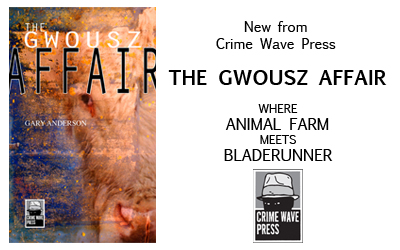
My other favorite recent read is The Gwousz Affair by Gary Anderson, a Sci Fi Noir novel Crime Wave Press has just put out. It’s set in 2042 and humans have made cows intelligent, the planet is run by bovines, the US government has moved to Nebraska, all humans are vegetarians and inter-species sex is permissible. Enter a hardboiled PI who is to find the killer of the female offspring of the bovine president. Think Animal Farm getting into bed with The Big Sleep and Bladerunner.

Gwouszadd


TF: Is there a book out there or laying around your home that you’ve been meaning to read but haven’t gotten around to it yet?

TV: There are stacks of those lying around. I’ve had a David Goodis and a Massimo Carlotto sitting on my shelf for months – no time to take a look yet. On the next long flight.

TF: Complete this sentence: Amazon.com is …

TV:…symptomatic of the way business has gone in the early 21st century.

TF: Make the case for fiction over non-fiction in 100 words or less.

TV: It’s often easier for me to get at a larger truth in fiction. And the process of writing fiction is the most beautifully obsessive skill I have. I basically move in with my characters and every day I start writing I find that they have done stuff during the night I didn’t ask them to do. In a way, the writing process becomes like an intense love affair, but with a whole bunch of people craving my attention while they slowly reveal themselves to me emotionally, physically and intellectually. When this happens, I am very, very happy.

TF: Tell our readers about your latest crime novel, The Man with the Golden Mind and why they should read it?

TV: Julia Rendel asks Detective Maier, whom I introduced in last year’s The Cambodian Book of the Dead, to investigate the twenty-five year old murder of her father, an East German cultural attaché who was killed near a fabled CIA airbase in central Laos in 1976. But before the detective can set off, his client is kidnapped right out of his arms. Maier follows Julia’s trail to the Laotian capital Vientiane, where he learns different parties, including his missing client are searching for a legendary CIA file crammed with Cold War secrets. But the real prize is the file’s author, a man codenamed Weltmeister, a former US and Vietnamese spy and assassin no one has seen for a quarter century.

Almost a decade ago, I co-wrote the screenplay to The Most Secret Place on Earth (http://www.youtube.com/watch?v=i8cIki7awN8) a feature documentary directed by my brother Marc Eberle, about the CIA in Laos. Between 1965 and 1973, the US secret service ran a clandestine war against the Laotian communists, secretly recruiting 30.000 ethnic minority mercenaries, many of whom died in battle. The agency partly financed its efforts with drugs and eventually bombed the country to bits.

During the making of the film, I met some of the people involved in that conflict – CIA case officers, Air America pilots, USAid staff, Hmong rebels, Thai mercenaries, journalists and academics and I always wanted to write a fictionalized account of what we felt was a war crime committed by the US that had almost been forgotten.

Oh, and in The Man with the Golden Mind, the most infamous former US Foreign Secretary makes a cameo appearance. Who’d want to miss that? As I said, in fiction it’s sometimes easier to go after larger truths than in non-fiction.

TheManWithTheGoldenMindS

TF: Please tell me your three favorite dead authors? Or if you are feeling confident you can throw some live ones into the mix?

TV: Dead ones: Joseph Conrad, William Burroughs, Jim Thompson

Live ones: Katherine Dunne, Philip Kerr, Gary Anderson

TF: Tell me about your publishing house. What are the challenges of a boutique publisher in an Amazon age? 

TV: I run Crime Wave Press (www.crimewavepress.com) with Hans Kemp and we have been publishing crime fiction, in eBook and POD format, for a year and a half now. We started off with Asian based titles, but soon noticed that we couldn’t find enough good manuscripts in the region to publish the number of books we need to make the enterprise worthwhile. That said, our Father Ananda Mysteries by Nick Wilgus, a series of clerical thrillers featuring a cop turned Buddhist monk in Thailand, are doing quite well, as does our international thriller Gaijin Cowgirl by Jame DiBiasio, and my first novel, republished by CWP, The Devil’s Road to Kathmandu, is selling ok and is also available in Spanish.

Now that we read submissions from all over the world, we are releasing titles more frequently, and – hallo writers out there – we are reading manuscripts at present – so get in touch.

crimewave (1)s

Any subgenre of crime fiction will be considered, novels and novellas, but no True Crime, no short stories and no children’s books or graphic novels.

Crime Wave Press will be represented at both the London and Frankfurt book fair this year and we hope to make more international rights sales.

TF: What does The Year of the Horse have in store for you?

TV: I had a good start with Crime Wave Press invited to the Irrawaddy Literary Festival in Mandalay in February and The Man with the Golden Mind coming out a couple of weeks ago.

In the summer, American photographer Kraig Lieb will publish Cambodia: A Journey Through the Land of the Khmer, for which I wrote the text.

The next two Crime Wave Press titles, Death Sentences by Michael Zemecki, a personal (and fictional) account of a white supremacist on death row in the US – a kind of Ed Bunker meets Charles Bukowski at death’s door – and the first Detective Le Fanu Adventure The Madras Miasma by Brian Stoddart, a gripping crime novel set in 1920s British India, are in the pipeline.


VaterSnookS

Tom Vater on stage with Laura J. Snook in Cambodia

I’ll travel. I’ll play some music. I’ll write another novel.

Thanks very much, Kevin, for having me.

TF: Thank-you, Tom. 


CityLife

This interview also ran at Chiang Mai City News and may be found there by clicking the above banner


2 Comments

Slim


One week from today, Thailand Footprint will be one year old. That is a big deal to at least one person – me. I’ll recap the year a bit and publish one of the first things I wrote way back then – 365 days ago. I’ll tell you what I’ve learned and what I know. Whether you read it or not is, of course, always up to you. Thanks for stopping by as often as you have.

An interview with Tom Vater will be the last interview in this inaugural year. As I’ve said before, when Tom Vater talks, I listen. In this case I think you’ll want to read what he has to say. Look for that interview this coming Thursday.

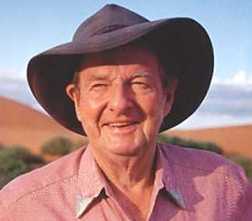
Until then, here is a little ditty by Slim Dusty, a singer-songwriter from one of my top three favorite countries, Australia. Slim is no longer with us, reminding us we only get to look forward and back for so long.

Leave a comment

MWF Ang_portrait (1)s

Thailand Footprint is pleased to welcome Angela Savage to our Fast Track interview. Angela has strong ties to Thailand that go back almost thirty years. Like inaugural Fast Track interviewee, Andrew Nette, she resides in Melbourne, Australia. That’s not a coincidence as Angela and Andrew are partners and they chose The Lucky Country in which to raise their daughter. Angela has three novels set in Thailand in the Jayne Keeney P.I. series. They are: BEHIND THE NIGHT BAZAAR, set in Chiang Mai, THE HALF CHILD, set in Pattaya and THE DYING BEACH set in Krabi. She is a writer with a social conscience. You will get a good crime story and at least one message in an Angela Savage novel. Here is how Andrew Nette described Angela’s work ethic:

“She works incredibly hard to give readers an insight into what it’s like to live in Thailand, for foreigners and Thais, with all the blood, sweat, tears, beauty and – as is usually the case for expatriates – embarrassing social faux pas that this can entail.”

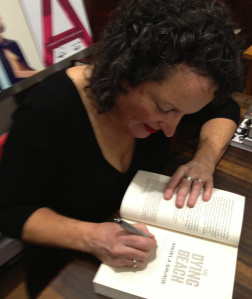
angela-signing_ellie-marney_crop

Angela Savage at the book launch for The Dying Beach

Welcome, Angela Savage:

TF: Is Australia still The Lucky Country and if so, why?

AS: The simple answer is yes – provided you’re not Indigenous, homeless or an asylum seeker. Among the non-Indigenous population, Australia’s health and wellbeing indicators are up there with the best of them; life expectancy is among the highest in the world. We’ve weathered the GFC better than most – all of which begs the question, why are we so damn mean? Our current treatment of asylum seekers is shameful. Peace and prosperity appear to have made Australians paranoid rather than comfortable, a situation not helped by the absence of visionary political leadership.

End of rant.

TF:  What book(s) or music influenced you growing up?

AS: My grandfather, nicknamed ‘Banjo Savage’, worked as a musician on cruise ships in the 1920s, and taught me to sing what my mother referred to as ‘drunks’ songs’ – ballads about passion, pain and death – when I was still a toddler. Mum attempted to counter these early influences with liturgical music, but somehow Kenny Rogers managed to slip through the cracks, bringing more songs about passion, pain and death. The ideal musical education for an aspiring crime writer, really.

TF: What’s the last record or book you can remember listening to or reading?

Among my most memorable recent reads are two collections of short stories: Sightseeing by Rattawut Lapcharoensap, set in Thailand; and Holiday in Cambodia by Laura Jean McKay, set in Cambodia.

Music-wise, I’ve been listening to Bruce Springsteen and the E Street Band live at the Hammersmith Odeon in London, 1975. They sound remarkably like they did in Melbourne in February, 2014.

TF: Is there a book out there or laying around your home that you’ve been meaning to read but haven’t gotten around to it yet?

AS: I’ve been meaning to read Vikas Swarup’s Six Suspects, the sequel to his excellent Q&A, which was made into the film Slumdog Millionaire. Timothy Hallinan’s The Queen of Patpong is also towards the top of my TBR [To Be Read] pile.

TF: Complete this sentence: Amazon.com is …

AS: …a convenient place for Kindle users to buy books. I do use a Kindle for travel, but I still read mostly paperbacks.

TF: Make the case for fiction over non-fiction in 100 words or less.

AS: Non-fiction is only ever as strange as the truth, and can only take you places that exist. Fiction is not bound by such limitations. Fiction sets you free.

TF: Please tell me your three favorite dead authors? Or if you are feeling confident you can throw some live ones into the mix?

AS: Favourite dead authors: Angela Carter, Raymond Chandler, Oscar Wilde.

Favourite authors still living: Barbara Kingsolver, Simone Lazaroo, Honey Brown, Wendy James, Megan Abbott, Garry Disher, David Whish-Wilson and Andrew Nette.

TF: How important is setting in a crime novel? What is it about Thailand in general and Chiang Mai in particular that makes it such a great setting for a crime novel?

AS: I think it was the events of 1992 that first fired my imagination about Thailand as a setting for crime fiction. After spending several idyllic days on Koh Samet, my partner and I happened to be in Bangkok in May when the Thai army opened fire on demonstrators at Sanam Luang. The fact that the surface calm and beauty of the country could erupt so suddenly into violence proved irresistible to me as a writer. In addition, the coexistence in Thailand of old and new, tradition and modernity, religion and consumerism, parochialism and globalisation provides so many riches for a fiction writer to mine.

Thailand is not merely the backdrop to my crime novels, but a character. the stories I write couldn’t take place anywhere else.

As a non-Thai writer, I challenge myself not to only expose Thailand’s seedy underbelly but to also showcase the beauty of the country. Chiang Mai was the setting for my first novel, Behind the Night Bazaar, because it has both. My Australian expat PI character, Jayne Keeney, alludes to this towards the end of the novel when she reflects that, “while Chiang Mai might have an ugly side, the light that afternoon was at its most flattering.”

Behind the Night Bazaar cover (1) (1)s


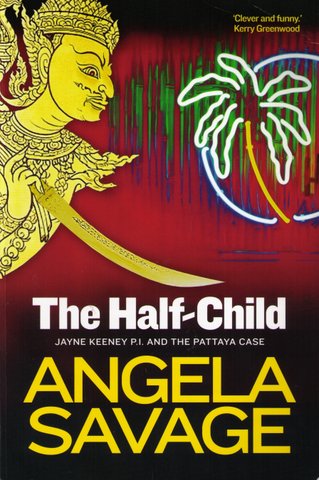
I set my second novel The Half-Child in Pattaya, which is not the country’s most attractive location—one character refers to it as ‘Thailand’s own Sodom and Gomorrah’. I balanced this by having a character come from Kanchanaburi, allowing me to take the reader to some Thailand’s ‘wild west’.

The Half Child cover (1)s


By contrast, my third novel, The Dying Beach, is set in Krabi, a stunning location. I don’t know what it is about crime writers that sees us visit beautiful places and start mentally populating the landscape with dead bodies, but that’s what happened when I visited Krabi on holidays. I guess it’s our way of paying tribute to a place.

The Dying Beach_large_cover (1)s


TF: What does The Year of the Horse have in store for you?


AS: As someone born in The Year of the Horse, I am looking forward to 2014.

Angela in Krabi 2011 (1) (1)s

 Setting is important to crime fiction author, Angela Savage

AS: I’ve recently enrolled in a PhD in Creative Writing in order to spend the next three years writing full-time. I’m working on a novel set in Australia and Thailand that deals with commercial surrogacy between the two countries. I’m also hoping to finish off the fourth book in the Jayne Keeney PI series, set in Bangkok during the financial crisis of 1997.

TF: Thank-you, Angela for being our guest at Thailand Footprint. I hope you get a chance to put your feet on Thailand sand again in the near future. 


Angela Savage is a Melbourne-based crime writer, who has lived and traveled extensively in Asia. Her first novel, Behind the Night Bazaar won the 2004 Victorian Premier’s Literary Award for an unpublished manuscript and was shortlisted for the Ned Kelly Award for Best First Book. Her second novel, The Half-Child, was shortlisted for Best Crime Fiction. Angela is a winner of the Scarlett Stiletto Award for short crime fiction. Her latest novel is The Dying Beach.

Leave a comment

Robert Carraher

I learned today that Robert Carraher died recently of cancer. We shared some things in common. He liked music and books. Timothy Hallinan was one of his favorite authors. It was just a little over one year ago that it was suggested by author Lisa Brackmann that I contact Robert after I shared with her my desire to start a blog about books and music and people. “You should talk to Robert Carraher.” Lisa Brackmann said. So I did. And I was glad I did. Because he was very helpful. He was an accomplished book reviewer. I enjoyed his reviews, a lot. My first review on this blog was for Zero Hour in Phnom Penh. Robert took the time to leave a positive comment. A short and affirmative, positive comment. At the time I replied, it was like being a stand-up comedian and having Jerry Seinfeld nod his head up and down after your routine and say, “Funny.” It meant a lot to me. And he took the time. So now I am returning the favor. We had many private messages back and forth. He shared his advice. I listened. One bit of advice I remember in particular: “It’s not about us, Kevin. Always remember that.” It tied in perfectly with the Henry Miller tag line I use often, “Forget yourself.” I never met Robert Carraher face to face, although it would have been welcome by me and likewise by him. He was a smoker. I wish he wasn’t. I have friends that have smoked and quit. I’m glad they have quit. I have others who still smoke. I wish they would quit. Thank-you, Robert Carraher for your sage advice and humor. And your passion for books and music and living. It was all very much appreciated.

Robert

Leave a comment