Thailand Footprint: The People, Things, Literature, and Music of Thailand and the Region

Posts tagged ‘James Austin Farrell’

I met the artist, J.D. Strange (James Dennison Strange) under a starless sky over a basket of chicken livers washed down with some pints of dark ale at an outdoor eatery, catty-corner from Queen Victoria Pub. The burned out second floor window at the bar across the soi had been replaced and a cat was licking one of the paint chips left behind on the red awning. Leaded or unleaded, I wasn’t sure. Foot traffic was picking up and so were the green and yellows. Strange seemed more interested in a busty woman in long heels and short shorts and a nerdy gal, wearing white framed glasses and eating deep fried larvae than this interviewer. But this wasn’t my first rodeo. No. On with it, as Christopher Minko once told me.

fried-chicken-livers-400

KC: Someone, a long time ago, gave me some good advice about women. He said, “Tell the pretty woman she’s smart and the smart woman she’s pretty.” It made sense to me at the time.

JD: That’s pretty smart advice.

KC: You’re a writer.

JD: Thanks. So are you.

KC: Well, I’m not expecting a call from Elyse Cheney anytime soon. Thanks, though. You, on the other hand, have written four novels in the Joe Dylan Detective series, not to mention Lizard City with Johnny Coca Cola, have a screen option out on The White Flamingo and have published tons of short stories, which garnered you numerous rejection slips in the process. All years before your 40th birthday.

JD: I have. Rejection slips are my badges of honor.

KC: Your story, Pacific Coast Highway, in Paul D. Brazill’s Exiles: An Outsider Anthology really hit home. And all the proceeds go to charity. Good on Paul and you. You’ve even published a book about Buddhism under a nom de plume, so that leads us, naturally, to music.

Exiles-An-Outsider-Anthology-by-Paul-D.-Brazill-200x300

JD: Naturally.

KC: Can you be like Tom Petty and do some free fallin’ about the musical influences in your life from the time you held your first Atari joystick to what you listened to with your eggs this morning? 

JD: Okay. Let’s see. I thank my parents for introducing me to The Beatles, Stones, Squeeze, The Smiths, Neil Young, Leonard Cohen and many more bands and songwriters that I wouldn’t have discovered so early otherwise. In fact my grandparents are Beatles fans, God bless them. I discovered The Velvet Underground and Nico through my friend Scott who bought the record after watching the Oliver Stone movie The Doors based on the book No One Here Gets Out Alive written by none other than Jerry Hopkins who was at the last Night of Noir event in Bangkok, albeit fleetingly. So it all moves in circles.

As a teenager and during my early twenties opening my CD cabinet was like opening an angry teenager’s diary. There was a lot of dark stuff in there. Music for a New Society by John Cale. Early Beck, Sonic Youth and God Machine for a stateside trip to hell. The Auteurs and Pulp with their wonderfully British brand of fallen actor pop star gloom. Suede with their glorious drugs in a council flat chic. Dinosaur Jr with their weed inspired fuzz box meltdown and the Jesus and Mary Chain for an absolute nihilistic hit of the dark stuff. I took Metal Machine Music by Lou Reed seriously – it was just a record of noise and feedback. It almost ruined his career yet Reed toured the album shortly before his death. So, there you go. I like risk takers with dangerous minds. On the back of the Metal Machine Music LP is that wonderfully spikey quote: “My week beats your year.”

Early 90s in London I went to hundreds of gigs and a handful of festivals and played in a band as a guitarist, singer and song-writer. We were lucky enough to have a studio and a producer (all on a government loan!) and I wish I still had some of those recordings. We practiced solidly and spent a lot of time recording and experimenting with samples and effects and basically monkeying around with all the equipment at our disposal. Thousands of rehearsals over a number of years and we never even signed a record deal! We landed in the local paper and our live shows were unmitigated disasters as I had chronic stage fright and a weakness for Russian vodka. I love rock and roll and back then in my youthful naivety I had the narrow belief that the only thing I was any good at was writing and recording songs. This was nonsense. I was actually quite good at other things too, like smoking, drinking beer, fumbling around in the dark reading Burroughs and watching Easy Rider and generally acting the fool my friends.

Right now I like Big Fat White Family. Tom Vater turned me onto them. Touch the Leather is an awesome track.

KC: I’ll check it out. Vater is irreverent and informed, I’ve read. And a great comedian. Speaking of objectivity, can an artist be objective about his own work? ​

JD: Nah… Shane McGowen said during a brief period of coherence that art is like throwing shit at the wall. Some of it sticks and some of it doesn’t and the thrower really doesn’t know which way it will splat. I’ve struck out more than I’ve hit. A wise man realizes he’s a fool just fumbling around in the dark. I don’t cling to praise and I don’t cling to criticism and I am certainly not objective about my own work. Writing a novel is like bringing up a child. You love your child more than anything in the world but you know deep down inside you made more than a few mistakes along the way.

KC: Who decides whether someone is an apprentice, a craftsman or a true artist? Is it his peers, the public or the almighty sales figures?

JD: Peer acceptance is very important to me personally although I reckon in the end the audience decides, word of mouth decides, the readers are the real story makers, writers just kind of lay out the path. A promotional push can get the ball rolling but if the ball is bad it won’t sell after the first few months. Then there comes one who just breathes talent and nothing can stop him or her. He or she needs no promotion, word of mouth spreads like wild fire. Very rare, but it happens.

KC: Give me an example.

JD: A good example would be (Henry) Miller.

Henry Miller

Henry Miller

KC: Isn’t it possible that if Henry Miller had not hooked up with some well-heeled sponsors in Paris no-one would have ever heard of him? Did Henry get lucky or did he create his own luck? 

JD: Miller was certainly not lucky for much of his life if the books I’ve read are accurate. Miller published in France, and then Barney at Grove Press took a risk and put his books out Stateside. Thus the circus began; scandal, court case, and huge sales. I can’t see anything scandalous in Miller’s writing personally. I just see good prose and wonderful flights of imagination. When he flows he really flows like some kind of possession is at play, you know? He would enjoy success if he started writing now. He was a good writer who followed the simple discipline that one word should follow the next as if it were supposed to be right there.

If you study the careers of successful writers in depth and read the biographies you will see that they just kept plugging away until at least one person enjoyed what they were doing just enough to sustain the magic. Some of the great novelists were writing for just one person, normally a lover or a friend, or quite often, themselves. It seems that financial success and critical recognition for any artist normally comes later in life, if at all. Some people luck it and some have talent, but usually it’s just good old hard work over many, many years.

KC: A friend of mine said, as we discussed musicians, “There is more talent in the world than luck.” Do you agree with that?

Lady-Luck-2_LG

JD: An individual either has or doesn’t have musical talent, although some do have better musical talent than others. Musical talent is easier to spot than writing talent, you can hear it, but when you see writing talent, you really see it. Bob Dylan, for example is an average musician but an enormously talented writer who made a fortune in the music business owing to his use of words. The guitar was a prop to success and the Beats had blasted the barn door open in terms of what you could sing about at that time and place. I’m not saying that Dylan wasn’t a rock and roller, or a folk musician, he was, but first and foremost, like Lou Reed, he was a writer who used the rock and roll platform to express himself. Is there a creative gene? I don’t know. Perhaps it is a strain of autism. Musical talent has been proven to be genetic. Perfect pitch is passed on down generations. Anyone can play the guitar or the piano but how many can reach that state where the instrument takes over the musician? When the musician is just a puppet on a stage guided by some strange higher power? Writing can be learned to a certain degree yet a writer in full flow is like the piano player guided to that golden place by the muse. Burroughs wrote in a Tangerine letter to Ginsberg that “the writing is coming on like dictation; I can’t keep up with it.” Perhaps there is something supernatural at play. I don’t know. I know only one thing. Talent and luck are less important than work. Work brings talent and luck. Warhol said work is the most important attribute any artist has in his toolkit and many would say Warhol was untalented and lucky.

KC: Warhol critics are not hard to find. Warhol-like success is quite rare. He was a worker bee. Tell me about your book on Buddhism. Is Buddhism a mist, a lacquer, a veneer or a hardwood in your life? Expand on these things called thoughts? Should we pay them any attention? How does one unlock the great mystery of life, anyway?
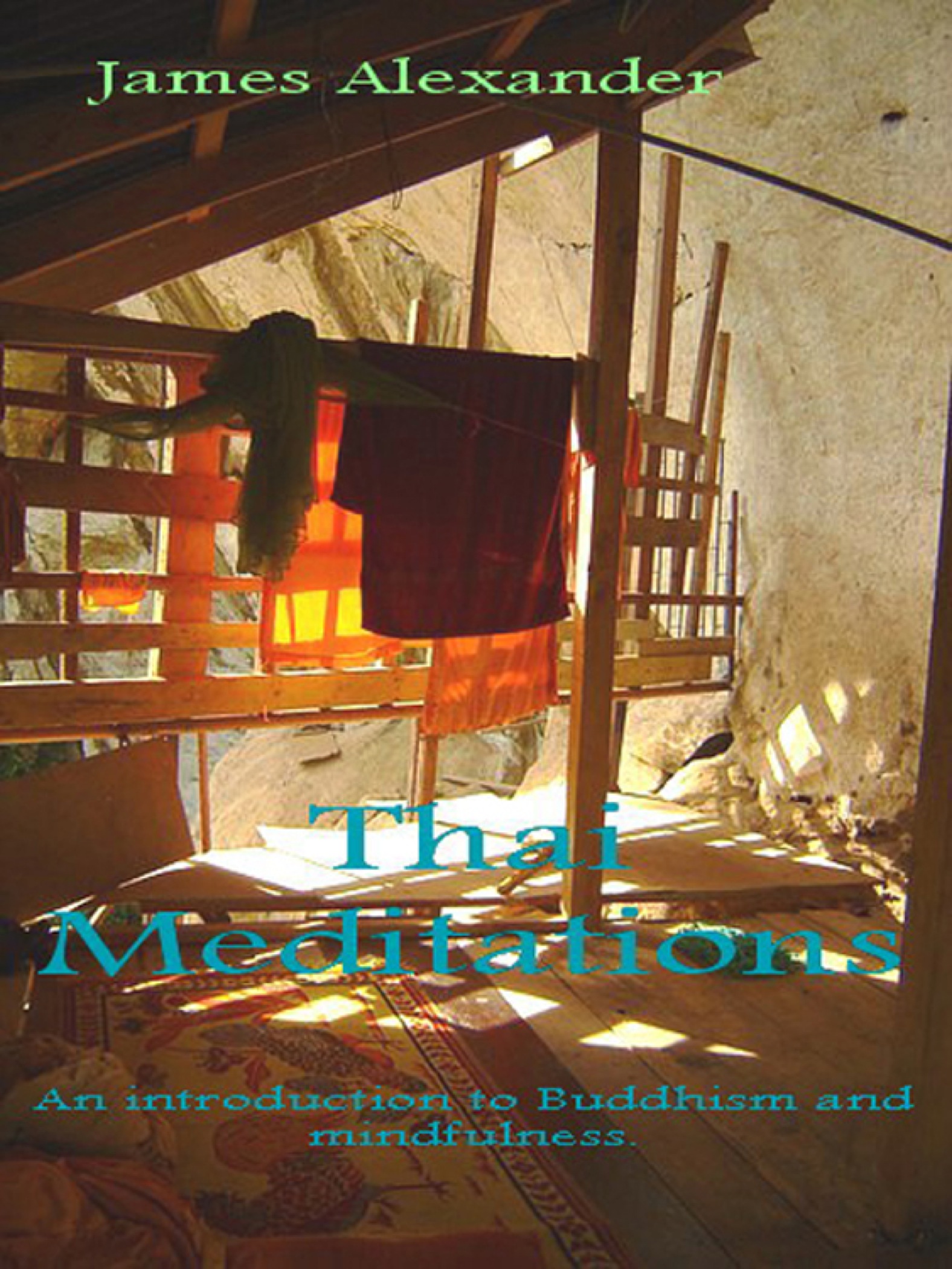
Thai Meditations

JD: Thai Meditations was written after staying at several monasteries in Thailand. There is a short story or observation for each of the seventy-seven provinces of Thailand. You would have to ask someone else about unlocking the mystery of life. I’m not qualified; I’m merely fumbling around in the dark. Thoughts shouldn’t be held on to for too long in daily life. Living in the present moment is difficult, yet, as writers we get to play with thoughts. Novelists rearrange thoughts and construct them into stories that allow the reader to become lost in the story and forget their own anxieties. Stories really are a magical gift in that respect. It all goes back to the hunter gatherer society and tales around the camp fire. I guess the story-teller was a lousy hunter.

KC:​ Sean Penn once said that one is either born with a resistance to cynicism or you’re not. He went on to say that his friend, Charles Bukowski was one of those guys who was given every opportunity in life to become a jaded, cynical prick. But Penn claims Buk was anything but. Sean Penn goes on to describe Charles as the sweetest, most vulnerable pussycat who disguised it wonderfully. Do you agree with Penn’s assessment of Bukowski?
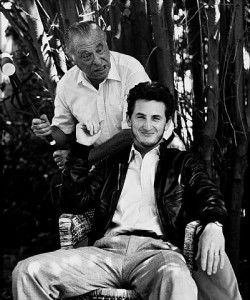
36.Charles-Bukowski-and-Sean-Penn-250x300

JD: I agree and disagree. I don’t think a child is born a cynic nor born with a resistance to cynicism. I think a cynical person becomes one by way of parental or institutional belittlement – social conditioning – although some argue genetics are at play, I’m not so sure. I do agree that Bukowski was sensitive and vulnerable. Most poets are. Penn knew Bukowski after he had made some money and had gotten himself married to Linda and had the hot tub and the BMW. He was cynical as hell while claiming to ride box cars and living on skid row. But when Penn knew him he was living the high life, Santa Barbara, baby. It’s difficult to be a cynic when you’re sitting in a hot tub smoking a Honduran cigar with close to a million dollars growing in the bank and a nice BMW on the drive and you’re having Dennis Hopper and Madonna over for brunch.

KC: How do you avoid becoming cynical? How would you describe yourself? What, if anything, do you disguise?

JD: The best way to avoid becoming cynical is to remove yourself from the source of that cynicism. If Thailand or any country brings out these feelings of cynicism, take a trip somewhere else for a week or two. If your job sucks, change it. I describe myself as a humorist creative type, a loyal son of a bitch who has a drive to succeed, but could be a better family guy. Disguise? A writer disguises nothing at all; it is all in his work for anybody to read. Do you know how much bravery it takes a novelist to publish their first novel? First novels are generally terribly personal, and packed with the author’s most awful secrets.

KC: Tell me about your writing process?

JD: It varies. The White Flamingo took a few sittings. After the notes were made and my outline was mapped out I hammered the novel out in a few weeks. I just deleted 25,000 words of my latest book Fun City Blues as I thought about a new science fiction direction. You know I was once asked by an attractive tall blond “What is a writer?” I replied “Someone who can’t stop writing.” So perhaps it’s an obsessive thing.

​KC: That blond sounds smart to me. Raymand Chandler wrote about Bay City in his 7 Philip Marlow Novels, which everyone pretty much knew was Santa Monica, California. You write about Fun City in your Joe Dylan series, which most, but not everyone, would recognize as Pattaya. Explain this literary technique if you can. What are the advantages of doing it the Chandler way? Is there a down side?

JD: First and foremost I love Chandler’s work and admire everything he has written apart from some of the very early work. Secondly Fun City is a strange beast of a city, a product of my warped imagination but grounded in visits to Pattaya and Bangkok where I’ve lived for 13 years. The series has become more popular than I would have ever of imagined it to have become. Fun City gives me the license to spill out any literary phantasies I may have without the geographical or cultural restrictions of actual place. I can push the fictional world further with the freedom of this make believe city. In the current book I have the harbor, the beach, the Central Business District, and the Red Night Zone all set together in the blade-running future. I have discovered my terrain after years of fumbling around with the concept and the formula of the series. The tourist zones of Thailand are so close to science fiction that it just makes sense to write in a cyber punk vein, and go all the way with it. Joe Dylan is of course a fedora wearing gumshoe detective who navigates around this strange neon world by night. It’s a nice concept. I’m content with Joe and Fun City. They mix together well, like red wine and cheese. I like writing the series and am happy that the series is being read.

KC: You’ve been at the forefront of the first two Night of Noir events at the Check Inn 99 bar. Tell our readers about Night of Noir Number 3.
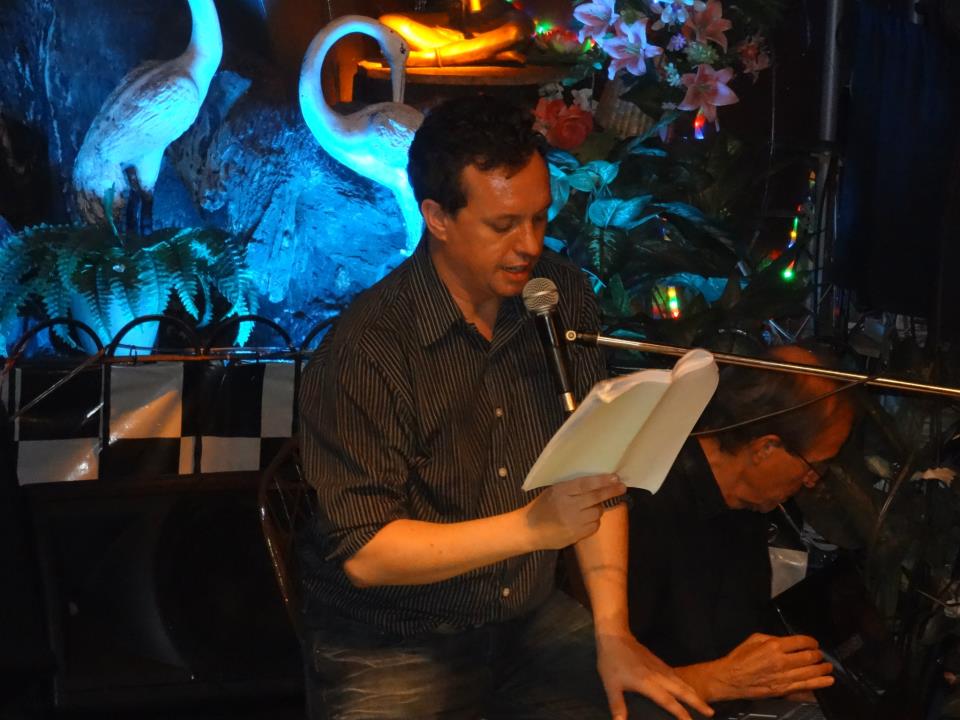
james-a-newman-w-white-flamingos

Author James Dennison Strange reads from a Joe Dylan crime novel during a Night of Noir held at Check Inn 99

JD:  This coming Thursday, 8th January 2015 is the date set for the third Night of Noir. I’ll be the host for a line-up which includes, Dean Barrett and Tom Vater along with Jame Dibiasio flying in from Hong Kong. Jame wrote the excellent Gaijin Cowgirl for Crimewave Press and I believe the second book in that series is out quite soon. My publishing partner and editor John Daysh is in town. James Austin Farrell may come down to the big smoke from Chang Mai. Thom Locke is confirmed. Poet Noir John Gartland is reading. Artwork by Chris Coles and photography by Stickman and talk of an author’s band playing live. The wonderfully talented musician Keith Nolan will be in house. The last two years have been a great success and have drawn in some wonderful authors from around the world including Cara Black and John Burdett last year. Chris Catto-Smith, manager of the Check Inn 99 has been an absolute legend in helping us realize the event. Chris Coles has been an incredible influence on the whole scene with his paintings and vision and was the one who first got the ball rolling. I am very lucky and grateful to be here in this space and time with such wonderfully creative people. Including yourself, Kevin. Thanks for the time and the questions. I enjoyed it. Is it over? Do you mind if I hit Suzie Wong?

KC: The chicken livers are all gone. So, yes. Suzie Who?

JD: Exactly.

Bangkok Fiction Night of Noir

 For more information regarding the upcoming Bangkok Fiction Night of Noir go to

the blog of J.D. Strange

Leave a comment

JDMotorCy

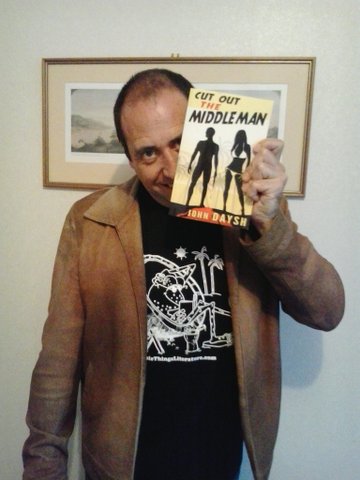
The Commonwealth of Nations have been well represented at Thailand Footprint with authors from the United Kingdom, Canada and Australia written about and discussed here often. Author, John Daysh from New Zealand becomes the first Kiwi to be interviewed at Thailand Footprint but he will not be the last. John is a sixth generation New Zealander through his maternal blood lines and the Great, Great, Great, Grandson of John Daysh whom arrived in New Zealand in 1841 from Hamshire, England. Just two years after the Treaty of Waitangi which granted Britain dual sovereignty (with the indigenous Maori) over New Zealand. He is a proud New Zealander who knows Thailand well. The setting for his backpacker/crime/love story novel, Cut Out The Middleman is southern Thailand and London, based, in part, on John’s own exploration and extensive travels. Thailand Footprint is pleased to have John Daysh here today checking in from God’s country on Easter Sunday:

TF: Why is New Zealand known as The God Zone and how is it different than the zones found in Bangkok?  

JDCourse

JD: I guess it comes from a mix of arrogance, honesty, pride and naivety.  NZ is a lovely country to live in.  Stunningly beautiful and wonderfully uncomplicated.  But it is also incredibly detached and insular.  That is where it is similar to Bangkok; or how Thais are similar to Kiwis.  The vast majority of Kiwis wouldn’t be able to determine the difference between a Korean, a Thai, a Chinese or a Japanese.  Same as most Thais can’t tell the cultural difference between an American, a Swede, an Aussie or a German.  New Zealand has always been geographically isolated from the rest of the world and that has insulated the minds of many in that there is a sense that we are untouched or unsullied by the problems that face the rest of the world.  It is as if our clean, green, unpolluted environment mirrors our mentality.    I remember coming home for a holiday when I was living in China and the lead story on the 6 o’clock news was about how a postie (mail delivery dude on a bicycle) was refusing to deliver mail to a particular street because he felt intimidated by the dogs barking at him from behind their fences (a legal requirement for dog owners).  I didn’t know whether to be annoyed, amused or envious.  On the most popular news website in New Zealand, World News sits below National News, Sports News, Weather, Entertainment News and What’s on TV.  Ignorance is bliss. And it is.  Living in New Zealand has been compared to living in England in the 1950’s.  It is a fair comparison outside the big cities.  And I guess that is what I love and hate about living here.  Beautifully simple but agonizingly unsurprising. It is the perfect place to raise a family.

TF: What books influenced you growing up?

JD: I read everything Hemingway wrote by the time I was fourteen.  I had read everything Stephen King had written by the time I was fifteen and I have read every book of his since.  Hemingway’s stoicism and concise style resonated strongly with me and King’s wild imagination and amazing characterisation captured me completely.  From there I moved onto Kerouac and the Beat Generation and then Kesey introduced me to a mode of critical thought that sent me towards dystopian literature.  George Orwell and Aldous Huxley became my new champions.  That all happened before I went on to study literature at university and all of those writers still influence me today in the way I see the world and interact with it.

TF: Is there a book out there or laying around your home that you’ve been meaning to read but haven’t gotten around to it yet?

JD: Christopher G. Moore’s ‘The Marriage Tree’.  Reading is such a guilty pleasure at times.  Mostly I am reading submissions or editing novels (or reading articles on the bloody internet) and it doesn’t leave a whole lot of time for reading for pleasure.  Maybe tonight.

TF:Complete this sentence: Amazon.com is …

JD: A vast jungle full of beauty, adventure, danger, and fecal matter.

TF: Make the case for fiction over non-fiction in 100 words or less.

JD: Fiction is an escape and it is limitless but it is more real than non-fiction.  Fiction explores experience and tells stories and opens doors to the imagination and infinite creativity.  Fiction exposes the reality of individuals in boundless form.  It delves and depicts and infuses our lives with the truths of others.  Fiction is a gift from the storyteller to the reader.  Fiction is more honest than non-fiction.

TF: Tell our readers about your last novel, Cut Out the Middleman? 

COTMMFinal


JD: It is the story of a disillusioned traveler who ‘finds’ himself in Thailand and ends up running a beach bar on a remote island where he gets caught up in the drug trade.  He tries to navigate a safe path amongst psychopaths, drug addicts, whores and hippies in attempt to heal himself and find love.

TF: Please tell me your three favorite dead authors? Or if you are feeling confident you can throw some live ones into the mix?

JD: Ernest Hemingway, George Orwell, Aldous Huxley.  James A. Newman, Stephen King, James Austin Farrell.

TF: Tell me about your publishing house. What excites you about it? What about it is a drag? 

SPP

JD: Spanking Pulp Press is something that James Newman and I cobbled together out of our frustration with the world of publishing and our love of pulp fiction.  Our primary aim is to support promising writers and bring pulp fiction back into the mainstream.  The excitement comes firstly from being able to work with James Newman who I consider to be one of the finest gentlemen I’ve met and one of the finest literary talents around.  The man is a pulp genius. Secondly, it gives me the chance to work with some fantastic writers and also hone my editing skills, and hopefully make me a better writer.  The opportunity to be James’ editor and co-publisher was just too good to pass up.  Then I got to work with one of my heroes, Phillip Wiley, and James Austin Farrell who I truly believe will achieve literary greatness in time.  Plus hanging out with Thailand’s most famous private eye, Warren Olson, has been amazing as we work on a set of four novels and his upcoming memoir, The Private Detective.  Then from old hands to young bucks; Simon Palmer is our latest signing and he is going to turn some heads for sure.

What is a drag?  Only having so many hours in a day.  We have been very lucky in that we had an influx of quality submissions quite early on.  But that means that some good books and writers have to wait while James and I take it one book at a time to ensure we are putting out the best books we can.  My biggest stress is knowing that some damn fine writers are waiting on me to get to their book.  I wish time would drag so I could get more done.

TF: What does the The Year of the Horse have in store for you?

JD: Editing, editing, editing.  We aim to have another ten books out this year.  Plus I’m trying to finish a novel I’ve be in and out of over the past few years.  “Like a Moth to a Flame” will be ready by the time I hit Bangkok in December/January for a book signing and the next Bangkok Night of Noir at the Check Inn 99.  Fingers crossed.

TF: Thanks, John. I look forward to that happening. In the meantime, good luck on lowering that golf handicap of yours between books. 


CityLife


This interview may also be seen at Chiang Mai City News by clicking the above banner.


Leave a comment

This interview by James Austin Farrell of CRIME WAVES PRESS publisher, Tom Vater first ran in Chiang Mai City News on December 23rd, 2012. Thailand Footprint is grateful to Chiang Mai City News and James Austin Farrell for their expressed permission to re-run the interview. If you’ve never checked out Chiang Mai City News, please do so at the link below. I recently returned from a 10 day trip to Chiang Mai. This is a valuable web-site both before and during a northern trip. It is loaded with great information:
http://www.chiangmaicitynews.com

CrimeWavePress

INTERVIEW OF TOM VATER by JAMES AUSTIN FARRELL BEGINS:

Who are you and what do you do?

I am an Asia based writer and journalist. I was born in Germany, studied in the UK, played in punk rock bands across Europe in the late 80s and early 90s and have since lived in India and Thailand.

Since 1997, my feature articles have been published widely around the world – from The Times, The Guardian, Marie Claire to Penthouse. I am currently the Daily Telegraph’s Bangkok expert.

I have written numerous books on Asian themes in both German and English, most notably Sacred Skin (www.sacredskinthailand.com), an illustrated book on Thailand’s sacred tattoos, with my wife, photographer Aroon Thaewchatturat (www.aroonthaew.com).

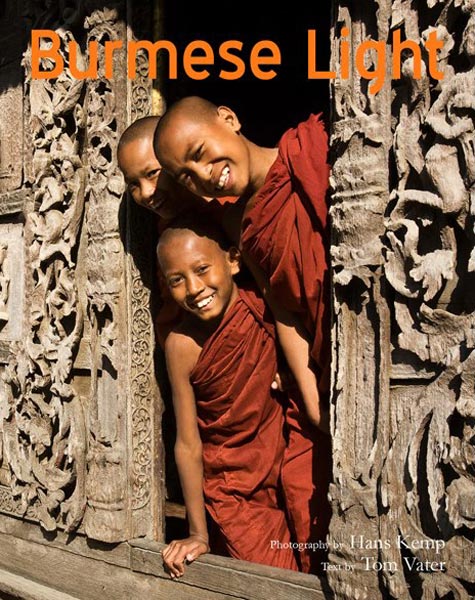
In spring 2013, Burmese Light, an illustrated book by Hans Kemp will be published by Visionary World (HK), for which I wrote the text. Also in 2013, an illustrated book by Lonely Planet photographer Kraig Lieb titled Cambodia will be out and I wrote the text for that as well.

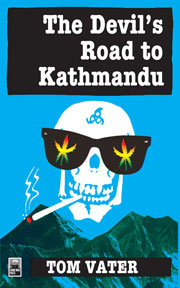
I am the author of two crime novels – The Devil’s Road to Kathmandu, first published in 2005, now republished by Crime Wave Press in 2012 and out in Spanish with Editorial Xplora in December. My second novel The Cambodian Book of the Dead, first published with Crime Wave Press in Thailand and Cambodia in 2012, will be out worldwide with Exhibit A in June 2013.

I also write documentary screenplays with my brother, director Marc Eberle (marceberle.com), most notably The Most Secret Place on Earth (2008), a film about the CIA in Laos in the 60s which has been broadcast in 25 countries.

Basically, I am constantly flat out with new projects and am very grateful that so many talented artists want to work with me. My working life and much of my social life revolves around a kind of little family of people working together in Asia.

Can you tells us a little about Crimewave Press?

Crime Wave Press (www.crimewavepress.com) is Asia’s only English language crime fiction imprint. Founded by acclaimed publisher and photographer Hans Kemp and myself in October 2012, the company is based in HK and has published four titles so far, covering thrillers set in The Philippines, Nepal, Thailand and Cambodia.

CWP currently publishes ebooks and PODs and will move into print in summer 2013. Hans Kemp and I are positively surprised by the reaction to our output. We have already sold foreign rights for two titles and are talking to a film director about optioning a third. We are looking for writers and full manuscripts. Submission guidelines can be found on our website.

CambodianBookoftheDead

What are you working on these days?

I am working on a follow-up to The Cambodian Book of the Dead, featuring German detective Maier solving cases around Asia. UK publisher Exhibit A will publish this book, as yet untitled, in early 2014.

Tells us about your book The Cambodia Book of the Dead?

In 2001, German Detective Maier travels to Cambodia, a country re-emerging from a half century of war, genocide, famine and cultural collapse, to find the heir to a Hamburg coffee empire.

His search for the young coffee magnate leads into the darkest corners of the country’s history and back in time, through the communist revolution to the White Spider, a Nazi war criminal who hides amongst the detritus of another nation’s collapse and reigns over an ancient Khmer temple deep in the jungles of Cambodia.

Maier, captured and imprisoned, is forced into the worst job of his life – he is to write the biography of the White Spider, a tale of mass murder that reaches from the Cambodian Killing Fields back to Europe’s concentration camps – or die.

Crime Wave Press have sold world-wide rights to The Cambodian Book of the Dead to British crime imprint Exhibit A, though CWP have retained English language rights for Thailand and Cambodia.

Have you written more?

I enjoy a modest publishing career in Germany: I have published a travelogue on the source of the Ganges and a book on Thailand’s minorities, the only such title in German. My wife Aroon has published three photo books in Germany, all on Asian subjects, all with my accompanying text.

Did I see you with Nick Cave recently? What was that about?

My wife Aroon and I were invited to present Sacred Skin at the UBUD Writers and Readers Festival in Bali in October. We also launched Crime Wave Press at the festival. Nick Cave and John Pilger were the main draw at UBUD and we got the chance to hang out with both (separately, mind you) and talk books, politics, music, life on the road etc. Good times.

What the most popular titles from CWP?

Our current bestsellers are The Devil’s Road to Kathmandu and Mindfulness and Murder.

The Cambodian Book of the Dead was doing well but since signing over the rights to Exhibit A we have taken it off the net. It is still available in print in Thailand and Cambodia.

Crime Wave Press will offer the high seas thriller Dead Sea by Sam Lopez for free as an e-book download from amazon on December 22,23 and 24.

DeadSeaSamLopez
What were you doing before you sat down to answer these questions?

I was having breakfast in the Z Hotel, a small palace in Puri, Orissa, on the east coast of India. It’s a great place to get a lot of writing done.

How does a writer in this part of the world go about being published for the first time?

Hm, I am not sure I am a typical example. When I arrived in SE Asia in 2001, I had already been published in newspapers in India and Nepal, had done a writing stint for Rough Guides and had a film writing credit under my belt (The Greatest Show on Earth, a documentary about the Maha Kumbh Mela, the largest gathering of people on the planet for GEO TV and arte) I arrived with a job as script writer and production manager for a film about Angkor, produced for German TV, which was shot in 2002. This helped me get work with regional magazines. Initially, I worked for Bangkok publications including the seminal Farang Magazine, then moved on to The Far Eastern Economic Review and The South China Morning Post. I had an agent in London who got me into international publications and finally I managed to get a foothold in the British broadsheets.

My advice to up and coming writers: Write, write, write, a thousand words a day at least. Don’t do free work for too long. Pitch, pitch, pitch, to newspapers and magazines. Don’t get disheartened by rejections. Work in many disciplines, one is not enough these days – learn other skills beyond writing, like photography, film-making, radio etc. Take constructive advice to heart. Doubt your abilities but never admit your doubts to the sharks out there. Read a lot. Develop a signature style. Don’t go after the money from the start. If you are committed and have a long breath, it will come. Don’t drink too much and don’t take too much drugs. Don’t forget to fall in love and live as much as your body and mind can sustain.

Can you talk about the SE ASIA literary market? Do books travel? Is there a particular genre coming from this part of the world, i.e. noir?

I don’t know about genres in this part of the world. Southeast Asian countries barely have a literary scene and good novels by local writers are scarce. The novel is a western construct. The target group for CWP is clearly a western audience, whether expatriates residing in Asian countries or readers back in Europe, the US or Oz. Though we are grateful for every Asian reader.

Travelers and tourists tend to read a limited list of international bestsellers. Titles such as Wild Swans or Shantaram keep cropping up in these lists. These books clearly travel, they can be found on every second hand bookshelf between Goa and Bangkok.

The Bangkok literary scene is pretty checkered. The locally published deluge of bar girl novels is dreadful. There has been some noise about Asian Noir with veteran author Christopher Moore publishing two anthologies (Bangkok Noir and Phnom Penh Noir). John Burdett and Colin Cotterill write decent crime novels (neither writer fits into the Noir genre, mind you). Crime Wave Press does not limit its publications to Noir, our output would be too thin. We also publish whodunits, thrillers, spy novels and any other variations on the crime genre.

DevilsRoadtoKathmandu
Cambodian writers, as HS Thompson once said, have gotten so close to the edge they have fallen off. Does Cambodia attract writers? Why? Why do so many people go ‘off the rails’ in Cambodia?

Haha. Cambodia is a place lots of white men go to roll around in it. ‘It’ being the country’s pervasive culture of impunity. Thanks to a corrupt and venal government, the nasty realpolitik by western donor nations and the Chinese, a bloated and self-serving NGO industry and a tragic history that would take too long to explain in the context of this interview, Cambodia is a place where everyone can do anything, so long as they have dollars in their pockets. That attracts a lot of people who call themselves writers before they have written anything of substance. Most promptly go off into the deep end and lose their pencils at the first sign of a couple of bar girls and a vial of crack. There are some notable exceptions.

Tells us what we’ve got to look forward to for the future from CWP?

2013 will be the year for Crime Wave Press!!! We have two new titles lined up for the spring. First up is Sister Suicide, the sequel to Mindfulness and Murder by Nick Wilgus, a second Father Ananda title, which follows the Bangkok-based Buddhist monk turned sleuth to the Thai hinterland to solve a crime involving the seven Buddhist hells. Following that we will publish a really exciting action packed thriller spanning 50 years and a trail of greed and crime that reaches from Japan to Thailand and Burma. We hope to have published about a dozen titles by the end of 2013.

What should we do if we visit Cambodia?

Pray.

No, in all seriousness, the immense suffering endured by the Cambodian people has not stopped. While the genocide is long gone and the civil war ended in 1997, Cambodians have few rights and the government is made up of former Khmer Rouge. Democracy is a sham. Evictions and political assassinations are common place, activists are routinely threatened and the police shoot to kill.

Tourists rarely see any of this. If you visit Cambodia, go and see the Angkor temples of course, which you will share with millions of package tourists from around the world. If you are seriously interested in the Angkor era, do the main temples in three days and then head to more remote sites like Banteay Chhmar or Koh Ker where you might have some temple corners to yourself.

Beyond the remnants of the Khmer empire, check out the coast around Kampot and Kep – wonderful colonial architecture and some nice beaches – and the highlands of Mondulkiri and Ratanakiri, home to the country’s indigenous minorities. For the latter, don’t wait too long, the military/government/local tycoon/ foreign company nexus are raping these parts of the country as quickly as possible and the wonderful forests, crammed with wildlife we know little about, will soon be gone.

The Cambodian people are resilient, great to hang out with, super friendly and very funky. Head out to the villages and you will be welcomed with open arms. And you might get to eat tarantulas.

What shouldn’t we do?

Have sex with children, smoke crack, hob-nob with politicians, drink with police, support moronic NGO projects, drive without a helmet. Common sense stuff really.

_________________________________________________________________________________________________________________________________

Update: Burmese Light is now available around the world. burmese-light-cover-front-large

Many thanks again to James Austin Farrell of Chiang Mai City News for graciously allowing the reproduction of this interview with CRIME WAVE PRESS publisher, Tom Vater. I enjoyed it almost as much as if I was there.

CityLifeChiangMaiBannerAd

Leave a comment