Thailand Footprint: The People, Things, Literature, and Music of Thailand and the Region

Posts by Kevin Cummings

Dead

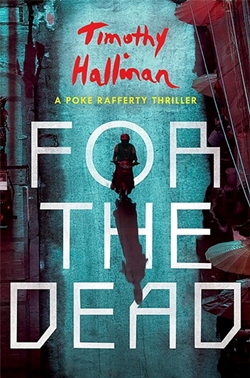
FOR THE DEAD by Timothy Hallinan – A Book Review by Kevin Cummings

If you’ve read any of the first five Poke Rafferty Bangkok Thrillers by Timothy Hallinan chances are you became a fan of the series. You do not get the Edgar Award, Macavity Award and Shamus Award nominations and have NBC develop your Junior Bender novels into a television series by Tweeting. You do have to write at least sixteen novels, though, plus a lessor known fact, Tim Hallinan has written a book of non-fiction on the works of Charles Dickens. For The Dead is now available for pre-order at Amazon.com and will be available at quality bookshops beginning November 4, 2014 – just two weeks from today.

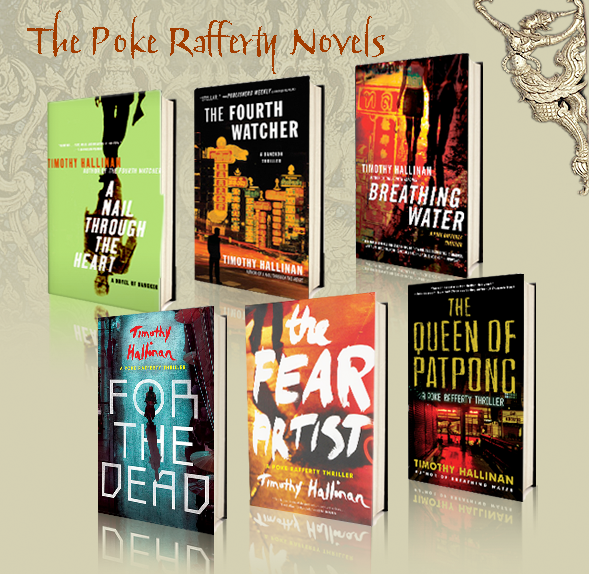
One of the more enjoyable posts I have ever written on Thailand Footprint and one of the most consistently read is titled: The Poke Rafferty Series by Timothy Hallinan – King of the Bangkok Fiction Hill? There I discuss Tim’s first five novels in the Poke series. They are in order: A Nail Through The Heart; The Fourth Watcher; Breathing Water; The Queen of Patpong and The Fear Artist. 

Poke Rafferty is an American travel writer. He is a family man with an improbable family blossoming in the mud of an even more improbable city – Bangkok. His wife, Rose, the former lanky Issan country girl was once a Patpong dancing superstar until Poke rescued her or she rescued Poke. Love and marriage followed.  They adopted a homeless street girl named Miaow. As I wrote in that earlier review written almost 18 months ago, “It is the patchwork nuclear family setting, for me, which sets the Poke series apart from much of the other available Bangkok based fiction. That and the brilliant prose of Timothy Hallinan.”

Edgar, Macavity and Shamus Award nominee, Timothy Hallinan

Edgar, Macavity and Shamus Award nominee, Timothy Hallinan

In that regard, not much has changed in For The Dead and yet a lot has changed. Miaow is now thirteen years old. For The Dead is, for the first time, primarily Miaow’s story. How best to describe Miaow to the unfamiliar reader? Hallinan does it superbly in the narrative thoughts of Rose:

Miaow, she thinks. The throw-away child, tossed onto a side-walk. As tough as she tries to seem, Miaow worries about everything. She double-checks everything. If she were hanging over a cliff, held only by a knotted rope, she would try and improve the knot. She has no idea how remarkable she is, how smart, how decent, how much she’s loved. Somewhere in the center of her being, Miaow is still the short, dirty, dark-skinned, frizzy-haired, unloved reject who tried to sell chewing gum to Rafferty on his second night in Bangkok.

For The Dead opens with a wonderful upcountry dream sequence. It concludes with heart-tugging laughter. What you get in-between, besides a fast paced thriller featuring technology, pulse pounding chase scenes and contract killings conducted at the highest levels by a corrupt Thai Police force, is what is missing in so many novels today: quality. Page after page of quality. What you read in a Timothy Hallinan novel has importance, it’s useful and it’s entertaining.

In For The Dead, Poke is happy, financially secure for once and learns that his family of three will in nine months time become four. Miaow helps her nerdish Vietnamese boyfriend replace his second lost iPhone with a used model during a skillful negotiation process with a Sikh merchant on a skipped day of school in India Town. They learn later the phone contains pictures of some very dead policeman. Poke would normally be an early confidant but news of Rose’s pregnancy was relayed in an awkward manner, creating domestic strife. Serious jeopardy ensues and leads to the heaviest of hit men.

You could make a good case that in the Poke Rafferty series the last three novels have been the best, although I very much enjoyed Breathing Water. For me, The Queen of Patpong had the perfect mix of thrills, antagonist and family. In The Fear Artist, I found myself missing the family at times, although again the thrills and antagonist were stellar, plus you got the intriguing character of Treasure, whom we last saw disappearing into the fire and explosions of her abusive home. For The Dead puts Poke and family front and center, plus Treasure gets an encore along with two memorable Bangkok street kids. The thrills are still there as is the terrific prose of Hallinan detailing in great depth the best and worst of mankind.  My criticism of For The Dead is the antagonist didn’t live up to the level of evil or consistency of the last two, but Hallinan can take the blame for that one, for setting the bar so high. My suspension of disbelief also had to be ratcheted up a notch for a rather conveniently timed plot solution, no matter how much I wanted it to happen.

The Queen of Patpong is a Bangkok Thriller. My favorite Bangkok thriller of all-time. The Poke series is a Bangkok series when looked at in totality. For The Dead is, first and foremost, a human story – a story about a family and the bonds that hold them together.A story that could play within the backdrop of a dozen cities throughout the world – the corrupt police department and poor rice farmers notwithstanding. And that is not a criticism; that is a compliment to the story-telling ability and the multi-dimensional characters that Hallinan constructs in his writing. The Poke Rafferty series is no longer confined to the genre of Bangkok fiction or a simple mystery – this is first class literary fiction.

We are reminded often that we now live in a world where books, music, authors and musicians have all been devalued. But value is still out there if value matters to you. Smart and appreciative readers will always invest in reading good books by good authors. For The Dead is one such book and Timothy Hallinan has proven time and time again that he is one such author.
Poke_home

(Photo courtesy)

For more information about author, Timothy Hallinan and his novels you can visit his web site at www.timothyhallinan.com

CityLife

 This post may also be seen at Chiang Mai City News by clicking the banner above

2 Comments

huay-tung-tao-lake

I stumbled upon these two great times lapse videos by Saengthit Kamlangchai while on Twitter. It was timely as I try and practice, taking in the good as much as possible, despite the dark side of Thailand, which is quite real. The two murders of young backpackers on Kho Tao Island are testament to that. Underneath the music and wonderful images are lots of reasons to be careful – to practice skepticism. A reminder as we returned to the Land of Happiness four days ago. Nevertheless, I enjoyed these two videos and I hope you choose to view at least one of them. Pick your paradise or pick your poison. It all depends on your vantage point:

Bangkok – The Beauty of Faith

Chiang Mai – Light of Heaven

2 Comments

Everybody has biases. Mine involve Check Inn 99 and Chris Catto-Smith. Watch the video produced by the video team from BangkokNightlife.com and click the link at the top of the video to take you to where you can vote for Chris for Expat Entrepreneur of the Year  by clicking Like. You can also go to the Facebook link at http://lnkd.in/bhcZg_R    

CheckInn99CC

1 Comment

TheManWithTheGoldenMind-144dpi

The Man With The Golden Mind by Tom Vater is the second in the Detective Maier mystery series and my second as well. The Hamburg based, green eyed private detective has shaved his trademark handle-bar mustache and been hired by a young woman to investigate the death of her father, which took place in Laos during 1976. A kidnapping soon occurs and Maier finds himself trekking in Vientiane, Luang Prabang, Vang Vieng and Laotian jungles. Much of the novel takes place around the year 2002.

​Vater​ has fine-tuned his craft. The writing is tighter than The Cambodian Book of the Dead (Exhibit A 2013) although still on the darker and more violent side of crime fiction. Tom Vater describes two things particularly well, on an individual basis and grand scale: ​power and man’s inhumanity to man. The fact that one impacts the other should come as no great surprise but the way Vater dissects the two is skillful and to​ be appreciated.
.
My nit with the book is Vater tightropes a high wire act that has him leaning toward lecturing at times in lieu of tipping the balance bar back to entertaining. It is a minor beef as this is definitely a fictional tale featuring a proud protagonist blessed with James Bond like protective qualities. And like James when Maier falls for the female form you can guess that woman will suffer a similar Bond romantic interest outcome.
.

There is a lot going on, mostly in Laos, sometimes in bordering Thailand and Bangkok: jungle visas, sniper shootings, long tail boat rides, family reunions, values conflicts, private clubs, buried gold, double digit deaths​, espionage old and new and the requisite top secret file to keep your interest in between the sex and high quality drugs. Or drugs and high quality sex – you get to use your imagination.

An example of power on an individual basis is the appearance of a former U.S. Secretary of State, which was one of my favorite segments in the novel. The narrative describes his entrance at a posh 5 star hotel: he filled the corridor with the easy aura of a Roman emperor.

This was my second fictional account of the secret war in Laos involving CIA espionage. The other being, The Nature of the Game by James Grady. I learned more about the clandestine USA operation from Vater, which is no doubt due to his production and lengthy research of a documentary on the subject.

The Man With The Golden Mind has all the qualities I like in a good dark spy fiction novel. Exotic settings, interesting characters, mood setting narrative and thoughtful dialogue, with enough surprises to keep you turning the page. Vater nails Laos. The government, the people, the jungle trails and the mighty Mekong. This is not a formula detective novel or a comfortable cozy. Bring your cognitive skills. There is a lot to keep track of in The Man With The Golden Mind but it is well worth the mystery tour. I’ll be following Detective Maier into his next adventure when he returns in The Monsoon Ghost Image. 

CityLife


This book review was previously published at Chiang Mai City News and may be seen by clicking the above banner

2 Comments

This time each month I post a quote by American writer, Henry Miller. And we will get to that. But this post is about a trip I took this week to The Henry Miller Memorial Library in Big Sur, California. Few places on earth remain timeless but Big Sur comes as close as it gets. Located only 77 miles south of my home, the trip takes a little under two hours of coastal agricultural views before morphing into a turning and twisting drive of beautiful Pacific Ocean panoramas, small creeks, scenic bridges and tall redwoods. It’s impossible for me to take that drive without getting flashbacks of being a young boy on family trips in the family vehicle, a 1954 Buick.

The Henry Miller Memorial Library is located 100 yards south of the well known Nepenthe restaurant.

HenryMillerSign

This is the sign upon arrival. Henry Miller was against memorials, in general and for him specifically. For Henry the best testament of a man was how he lived, not how he was remembered by others.

Library1

Just through the gate after a short walk through tall redwoods one is greeted by a simple redwood structure with a grove to the right with a stage and viewing screen.

HenryMillerA

Inside one finds books, books and more books many written by Henry but other notable authors as well such as Jack Kerouac’s 1962 novel titled Big Sur.

Library

There are also plenty of paintings and prints by and of Henry but I saw no originals, probably because of their value. An original Henry Miller watercolor which he routinely gave away while at Big Sur and later sold or took a tax deduction of $300 per now fetch a few thousand dollars or more.

HenrySculpture The above bust sculpture of Henry is located by the cash register, along with a sign noting that with a $5.00 donation a book about the museum is included.

Typewriter

An old Underwood typewriter was one of many interesting artifacts to be enjoyed. You cannot get much further from the hustle and bustle of Paris, France where Henry Miller lived prior to moving to Big Sur in 1948 but in both cases Henry was opting out of conventional wisdom.

Tea

I bought a couple of Henry Miller books and brought them outside where tea and coffee were served under the honor system, which I am sure Henry would have approved.

PingPong

Around the back is where they keep the ping pong table for staff and visitors alike to play, which brings us to the Quote of the Month:

I keep the Ping Pong table for people I don’t want to talk to. You know, it’s simple, I just play Ping Pong with them. – Henry Miller

BigSurTrees

It’s a peaceful and timeless environment. There were only five other people enjoying the museum and I saw only one laptop open.

Kevin Cummings Thailand Footprint Big SUr Santa Cruz CA

Here I am forgetting myself just enough not to look into the lens of a rare Kevin Cummings selfie. A portrait of Henry Miller looms above my head.

WriteOn

Some of the staff that work at the library live and camp on the premises. This sign reads: STAFF ONLY – WRITE NOW

EmilMailBox

The library was previously the residence of Henry Miller’s longtime friend, Emil White. Henry once wrote about Emil: “One of the few friends who has never failed me.” Henry Miller lived about 5 miles from the library, up on a mountain top. The property is inaccessible to the general public. Emil set up the library to honor Henry’s life after his passing.

Another great author, George Orwell wrote in his 1940 essay, “Inside the Whale,” of Henry Miller:

“Here in my opinion is the only imaginative prose-writer of the slightest value who has appeared among the English-speaking races for some years past.”

In the 17 months I have been writing this blog a few people have wondered why I include Henry Miller? It’s a fair question. Weaving in Henry Miller throughout this Thailand based web site is one of the things I like best about it, and the quotes always rank high in traffic and the almighty, Likes. But for the answer you need look no further than one of my all time favorite Bangkok fiction novels, Missing in Rangoon by Christopher G. Moore. Like many of my good ideas it was not original. Borrowed is how I like to think of it, kindly. There is a Henry Miller thread woven into Missing in Rangoon, which adds greatly to the story. As timing would have it just yesterday Christopher G. Moore wrote about Henry Miller and George Orwell and the Missing in Rangoon and The Marriage Tree passages involving the two authors, in an essay titled, Obey, at Reality Check found at his excellent blog, InternationalCrimeAuthors.com . It is well worth the read as he discusses how two authors went about the near impossible but worthy endeavor of, writing about truth. Each one in his own and distinct way.

Big Sur Coast

I hope you enjoyed this photo-essay on my visit to The Henry Miller Memorial Library. If you find yourself within a 300 mile radius of the library consider the journey for yourself. The ride back is even better for some reason.

Leave a comment

A very interesting blog post detailing that no matter whether you take a fast VIP bus from Chiang Mai or a slow 2 day day boat ride from there to Luang Prabang, accidents happen in the Land of Smiles …

Shereen's avatarWe take to the open road

From Chiang Mai, we headed straight to the Thai/Laos border and caught a two-day “slow boat” down the Mekong River to Luang Prabang. We were looking forward to a couple of quiet, scenic days on the water. For the most part, that is exactly what we experienced.

There were about ten other people in our group who were making the same trip. On the way to the border, we had a quick stop in Chiang Rai to see the very modern Wat Rong Khun (the White Temple). It was spectacular to see! (We’ve since learned that the temple was damaged by an earthquake in early May. It’s anticipated to take a couple of years to repair the damage.)

Wat Rong Khun (the White Temple) Wat Rong Khun (the White Temple)

Wat Rong Khun (the White Temple) Wat Rong Khun (the White Temple)

Our group, along with several others, stayed overnight in Chiang Khong, Thailand which is right at the border. The next…

View original post 769 more words

2 Comments

A blog post by Muay Thai Champ, Melissa Ray on an evening at the FCCT with Thai politican Chuvit Kamolvisit. It was written six months ago but I found it still entertaining today. Melissa has been featured at Thailand Footprint twice (see links below) and still holds title of most read blog post here. Enjoy.

Melissa Ray's avatarMuay Thai on the Brain

Image source: facebook/ชูวิทย์ I'm No.5 Image source: facebook/ชูวิทย์ I’m No.5

Outspoken pimp turned politician, hotel owner, and crusader against corruption, the “bathtub godfather” Chuvit Kamolvisit is arguably the most interesting character in current Thai politics.

Never far from the limelight, most recently he created headlines after a (staged?) street fight with a man believed to be an anti-government protester on the way to a polling station in Din Daeng on Election Day earlier this month.

While browsing my Twitter feed last week, my eyes were drawn to a Tweet informing that Chuvit would be speaking and taking questions at the Foreign Correspondents’ Club of Thailand (FCCT) on Thursday 13th February.

Although I am far from knowledgeable on Thailand’s politics, in recent months I have become increasingly interested in the country’s political scene, and with Chuvit renowned for his candid nature, I figured the opportunity to hear his thoughts on the current standoff between the government…

View original post 719 more words

2 Comments

A reminder and reblog from Crime Thriller Girl …

crimethrillergirl's avatarSteph Broadribb

Dagger in the Library logo Dagger in the Library logo

The Crime Writer’s Association (CWA) 2014 Dagger in the Library Award gives the chance for us, the readers, to nominate our favourite British crime fiction authors for the prestigious award.

Sponsored by Dead Good Books, the Dagger in the Library is given in honour of the author’s entire collection of work to date rather than one specific book. Previous winners include Belinda Bauer, Steve Mosby and Stuart MacBride.

Nominations close on 1st September 2014, so make sure you hop on over to http://www.deadgoodbooks.co.uk/index.php/dagger/ and nominate up to three of your favourites.

What’s more, you’ll be automatically entered into a draw and in with a chance of winning £200 worth of crime books!

View original post

Leave a comment

Excellent interview by the Crime Thrilla Fella of Colin Cotterill. THE AXE FACTOR, third in the Jimm Juree series is discussed. “I believe that whatever genre you choose, despite the fact that there are millions of bloggers and short story posters and homepage entertainers, the cream will float to the top. If you’re any good, you’ll get noticed.” – Colin Cotterill

SSA1's avatarCrime Thriller Fella

Colin Cotterill Photo credit: Christina Körte

As you toil away writing in the back room of your two-up two-down spare a thought for poor old Colin Cotterill, who pens his crime novels in a small fishing village in southeast Asia. Colin’s the author of the Dr. Siri mystery books – he won the CWA’s prestigious Dagger In The Library Award in 2009 – and the third in his trilogy of Jimm Juree novels, The Axe Factor, comes out in paperback on Thursday.

Born in London, Colin has travelled the globe since 1975. He’s put all his experiences of the region – including working in child protection in Laos and Thailand – into his novels. In this fascinating intel interview Colin tells us about Jimm Juree, scribbling his first book on the back of bus tickets — and his life writing and illustrating in the shade of papaya trees.

Tell us about The Axe Factor…

The Axe Factor is the…

View original post 1,866 more words

Leave a comment

Arthur Hoyle Nature

Arthur Hoyle

I am pleased to welcome writer, educator, and independent filmmaker Arthur Hoyle. His documentary films have won numerous awards and have aired on PBS. Arthur received Bachelors and Masters Degrees in English from the University of California, Los Angeles. He taught English, coached tennis, and served as an administrator in independent schools. He currently volunteers as a naturalist in the Santa Monica Mountains National Recreation Area, leading interpretive walks on Chumash Indian culture. He lives in Pacific Palisades, California. Arthur Hoyle’s biography of Henry Miller, The Unknown Henry Miller: A Seeker in Big Sur, was published in March 2014 by Skyhorse/​Arcade, which I listened to and reviewed in July of this year at Chiang Mai City News (Click here to read review). Arthur’s biography of Henry Miller is the subject of this interview today.

Arthur Hoyle Henry Miller

KC:  Curiosity was one of Henry Miller’s strengths. I am curious about how your decision to do a comprehensive biography of Henry Miller came about? A biography is an enormous undertaking, particularly when researching someone who has at least three existing biographies, as is the case with Miller. You promise the reader in your title an unknown Henry Miller. What were your objectives as you began your research and why did you choose Henry Miller as your subject? 
.
 AH: I had been reading Miller since the mid 1990s. Discovered him by chance, browsing in a book store. Though I did graduate work at UCLA in English, I had never been assigned to read Miller. I read most of his books, and the three biographies. I came to the conclusion that he had not been fully understood by his  previous biographers. I also felt that critical perceptions of him placed too much emphasis on his sexual content, and not enough on his spiritual content, and many critics failed to see the connection between his interest in sexuality and his spiritual quest. For all of these reasons, I felt he was “unknown” and I decided to make him more visible through my biography. I also discovered through the research that there were two Millers: the fictional Miller of the Tropics and The Rosy Crucifixion, and the Miller who is revealed in his correspondence.
.
 KC: Let’s expand on Miller’s spiritual side. Particularly God and his interest in Astrology. Did you find a clear picture of Henry’s belief in God during your research or was he conflicted on the subject? Is it possible to define Henry’s God? What do you feel was appealing about Astrology to Henry? I came away after listening to The Unknown Henry Miller surprised at how much he depended on it at times. Finally, how would you summarize Henry’s spiritual side?
.
 AH: Miller did believe in the existence of God, but not the God of any organized religion. He was on a  mystical quest to experience union with the cosmos, and this is why he was interested in astrology and other occult traditions. Astrology is a system that links the inner self to the universe; it is a metaphorical language. But Miller did turn to it for guidance, in spite of his disclaimers to the contrary. Miller believed that God was accessible to all human beings and could be reached through individual effort, work on the self. Part of this work was disengaging from the norms and conventions of society in order to become detached. He was influenced by Zen Buddhism and the Taoist philosophy. Also by the American transcendentalists.
.
 KC: A lot of focus on Miller’s life has been given to June, his second wife, and Anais Nin. Rightfully so. They are more about the known Henry Miller and the Paris years. I’d like to focus  on a less discussed woman: Janina Lepska, Miller’s third wife and the mother of two of Henry’s three children. What did you learn about Henry’s Big Sur years concerning Miller’s family life that you were unaware of going in?
.
 AH: I knew nothing about Lepska before I began work on the book. The first thing I did was interview her. At the time of the interview, which extended over a period of six months at her home in Santa Barbara, she was 84 years old and still very alert, with a strong memory. It was clear that she had been unhappy with Miller and deeply regretted her decision to leave her academic fellowship at Yale to come to Big Sur as his wife. Miller was a selfish husband who expected his wives to mother him, and showed little interest in their needs. His unsuccessful marriages could all be traced to his dysfunctional relationship with his own mother. Nin saw this aspect of Miller very clearly, which is why she eventually broke with him.
.
 KC:  Another important person in Henry’s life was Barney Rosset, the publisher of Grove Press and The Evergreen Review. Can you talk about Barney’s persistence in pursuing Henry’s work for publication in the USA? Henry came across as ambivalent, at best, about making legal challenges. Can you explain the differences between Miller’s thinking and Rosset’s?
.
 AH: Rosset had been pursuing Miller for the rights to Tropic of Cancer since the late 1950s. Miller was not interested in bringing his banned books out in the US at that time. He didn’t want the controversy, and he didn’t need the money. He also feared that people would read the banned books for the wrong reasons—sensationalistic reasons. He changed his mind because of his relationship with Renate Gerhardt. He needed money if he was going to set up a new life with her in Europe. As it turned out, he was correct in his expectations for America’s reception of the banned books. And his relationship with Renate fizzled out. The publication of the banned books made him a celebrity, a role he had mixed feelings about. The flood of money that came in also caused him problems he would rather not have had.
.
 KC: Miller’s writing style was unique at the time. Henry Miller blurred the line between fact and fiction, often. He could embellish facts or omit them completely in his novels. I found the research you did regarding Henry’s correspondence one of the most interesting aspects of your biography. What stands out among the volumes of letters Henry wrote during his lifetime? What did he reveal in his letters or conversely what did he hide about himself in his books?
.
 AH: Miller wrote expressionistically in his autobiographical novels. It was his way of reaching the truth, a truth found only in art. There is no way to know how much of Miller’s fiction is “factual” or “representational” and how much is embellishment. He was writing from his own experience, but using language to transform that experience and, in the process, to transform himself. What you see in the correspondence that you do not see in the novels is Miller’s insecurity and vulnerability about his mission as a writer. He was trying to perform a magical act with his writing, and in his correspondence, especially to Durrell, you see him wondering if he is not deceiving both himself and his readers.
.
KC:  Can you talk about Henry’s relationship with books? As you note, one of his more accessible publications is The Books in My Life.  What did you learn about the importance of reading versus the importance of life experience according to Miller?
.
 AH: For Miller, everything was life experience, including the reading of books. Miller believed that through certain books he could absorb the life experiences of great men whom he admired, men he called “exemplars.” His literary heroes were Dostoevsky and Whitman, writers who he believed had brought the fulness of life into their books. Miller’s experiences as a reader shaped him as a writer and as a man, which is why he wrote The BOOKS in My LIFE. The two are really inseparable. But for Miller, only certain types of books were worth reading, and each person had to discover what they were—the books that would illuminate the reader’s life.
.
 KC: Lets move to Miller’s Southern California years. A territory you know well. What year did he move south from Big Sur? These were Henry’s full blown celebrity years. Henry seemed to enjoy some, but not all, aspects of being a celebrity artist. Tell me about that time for Henry? Was it a period of contentment or discontent? And please work in the subject of his water colors, if you can.
.
 AH: Miller moved permanently to Pacific Palisades in 1961, though he kept his house in Big Sur. On the advice of his accountant, he bought a house in an upscale neighborhood known locally as The Huntington. For a time, Lepska, divorced from her second husband, moved in with him along with Tony and Val. It was a mixed time for Miller. His health was deteriorating, he was not in a romantic relationship of any significance (though he did make a foolish marriage to a young Japanese woman who took advantage of him), and he was pretty much played out as a writer. He hobnobbed with celebrities, was lionized by the media, and became somewhat of an oracle for the countercultural upheavals going on all across American society. He was painting a lot of watercolors during the 1960s, but he sometimes felt like a drudge doing it because the paintings were being used to obtain tax write-offs. He went into serious physical decline in the 1970s, but remained a spirited presence until his death in 1980, in part due to his passionate attachment to the beautiful Brenda Venus.
.
 KC: Your biography shows that Henry Miller was a seeker and on a journey of discovery. Miller also showed ample disdain for the USA periodically. What, specifically, did Henry Miller discover about himself or the world that you haven’t already mentioned above and what in particular did Henry find so unappealing about his birth country and the American people in general?
.
 AH: Miller reacted against two influences: his mother’s bourgeois conventionality, that he associated with her humorlessness and joylessness; and the materialism and consumerism of mainstream American life. It is important to remember that Miller was born in Brooklyn at the height of the Gilded Age, and he matured during World War One and the Roaring Twenties. Given the literary influences on him mentioned above, he was moving in a personal direction that was opposed to the direction of American life. He saw spiritual desolation in the American scene, and he expressed this most directly in his book The Air-Conditioned Nightmare. But there are also abundant passages in the Tropics and The Rosy Crucifixion that express his dismay with the values most Americans choose to live by. He opted out, first by going to Europe, then by secluding himself in Big Sur.
.
 KC: What is next for Arthur Hoyle? If you could choose only one writer, living or dead, to research for another biography, who would it be and why? 
.
 AH: I think if I were to write another literary biography, I would do it on the English writer John Berger, a fascinating man, and a brilliant one. I am writing a non-fiction book now, portraits of American men and women who, like Miller, have made significant but overlooked or under appreciated contributions to our culture.
.
KC: Thank-you, Arthur. I very much enjoyed listening to The Unknown Henry Miller: A Seeker in Big Sur. It helped fill in a lot of the blanks about his life for me. Your next book sounds equally interesting. I look forward to that publication. Thanks again for taking the time to talk about an often misunderstood and under-appreciated writer.


HenryMillerUnknown
The Unknown Henry Miller: A Seeker in Big Sur by Arthur Hoyle is available at many chain and independent bookstores as well as Amazon.com and Audible.com


CityLife

This interview may also be read at Chiang Mai City News by clicking the banner


3 Comments