I met the artist, J.D. Strange (James Dennison Strange) under a starless sky over a basket of chicken livers washed down with some pints of dark ale at an outdoor eatery, catty-corner from Queen Victoria Pub. The burned out second floor window at the bar across the soi had been replaced and a cat was licking one of the paint chips left behind on the red awning. Leaded or unleaded, I wasn’t sure. Foot traffic was picking up and so were the green and yellows. Strange seemed more interested in a busty woman in long heels and short shorts and a nerdy gal, wearing white framed glasses and eating deep fried larvae than this interviewer. But this wasn’t my first rodeo. No. On with it, as Christopher Minko once told me.

KC: Someone, a long time ago, gave me some good advice about women. He said, “Tell the pretty woman she’s smart and the smart woman she’s pretty.” It made sense to me at the time.
JD: That’s pretty smart advice.
KC: You’re a writer.
JD: Thanks. So are you.
KC: Well, I’m not expecting a call from Elyse Cheney anytime soon. Thanks, though. You, on the other hand, have written four novels in the Joe Dylan Detective series, not to mention Lizard City with Johnny Coca Cola, have a screen option out on The White Flamingo and have published tons of short stories, which garnered you numerous rejection slips in the process. All years before your 40th birthday.
JD: I have. Rejection slips are my badges of honor.
KC: Your story, Pacific Coast Highway, in Paul D. Brazill’s Exiles: An Outsider Anthology really hit home. And all the proceeds go to charity. Good on Paul and you. You’ve even published a book about Buddhism under a nom de plume, so that leads us, naturally, to music.

JD: Naturally.
KC: Can you be like Tom Petty and do some free fallin’ about the musical influences in your life from the time you held your first Atari joystick to what you listened to with your eggs this morning?
JD: Okay. Let’s see. I thank my parents for introducing me to The Beatles, Stones, Squeeze, The Smiths, Neil Young, Leonard Cohen and many more bands and songwriters that I wouldn’t have discovered so early otherwise. In fact my grandparents are Beatles fans, God bless them. I discovered The Velvet Underground and Nico through my friend Scott who bought the record after watching the Oliver Stone movie The Doors based on the book No One Here Gets Out Alive written by none other than Jerry Hopkins who was at the last Night of Noir event in Bangkok, albeit fleetingly. So it all moves in circles.
As a teenager and during my early twenties opening my CD cabinet was like opening an angry teenager’s diary. There was a lot of dark stuff in there. Music for a New Society by John Cale. Early Beck, Sonic Youth and God Machine for a stateside trip to hell. The Auteurs and Pulp with their wonderfully British brand of fallen actor pop star gloom. Suede with their glorious drugs in a council flat chic. Dinosaur Jr with their weed inspired fuzz box meltdown and the Jesus and Mary Chain for an absolute nihilistic hit of the dark stuff. I took Metal Machine Music by Lou Reed seriously – it was just a record of noise and feedback. It almost ruined his career yet Reed toured the album shortly before his death. So, there you go. I like risk takers with dangerous minds. On the back of the Metal Machine Music LP is that wonderfully spikey quote: “My week beats your year.”
Early 90s in London I went to hundreds of gigs and a handful of festivals and played in a band as a guitarist, singer and song-writer. We were lucky enough to have a studio and a producer (all on a government loan!) and I wish I still had some of those recordings. We practiced solidly and spent a lot of time recording and experimenting with samples and effects and basically monkeying around with all the equipment at our disposal. Thousands of rehearsals over a number of years and we never even signed a record deal! We landed in the local paper and our live shows were unmitigated disasters as I had chronic stage fright and a weakness for Russian vodka. I love rock and roll and back then in my youthful naivety I had the narrow belief that the only thing I was any good at was writing and recording songs. This was nonsense. I was actually quite good at other things too, like smoking, drinking beer, fumbling around in the dark reading Burroughs and watching Easy Rider and generally acting the fool my friends.
Right now I like Big Fat White Family. Tom Vater turned me onto them. Touch the Leather is an awesome track.
KC: I’ll check it out. Vater is irreverent and informed, I’ve read. And a great comedian. Speaking of objectivity, can an artist be objective about his own work?
JD: Nah… Shane McGowen said during a brief period of coherence that art is like throwing shit at the wall. Some of it sticks and some of it doesn’t and the thrower really doesn’t know which way it will splat. I’ve struck out more than I’ve hit. A wise man realizes he’s a fool just fumbling around in the dark. I don’t cling to praise and I don’t cling to criticism and I am certainly not objective about my own work. Writing a novel is like bringing up a child. You love your child more than anything in the world but you know deep down inside you made more than a few mistakes along the way.
KC: Who decides whether someone is an apprentice, a craftsman or a true artist? Is it his peers, the public or the almighty sales figures?
JD: Peer acceptance is very important to me personally although I reckon in the end the audience decides, word of mouth decides, the readers are the real story makers, writers just kind of lay out the path. A promotional push can get the ball rolling but if the ball is bad it won’t sell after the first few months. Then there comes one who just breathes talent and nothing can stop him or her. He or she needs no promotion, word of mouth spreads like wild fire. Very rare, but it happens.
KC: Give me an example.
JD: A good example would be (Henry) Miller.
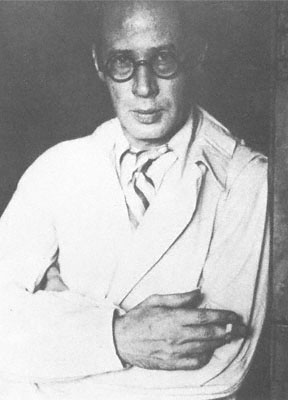
Henry Miller
KC: Isn’t it possible that if Henry Miller had not hooked up with some well-heeled sponsors in Paris no-one would have ever heard of him? Did Henry get lucky or did he create his own luck?
JD: Miller was certainly not lucky for much of his life if the books I’ve read are accurate. Miller published in France, and then Barney at Grove Press took a risk and put his books out Stateside. Thus the circus began; scandal, court case, and huge sales. I can’t see anything scandalous in Miller’s writing personally. I just see good prose and wonderful flights of imagination. When he flows he really flows like some kind of possession is at play, you know? He would enjoy success if he started writing now. He was a good writer who followed the simple discipline that one word should follow the next as if it were supposed to be right there.
If you study the careers of successful writers in depth and read the biographies you will see that they just kept plugging away until at least one person enjoyed what they were doing just enough to sustain the magic. Some of the great novelists were writing for just one person, normally a lover or a friend, or quite often, themselves. It seems that financial success and critical recognition for any artist normally comes later in life, if at all. Some people luck it and some have talent, but usually it’s just good old hard work over many, many years.
KC: A friend of mine said, as we discussed musicians, “There is more talent in the world than luck.” Do you agree with that?

JD: An individual either has or doesn’t have musical talent, although some do have better musical talent than others. Musical talent is easier to spot than writing talent, you can hear it, but when you see writing talent, you really see it. Bob Dylan, for example is an average musician but an enormously talented writer who made a fortune in the music business owing to his use of words. The guitar was a prop to success and the Beats had blasted the barn door open in terms of what you could sing about at that time and place. I’m not saying that Dylan wasn’t a rock and roller, or a folk musician, he was, but first and foremost, like Lou Reed, he was a writer who used the rock and roll platform to express himself. Is there a creative gene? I don’t know. Perhaps it is a strain of autism. Musical talent has been proven to be genetic. Perfect pitch is passed on down generations. Anyone can play the guitar or the piano but how many can reach that state where the instrument takes over the musician? When the musician is just a puppet on a stage guided by some strange higher power? Writing can be learned to a certain degree yet a writer in full flow is like the piano player guided to that golden place by the muse. Burroughs wrote in a Tangerine letter to Ginsberg that “the writing is coming on like dictation; I can’t keep up with it.” Perhaps there is something supernatural at play. I don’t know. I know only one thing. Talent and luck are less important than work. Work brings talent and luck. Warhol said work is the most important attribute any artist has in his toolkit and many would say Warhol was untalented and lucky.
KC: Warhol critics are not hard to find. Warhol-like success is quite rare. He was a worker bee. Tell me about your book on Buddhism. Is Buddhism a mist, a lacquer, a veneer or a hardwood in your life? Expand on these things called thoughts? Should we pay them any attention? How does one unlock the great mystery of life, anyway?
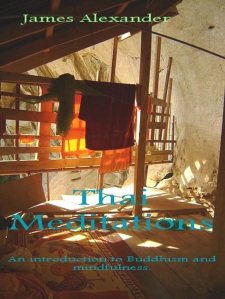
JD: Thai Meditations was written after staying at several monasteries in Thailand. There is a short story or observation for each of the seventy-seven provinces of Thailand. You would have to ask someone else about unlocking the mystery of life. I’m not qualified; I’m merely fumbling around in the dark. Thoughts shouldn’t be held on to for too long in daily life. Living in the present moment is difficult, yet, as writers we get to play with thoughts. Novelists rearrange thoughts and construct them into stories that allow the reader to become lost in the story and forget their own anxieties. Stories really are a magical gift in that respect. It all goes back to the hunter gatherer society and tales around the camp fire. I guess the story-teller was a lousy hunter.
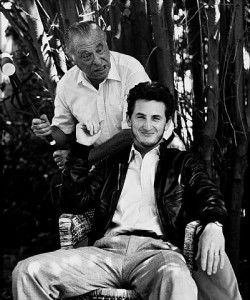
KC: Sean Penn once said that one is either born with a resistance to cynicism or you’re not. He went on to say that his friend, Charles Bukowski was one of those guys who was given every opportunity in life to become a jaded, cynical prick. But Penn claims Buk was anything but. Sean Penn goes on to describe Charles as the sweetest, most vulnerable pussycat who disguised it wonderfully. Do you agree with Penn’s assessment of Bukowski?

JD: I agree and disagree. I don’t think a child is born a cynic nor born with a resistance to cynicism. I think a cynical person becomes one by way of parental or institutional belittlement – social conditioning – although some argue genetics are at play, I’m not so sure. I do agree that Bukowski was sensitive and vulnerable. Most poets are. Penn knew Bukowski after he had made some money and had gotten himself married to Linda and had the hot tub and the BMW. He was cynical as hell while claiming to ride box cars and living on skid row. But when Penn knew him he was living the high life, Santa Barbara, baby. It’s difficult to be a cynic when you’re sitting in a hot tub smoking a Honduran cigar with close to a million dollars growing in the bank and a nice BMW on the drive and you’re having Dennis Hopper and Madonna over for brunch.
KC: How do you avoid becoming cynical? How would you describe yourself? What, if anything, do you disguise?
JD: The best way to avoid becoming cynical is to remove yourself from the source of that cynicism. If Thailand or any country brings out these feelings of cynicism, take a trip somewhere else for a week or two. If your job sucks, change it. I describe myself as a humorist creative type, a loyal son of a bitch who has a drive to succeed, but could be a better family guy. Disguise? A writer disguises nothing at all; it is all in his work for anybody to read. Do you know how much bravery it takes a novelist to publish their first novel? First novels are generally terribly personal, and packed with the author’s most awful secrets.
KC: Tell me about your writing process?
JD: It varies. The White Flamingo took a few sittings. After the notes were made and my outline was mapped out I hammered the novel out in a few weeks. I just deleted 25,000 words of my latest book Fun City Blues as I thought about a new science fiction direction. You know I was once asked by an attractive tall blond “What is a writer?” I replied “Someone who can’t stop writing.” So perhaps it’s an obsessive thing.

KC: That blond sounds smart to me. Raymand Chandler wrote about Bay City in his 7 Philip Marlow Novels, which everyone pretty much knew was Santa Monica, California. You write about Fun City in your Joe Dylan series, which most, but not everyone, would recognize as Pattaya. Explain this literary technique if you can. What are the advantages of doing it the Chandler way? Is there a down side?
JD: First and foremost I love Chandler’s work and admire everything he has written apart from some of the very early work. Secondly Fun City is a strange beast of a city, a product of my warped imagination but grounded in visits to Pattaya and Bangkok where I’ve lived for 13 years. The series has become more popular than I would have ever of imagined it to have become. Fun City gives me the license to spill out any literary phantasies I may have without the geographical or cultural restrictions of actual place. I can push the fictional world further with the freedom of this make believe city. In the current book I have the harbor, the beach, the Central Business District, and the Red Night Zone all set together in the blade-running future. I have discovered my terrain after years of fumbling around with the concept and the formula of the series. The tourist zones of Thailand are so close to science fiction that it just makes sense to write in a cyber punk vein, and go all the way with it. Joe Dylan is of course a fedora wearing gumshoe detective who navigates around this strange neon world by night. It’s a nice concept. I’m content with Joe and Fun City. They mix together well, like red wine and cheese. I like writing the series and am happy that the series is being read.
KC: You’ve been at the forefront of the first two Night of Noir events at the Check Inn 99 bar. Tell our readers about Night of Noir Number 3.

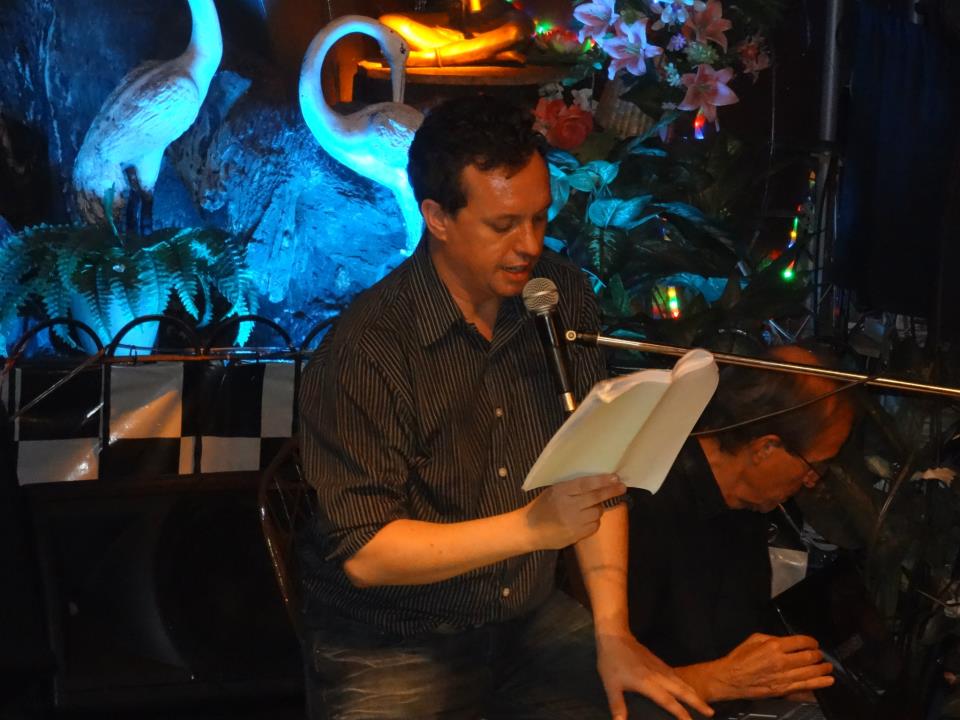
Author James Dennison Strange reads from a Joe Dylan crime novel during a Night of Noir held at Check Inn 99
JD: This coming Thursday, 8th January 2015 is the date set for the third Night of Noir. I’ll be the host for a line-up which includes, Dean Barrett and Tom Vater along with Jame Dibiasio flying in from Hong Kong. Jame wrote the excellent Gaijin Cowgirl for Crimewave Press and I believe the second book in that series is out quite soon. My publishing partner and editor John Daysh is in town. James Austin Farrell may come down to the big smoke from Chang Mai. Thom Locke is confirmed. Poet Noir John Gartland is reading. Artwork by Chris Coles and photography by Stickman and talk of an author’s band playing live. The wonderfully talented musician Keith Nolan will be in house. The last two years have been a great success and have drawn in some wonderful authors from around the world including Cara Black and John Burdett last year. Chris Catto-Smith, manager of the Check Inn 99 has been an absolute legend in helping us realize the event. Chris Coles has been an incredible influence on the whole scene with his paintings and vision and was the one who first got the ball rolling. I am very lucky and grateful to be here in this space and time with such wonderfully creative people. Including yourself, Kevin. Thanks for the time and the questions. I enjoyed it. Is it over? Do you mind if I hit Suzie Wong?
KC: The chicken livers are all gone. So, yes. Suzie Who?
JD: Exactly.

For more information regarding the upcoming Bangkok Fiction Night of Noir go to
the blog of J.D. Strange

 What is it about a pleasant fragrance that makes it appealing? What makes two people click? Often times it comes down to chemistry. Award winning photographer Hans Kemp (Burmese Light; Bikes of Burden; Carrying Cambodia) has entered the crowded private investigator genre under his pen name of Jonathan Kemp. Chicago P.I. Scanner Grant is teamed with a curvaceous ball buster of a beauty, Maxine Zwoelstra as they set out to solve two crimes: the murder of a young Tibetan girl on American soil and a missing person case, which smells more like Limburger cheese. The latter case involves searching for Max’s father and takes the duo to Hong Kong and the casinos of Macao. Kemp has put his keen sense of observation and Scanner’s olfactory system to good use in A Nose For Trouble. Physical descriptions and settings are well written with attention paid to detail. The first time novelist mixes an assortment of memorable characters, historical events, hot, spicy and believable sex scenes, along with a dead body or three in an entertaining but at times overly complex mystery. The characters include a Chicago Taxi driver with Tibetan leanings, a Vietnamese pimp, a Nazi scientist and my personal favorite a good old Aussie bloke who ends up down under.



 Thailand Footprint: Impressions left by the books, people, places and music of Thailand and South East Asia