Thailand Footprint: The People, Things, Literature, and Music of Thailand and the Region

Posts by Kevin Cummings

Henry

“This is my seventieth year of ping-pong playing,” Henry Miller wrote in 1971. “I started at the age of 10 on the dining room table. I take on players from all over the world. I play a steady, defensive Zen-like game. The importance of my recreation lies in preventing intellectual discussions. No matter how important or glamorous an opponent may be, I never let him or her distract me.”

pingpong

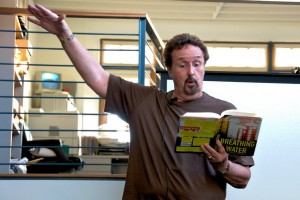
A picture I took at the Henry Miller Memorial Library in Big Sur, California – Summer 2014

Leave a comment

Write a book. Hell, I can do that. How hard can it be? I was sitting with a bunch of authors who had written a bunch of books, over a year ago at Checkinn99. So I told the owner, Chris Catto-Smith, “I’m going to write a book of non-fiction stories, which will include a chapter about the history of Checkinn99.” The cabaret bar owner and former Royal Air Force jet airline pilot replied, “Good idea.” It sure seemed like one at the time.

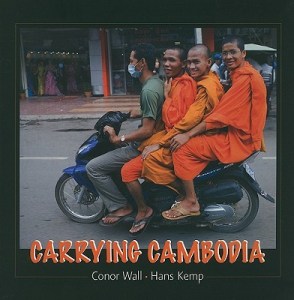
Carrying-Cambodia-Kemp-Hans-9789628563784

CARRYING CAMBODIA – A PHOTOGRAPHY BOOK By Conor Wall and Hans Kemp

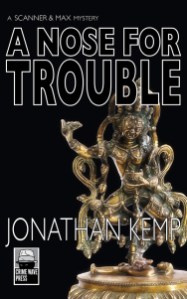
Yesterday I was in Checkinn99 again. It was a good day. I brought my longtime friend Bill there for the first time and he really enjoyed himself. The music was great as usual. Early on I spotted the photographer, Hans Kemp, sitting with a group so I went up to his table for a quick chat. Crime Wave Press recently published Hans’ first novel, A NOSE FOR TROUBLE under his pen name of Jonathan Kemp. I’ve already purchased A NOSE FOR TROUBLE for my Kindle. It has a great action packed beginning including some 1970s NBA basketball references, which I particularly enjoyed. I’m looking forward to reviewing the novel after I finish it. I asked Hans, a very accomplished photographer and publisher, about his experience of writing his first novel. “It was harder than I thought,” the creator of numerous books on photographic topics, including Carrying Cambodia, and Bikes of Burden said. That made me laugh, as I’ll soon be crossing home plate after a long round-tripper, completing my first and I am pretty sure last book, Bangkok Beat.

anosefortroublesmall-2

Hans has already received his first four Amazon reviews with an average rating of 4.8. You can click the picture above to learn more about Hans’ debut crime novel, A Nose For Trouble, which is available now.

Neil Gaiman has a great quote that I came across recently. I believe it to be true. It is:

Whatever it takes to finish things, finish. You will learn more from a glorious failure than you ever will from something you never finished.

I do not expect Bangkok Beat to be a failure. The only way it would be a failure is if I failed to do what I said I would do. When it comes out that will be success enough for me. As the saying goes, I have learned a lot during the process. I happen to like Neil Gaiman, as a writer and as someone who gives advice to writers, no matter what their skill level may be. Here is one of my favorite pieces of advice from Neil: “Tell your story… as quickly as you can, start telling the stories that only you can tell — because there will always be better writers than you, there will always be smarter writers than you … but you are the only you.”

If I were a younger man and a baseball player I’d be looking for a tryout in the rookie league. In professional baseball you have: A Ball, Double A, Triple A, and the Major Leagues. I’ve known guys who have played baseball at each of those levels. Self publishing allows just about everyone to be a rookie and make those inevitable rookie mistakes.

What have I learned? Neil is right. There will always be writers better than I could ever hope to be. Three Bangkok based writers of non-fiction come straight to mind: Lawrence Osborne, Jim Algie and Christopher G. Moore. They also write fiction better than I ever could but at least I have been smart enough, so far, not to tred on that turf. Before you ever buy Bangkok Beat make sure you have read Bangkok Days by Lawrence, Bizarre Thailand by Jim ,and The Age of Dis-Consent by Christopher. These three gentlemen have been in the Major Leagues for a long time and it shows. But if and when you are ready to read stories that only I could tell, I do hope you will consider buying Bangkok Beat even though there are hundreds of thousands of choices out there.

3 Comments

“Vanity is my favorite sin.” Al Pacino … A timely blog post by Jame DiBiasio, which he kindly allows for reblogging. Timely in that I’ll soon be published by the renowned Frog in the Mirror Press, a Big 666 Publisher if ever there was one …

2 Comments

Colin Cotterill Dogs 2

Author Colin Cotterill

Colin Cotterill was born in London, England. He has dual English and Australian citizenship. He spent several years in Laos, initially with UNESCO. Colin currently lives in a small town on the Gulf of Thailand, where he writes the award-winning Dr. Siri mystery series set in the People’s Democratic Republic of Laos, and the Jimm Juree crime novels set in Chiang Mai and southern Thailand. Colin has trained in and taught physical education early in his career. He has also taught and been a curriculum writer at Chiang Mai University, was the Project Director of Child Watch, an NGO for itinerant children in Phuket, Thailand and worked at refugee camps along the Burmese border. His uniquely hand-written CV may be viewed here.

In 2009 Colin Cotterill received the Crime Writers’ Association “Dagger in the Library” award for being “the author of crime fiction whose work is currently giving the greatest enjoyment to library users.” Cotterill won the Dilys Award in 2006 for Thirty-Three Teeth and was a Dilys Award finalist in 2010 for Love Songs From a Shallow Grave. The Dilys Award has been presented every year since 1992 by the Independent Mystery Booksellers Association to the title member booksellers have most enjoyed selling.

Since 1990, Cotterill has been a regular cartoonist for national publications (and he does cool book covers).

KC: In an essay by Jong Jie in 3:AM Magazine titled Literature and Politics Jie states:

“Where politics seeks to obscure, literature seeks to uncover; it insists upon a scrupulous rendition of reality, and on the courage to face up unflinchingly to it, no matter what it holds.”

Southeast Asia politics obscures in their own particular way. You’re a novelist who has interwoven politics into your stories from many countries. I wish to focus on three: Laos – the setting for your Dr. Siri novels and a standalone novel Pool and Its Role in Asian Communism, Thailand – the setting for your Jimm Juree series, and Burma, which you’ve written about in one of your earliest novels focusing on child abuse and pedophilia, Evil in the Land WIthout. What, if anything, do you set out to uncover about the political society of those three countries or put another way, what rendition of reality do you wish to convey? How is the politics different among the three countries and how is it similar?

CC: Jesus H Trueman, this is like a bloody university exam. What happened to the good old ‘Where do you get your ideas from?’

Okay, start. I know nothing about the penthouse of politics. Or, rather, I know what the newspapers and websites tell me, which is the same thing. But I live down in the basement where the garbage chute comes out.  I think that’s why I write about the dregs and orts of policies and doctrines rather than the people who randomly make them up. I describe how people are affected by bad decisions.  I started writing because I wanted readers to know about the seedy child abuse issues in Southeast Asia. The first hurdle I hit was that people don’t want to read about the seedy child abuse issues in Southeast Asia. It took two more books before I learned how to cleverly disguise my issues in a jolly yarn (Pool and its Role in Asian Communism). And that has become my signature. You get to the end of my books and ask, ‘I wonder if there’s any truth in that.’ With a bit of luck you might even look it up.  I write fiction but I tend to stay faithful to history. I may move buildings or shift dates for convenience but my characters are always directly influenced by the politics of the day and they’re not afraid to have opinions.

Similarities? A country with no freedom of speech run by a military dictatorship. You tell me which of the three countries I’m describing.

KC: Your SoHo Crime colleague Cara Black has said, “We write to give a voice to those who aren’t heard.” You’ve told me why you started writing; why do you still write?

CC: I don’t really like writing that much. It isn’t my outlet of choice but how many people in the world are doing what they truly want to be doing? In the beginning (and I was a very late starter) I wrote to see whether I could write and whether I could write well enough to make a living out of it. It was one of the challenges I set myself. I’ve been doing it all my life. I got lucky and passed that test. There are much better writers than me today who don’t even get their manuscripts on an agent’s desk. My timing was right. I haven’t moved on to the next challenge because none of the others involve paying the grocery bills. So the answer to your question is, ‘to feed the dogs’.

KC: You seem to have made a conscious decision to live a reality based life over a virtual one. There is no shortage of authors of varying abilities utilizing social media at varying levels. Are you sure that walks on the beach, gardening, riding your bicycle, playing with your gaggle of dogs and illustrating in your spare time beat receiving a slew of LIKES for posting a picture of Laurel and Hardy on Facebook or replying to a fan on Amazon who left you a 4 Star review? What are your thoughts regarding technology trends in the 21st Century, particularly as they relate to the publishing world and interaction with your fans?

CC: What do you mean? I have email. Since when is that not technology?  But even that’s a little too convenient for me. I miss the days when you sat on the front step waiting for the postman and cursed under your breath when he walked past. I have an email account now so the postman walks past virtually and there’s nobody to swear at when I have nothing in my in inbox. If anyone wants to get in touch with me it doesn’t take a lot of detective work. I appreciate the effort. But they can’t do it by clicking. I don’t have face book because I think it’s dumb. In my universe, ‘friend’ is a noun and ‘befriend’ is a verb and never the twain shall meet.

I was lucky in that I rode the last wave of print publishing. That public is dying out and being replaced by a Kindle generation. And with e-reads comes pirating. I can download any of my books absolutely free any time I like. So why should I pay for them?  It might not be a bad thing as people who wouldn’t have bothered to pick up my books at a shop are able to take a taste of me. With that taste will naturally come addiction and, inevitably, sales. “You know? Granny might like this. I’ll get a print copy and send it to her.”

KC: Your first Dr. Siri novel, The Coroner’s Lunch came out in 2004. The protagonist is a green-eyed, septuagenarian coroner – the country’s lone coroner – living in socialist Laos during the 1970s. This was obviously all part of a winning formula that would see the Dr. Siri series remain popular for over a decade and reach 10 books strong, with the upcoming Six and a Half Deadly Sins (SoHo Crime), scheduled for a May 19th, 2015 release. What are the joys and difficulties of writing a series of that length, given the starting age of your protagonist? Is it a safe assumption you didn’t envision either the popularity or length of the series?

CC: I was once on a panel with Robert Crais and one of his words of wisdom for aspiring writers was to make your protagonist young in anticipation of a long series. Dr. Siri started out at seventy two in a country whose use-by life expectancy was fifty-something. I had no idea the good doctor would become so popular and it does present certain problems. One of these is that I can’t afford to dally too long between books. Sometimes the next episode follows on only minutes from its predecessor. Ten books on and he’s still only seventy-four.  I suppose somewhere along the line I should consider a prequel.

I have a horrible memory and that is a terrible affliction for someone writing a series. I’m supposed to remember every detail of every event, every character. You might think it wouldn’t matter if the dog changes gender (to anyone other than the dog) or Comrade Civilai’s Citroen suddenly becomes a Renault. But, to some, it is akin to misquoting the scriptures. I have fans who know my characters better than I know my own father. What do you do at audience question time when somebody asks, ’It appears Dr. Siri is clinically alcoholic. Don’t you think it’s time he gets some help?’ I want to say, ‘He’s fictional’ but I look into the fan’s eyes and realize he’s not.

The only good point in having a regular cast of characters is that they tend to develop stories without me. In the beginning you’d say hello to them at the first script reading and they’d be nervous and uncertain. But after a couple of years you arrive late for the first editorial meeting and they’d have their parts written out already. ‘This is how I’d react in that situation,’ says Nurse Dtui. You even dare to swerve out of character and the personality police are on your back.

KC: Lets stay with character and personality. Pick any characters whom you have created and enjoyed spending time with, other than Dr. Siri and Jimm Juree – tell me their strengths and flaws and the novel(s) they can be found in.

CC: I’m very fond of the two main characters in Pool and its Role in Asian Communism, mainly because they are so diverse. Waldo is an African American widower due for retirement from his lifelong job at a pool ball factory. Saifon is a Lao girl who was trafficked to the states when she was very young and grew up on the streets. Both are flawed in their own sweet ways but they develop an unlikely friendship that endures. It was a fun relationship to write and a challenge in that the entire book was written in ungrammatical colloquial English.

Of my more recent characters I think I’d have to choose Jimm Juree’s Granddad Ja, a retired Thai policeman who spent his entire career in the traffic division because he refused to take bribes. I know…but it’s fiction. I’ve just realized how many elderly characters I have in my books. It looks like I’m paving the way for my own journey down the other side of the hill.

KC: In 2004 you wrote, “We tend to notice only the atrocities that suit us.” There is no shortage of atrocities going on near and far. Let’s focus on two that have occurred in 2015. The Charlie Hebdo slaughter in Paris, France, which left 12 people dead and the killing of 29 school children in Damaturu, Nigeria by gunmen from the Islamist group, Boko Haram. In addition to being a novelist who has written about issues that affect African children, you’re also an accomplished cartoonist. There are those who argue that the same outrage was not felt world-wide over the killing of the 29 school children as there was for the security guard and Charlie Hebdo staff who were killed. What can you say about these two sad events?

CC: Disasters have an element of ‘Thank goodness it’s not one of us’ attached to them. If Malaysian flight 370 had been full of Australian rugby players or Canadian girl guides, there would have been more of an uproar. But most of the passengers were Chinese.  Sigh of relief. After the 2004 tsunami the west was shocked at the number of white holiday makers killed. Two movies were made showing the plight of the whities even though  280,000 of the victims were Asian. Perhaps when we see a photograph of a Caucasian massacre victim it’s easier to believe it could have been us. But even so, uproar has a short shelf life.

The Charlie Hebdo killings came as I was writing my latest Dr. Siri book. The title is “I Shot the Buddha”. A few people I’d mentioned that to got in touch with me and urged me to change it for fear of repercussions. It annoyed me that idiotic violence should have an influence on my freedom of speech. The book doesn’t insult Buddhism but even if it did I reserve the right to insult any religion I wish. I welcome dialogue on the subject but I do not welcome a round of ammunition through the chest. If I were to believe in a god it would be because I loved him, not because I was scared to death of him.

KC: You live with your wife in the literary hotbed of Thailand. A fishing village located on the southern part of the Gulf of Thailand, Pak Nam. Describe Pak Nam as if you were employed with the Tourism Authority of Thailand and then again, as if to keep your most brazen fan from stalking you for your autograph of a first edition hard-copy of The Merry Misogynist. 

CC: The small town of Pak Nam (cagily non-specific as down here every town a short way from the coast has its own Pak Nam) sits on the estuary of the xxx river. As the sun rises on the Gulf of Thailand, it nudges home the squid boats, their decks piled high with the night’s catch. The colourful market is vibrant with the mix of southern Thai and Burmese accents. The open fronted shops on the narrow streets offer great bargains: Malay cloth,  Chinese toys and trinkets and music CD’s all the way from Myanmar. And for tourists and locals alike, the restaurants offer all the delicacies one would expect from a town so in harmony with the sea.

But, of course, nobody in their right mind would live there. The beaches are strewn with garbage nine months of the year and the shallow waters are a breeding ground for great schools of jelly fish. To break the monotony of a place with no entertainment, bodies regularly wash up on the sand, carried in on the currents from popular tourist islands. If you’re really bored you can go to the high spot of Pak Nam, the 7-Eleven, and watch the Burmese being shaken down by the police, or take a drive along the most dangerous stretch of highway in the country to Tesco where they have thirty four brands of cooking oil but no wine. Better still, don’t come.

KC: What can your readers expect from Dr Siri’s latest adventure, Six and a Half Deadly Sins?

CC: During the decades of civil war in Laos, the Chinese were building roads in the north of the country under the guise of international aid. It wasn’t a coincidence that the roads headed from China in the direction of the Vietnamese and Thai borders. Even in the fifties the cunning Chinese were paving the way to international trade. But when hostilities began in 1978 culminating in a Chinese invasion of Vietnam, these roads had a more sinister meaning, providing the invaders with another front from the west. It was all Laos could do to prevent China from crossing their borders.

Dr. Siri and Madam Daeng become entangled in this international intrigue whilst following a trail of clues woven into the hems of Lao skirts. Can they solve the puzzle before the invaders swarm across the border? Can they hold their own with the criminals operating in the hub of the Golden Triangle drugs trade? And whose funeral is that at the end of the story? (Cue kettledrums)

Six and One Half Deadly Sins by Colin Cotterill - Interview

KC: Peter Sellers, in his role of Chance the gardener in the movie Being There said, “In the garden, growth has it seasons. First comes spring and summer, but then we have fall and winter. And then we get spring and summer again.” What wisdom can you add to that and what was the last item out of your garden that you shared with a neighbor?

CC: That’s my favourite movie. But Dr. Siri goes one better with his immortal line, ‘Forget the planet, save the garden.’ It’s my own pay-it-forward mantra. If everyone undertook one small random act of gratuitous generosity from time to time, the world would eventually sort itself out. But of course not everyone will, so we’ll be stuck with the mess we have today. Selfishness rules. In fact we took a bag of our mangos to the neighbor just this morning to wish them a happy new year. The buggers threw water at us.

KC: The dogs in your Jimm Juree series get more than cameo roles – a trio even get a mention in the acknowledgments of The Axe Factor – GoGo, Sticky Rice and Beer. One becomes a hero and saves the day. If everyone had the desire and ability to be a dog owner what are the first few things they would learn?

CC: Cesar Millan (the dog whisperer) reminds viewers every week that dogs are not small people. But, of course, they are. They have personalities and far more human characteristics than a lot of people I know. But they’re small people who forgive easily, who don’t care about our bad habits and who provide love unconditionally. After a tricky domestic upset a few years ago I made the decision not to go back on the road but to stay with my dogs. They’ve repaid me a thousand times for that decision. Of course they get a part in my books.

KC: This interview happens to coincide on the two year anniversary of my blog with the frog in the coconut shell, which you kindly drew for me. Thanks again for that. 

CC: Happy anniversary.

Colin Cotterill also has another novel coming out next week. Here is the synopsis from Amazon.com:

Colin creates a new member of his cast of characters in is latest book Bleeding in Black and White. CIA agent Robert “Bodge” Leon has been deskbound since joining the agency at its post-WW2 inception. He dreams of being in the field, but when that happens it goes far from as expected. Sent to the Vietnamese highlands during the French fight against independence, he meets the beautiful concubine of the Emperor. Meanwhile back in the US the KGB is using a purge inside the CIA to recruit double agents. Can Bodge survive to find love in the Orient and see justice done back home?
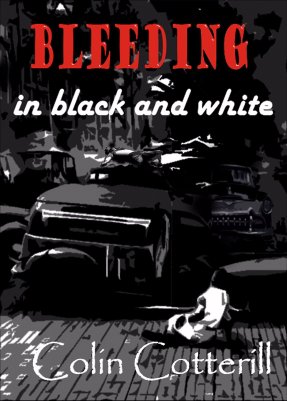
Black and White CC

For more information about the author, cartoonist and regular chappy, Colin Cotterill go to: www.colincotterill.com

You may pre-order Six and a Half Deadly Sins, scheduled for a May 19th, 2015 release at Amazon.com

To read page 306 of Six and a Half Deadly Sins click here.

For a book review of Six and a Half Deadly Sins from the New York Journal of Books click here.

Leave a comment

Wonderful interview by novelist Bruce DeSilva of Timothy Hallinan regarding his Junior Bender and Poke Rafferty series. Great Questions. Great Answers. Too good not to re-blog on a lazy Easter Sunday. Thanks Bruce DeSilva for allowing the ability to do so …

Bruce DeSilva's avatarBruce DeSilva's Rogue Island

Timothy Hallinan Timothy Hallinan

I interviewed fellow crime novelist Timothy Hallinan for Crimelandia, the website of Left Coast Crime, a major crime fiction conference where he was recently awarded a coveted Lefty Award. Here’s the text of our conversation:

Bruce DeSilva: You have two critically-acclaimed crime series going, one featuring Poke Rafferty, an American journalist living in Bangkok, and the other chronicling the life of Junior Bender, a Los Angeles burglar with tormentors on both sides of the law. This has you turning out two books a year. How do you manage this and remain sane – or am I making a false assumption?

Hallinan: It’s a false assumption. I actually missed the deadline for the 2013 Rafferty book, For the Dead, and unless I put my ass in the saddle and keep it there, I’m going to miss the deadline for this year’s Junior, King Maybe. Despite all the energy…

View original post 2,885 more words

Leave a comment

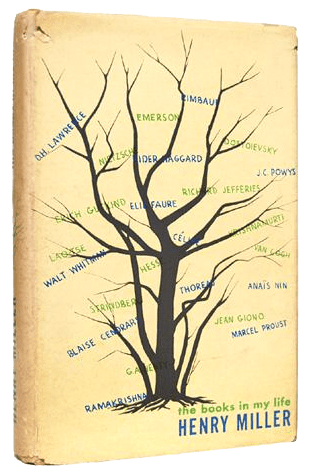
the-books-in-my-life


I found this month’s Henry Miller quote on an interesting site called, Henry Miller Online – a tribute to Henry’s books, art, loves and friends. There is a collection of unique and hard to find Miller items. The quote comes from The Books in my Life by Henry Miller. Click the picture above to go the web site. The quote is:


“The more one writes the less books stimulate. One reads to corroborate, that is, to enjoy one’s own thoughts expressed in the multifarious ways of others.” —Henry Miller (The Books in my Life)

Leave a comment

Matt Carrell was born in Brighton, England more than half a century ago. The son of Irish immigrants, he graduated from London University and then trained as an accountant. Matt’s work involved a great deal of international travel including long stints in Hong Kong and Thailand.

Author Matt Carrell

Matt’s first published work was a series of short stories entitled Thai Lottery… and Other Stories from Pattaya, Thailand. The idea for the book emerged while watching tickets being sold by a Bangkok street vendor, and hearing from a friend about the perils of getting involved in the parallel underworld lottery. After receiving positive feedback from readers he started work on Thai Kiss, his first full length novel, this was published in May 2013.

91-ofHdVUjL._SL1500_

His second novel, Vortex, is also largely set in Thailand and draws on Matt’s extensive experience of the investment industry. Vortex was released in January of 2014.

Vortex Matt Carrell

In June 2014, A Matter of Life and Death, a novel with a football (soccer) theme was published.

Matt Carrell A Matter of life and death

Breaking the Thai theme, Matt has also written a short story, Something Must Be Done, about a High School shooting, set in the USA, which takes on the issue of gun control or more accurately lack of control and the USA’s crazy gun culture.

Vortex was very well received by critics and the public alike. As a result Matt wrote, Vortex – The End Game, which was launched in November of 2014.

Matt and his wife divide their time between England and the French Alps, with frequent trips to Asia. Matt Carrell is a nom de plume.  In today’s interview Matt explains, among other things, the game of soccer better than anyone ever has, in my opinion. I am pleased to welcome Matt Carrell here today.

KC: Let’s talk football. A game you call beautiful on your side of the pond and we Americans call Super, once a year. Tell me what is beautiful about the The Beautiful Game? I’m having a hard time figuring it out on my own. More people watch and cheer the game of soccer than any other. I’ll leave out the word, root, for now.

MC: Kevin, I think there’s been a terrible misunderstanding. I’d never call “soccer” a beautiful game, I’m just addicted to the spectacle. Humans are essentially tribal and if footballers didn’t play out our proxy wars for us, I’m pretty sure we’d be back to invading each other’s towns, burning houses and trying to kidnap the women folk. Fans vent their frustrations from a carefully segregated section of the stadium and trash-talk each other on web forums. If they couldn’t do that, they’d be killing each other. It’s not a sport so much as a cunning method of maintaining law and order amongst those who don’t buy into religion. The government loves it because it’s a neat distraction. They may be running the country into the ground but their incompetence pales into insignificance compared with that referee who denied your team a goal on Saturday afternoon.

The “beautiful game” is not in my heart, it just speaks to the dark side of my head.

American football is much simpler, it’s something for you guys to watch between the commercials!

KC: Your writing in Thai Kiss won me over in the first paragraph. Tell me the first paragraph or sentence from two of your favorite books  or stories you have written and then tell me your favorite opening line from any of your favorite works of fiction? 

MC: The hardest thing to achieve in any story is to keep the reader hooked, to make them want to know what happens next. If you want to upset an author here’s a foolproof method. When they ask if you’ve read their latest book you reply, “Well I started it.” There’s nothing worse than to hear that someone read a few pages and didn‘t feel compelled to stay up all night to finish it. The sooner you get your reader’s attention the better, but you’ve got to maintain that momentum through the story. One of my favorite reviews of Thai Lottery was a single word and I’m not even sure it’s a word. “Unputdownable!”

I don’t consciously try to deliver an attention grabbing first line but I’m sure it helps. Thai Kiss starts with:

When your best mate gets washed up on the beach with a hole in the back of his head, it’s time to reflect. I turned it over and over in my mind but there was only one conclusion. If I stuck around, I’d be next.”

I hope this gives the reader a pretty fair impression of what will happen next. The narrator has good reason to believe he is in danger and is going to have to abandon the life he has built for himself. I’m also trying to convey that the story is pacey and action packed.

My latest novel is called Vortex… the Endgame, the second book in the Vortex series. Chapter one starts with:

 “On one side of the sectarian divide, it was the brutal slaying of an heroic freedom fighter, on the other; the clinical execution of a ruthless terrorist. To an over-worked, underpaid Inspector in the Royal Ulster Constabulary it was just another ton of paperwork…”

 Again I hope it gives a flavour of what follows, violent death is an expected consequence of war. These days it happens all too often when the rest of the world is just trying to go about its business. The story is about the lengths some will go to, to further their business and political aims when others are just struggling to get by.

To answer the second part of your question I went to dig out all the books I possess which would make me look well read and quietly intellectual. Then I realised I don’t have any. I can’t say they are the very best opening lines but these two did grab me:

From Brighton Rock by Grahame Greene – “Hale knew before he had been in Brighton three hours, that they meant to murder him. With his inky fingers and his bitten nails, his manner cynical and nervous, anybody could tell that he didn’t belong…” This is a great opening line, you get the sense of danger and the particular vulnerability of the character that’s being introduced. The smart money is not on Hale to survive.

From The Day of the Jackal by Frederick Forsyth – “It is cold at six-forty in the morning of a March day in Paris, and seems even colder when a man is about to be executed by firing squad.”  Again I think this is a great hook. The first time I read this I actually shivered.

For any writer who is worried that their first line isn’t sufficiently catchy to deliver them a best seller, I’ll offer you this, “I scowl with frustration at myself in the mirror. Damn my hair  – it just won’t behave…” I’m bored already that’s all I read, but it’s from 50 Shades of Grey, which I understand has been quite successful.

KC: Let’s shift gears away from sport in the interest of international harmony and away from 50 Shades of Grey, for this question at least.  Thailand is a mixed bag when it comes to the fiction authors. The general consensus is a lot of books produced by Thailand authors are sub-par as a group. In real estate the good properties pull up the value of the bad ones in the same neighborhood. But with authors in Thailand a case could be made that all the bad authors pull down the value of the good ones. Would you agree with that? Without naming any authors, at all, give me your impressions of the books written by Thailand based authors or books with Thailand themes? What is the upside of being an author in general if there is one, and what is the downside of being an author who writes fiction with a Thailand setting? 

MC: I’m an avid consumer of books set in Thailand and they certainly span the full range of the quality spectrum. Thailand is the perfect setting for a thriller. It offers a wonderful backdrop for the plot and the opportunity to introduce characters that don’t fit the usual stereotypes. The best writers seize that with both hands and offer an insight into a culture that will be completely new to many readers. When I had the initial idea for Vortex, a novel that takes financial crime as a central theme, I intended to set it in London. Switching it to Bangkok and Hong Kong gave the story an extra dimension.

The disappointing books fall into two categories. The first being those that really could be set anywhere in the world. “Got drunk, met a girl, made a dick of myself.” You don’t have to leave home to do that. The second is where the writer forgets that someone is paying cash for their book and the editing is poor and slipshod. Thai based books seem to have more than there fair share of bad grammar and random typos. When you get one of those that falls into the first category as well, it’s time to ask Amazon for a refund. Thailand is an extraordinary, complex country and the writers who help you to see what lies beyond the veneer, are giving their readers far more than those who write about their own back yard. There are plenty out there that deliver but, as you said, I’m not allowed to name names.

The upside of being an author is definitely the interaction with the people who’ve read my books. I often get messages asking me to bring back characters from previous books in whatever I write next. It’s a real kick to know that something I created has had that impact.

The downside is definitely that many people have a tendency to prejudge anyone who displays any sort of detailed knowledge of Thailand. My first two books focused on the bar scene and there’s an assumption that I couldn’t possibly know so much about it without being an enthusiastic participant. I’ve also written a short story about a high school shooting but, oddly enough, no-one thinks I’ve killed anyone.

KC: I want to talk about progress. I do not read Stephen King novels but I like, very much, what King writes on the subject of writing. What are you better at, now, than you were when you wrote your first book? How does one become a better writer other than writing a lot? Is it possible, given the opening salvo you’ve shared with us about Fifty Shades of Grey to define what a bad writer is? And finally what is easier to recognize, good writing or bad writing?

MC: I was incredibly lucky, my first book was taken up by a small boutique publisher called Aardwolfe Books. The editor for Thai Lottery was only interested in making it as good as it could possibly be and he didn’t spare my feelings. I’m still scarred by a note he put on one of my chapter endings, it said, “You probably think this is dramatic, it’s not.” He was right of course. I’d like to think my writing has always been strong on plot and in delivering plenty of twists and a good ending. With a lot of help from others I think I’m better now at creating a picture of what I want the reader to see in each scene and in fleshing out the characters so they feel like real people you can relate to. I’ve also learned to keep the story tight, eliminating the extraneous waffle that you might want to write but which isn’t key to the storyline.

If you want to improve as a writer I think you have to put your ego on one side. Encourage constructive criticism and try to get other experienced writers/editors to go through your books with a fine tooth-comb. You might not agree with everything they say but you’ll have learned something from the debate.

I wasn’t inspired by the first line of 50 Shades of Grey, and although I’ve read only a few lines from the rest of the book, it’s not for me. That’s not to say that EL James is a bad writer, quite the contrary. Anyone who has created something that people enjoy reading is a good writer. It’s rare to find an author who appeals to everyone, so as long as your books work for people outside your immediate circle, you pass the test. Excluding friends and family, if everyone else reading your stuff says it sucks, then you’re a bad writer.

An author’s task is to transport readers to another place, to make them eager to read the next page yet not want the book to end. I get irritated if I’m reading a book where the author fails to pull that off because of implausible plot lines, clumsy dialogue, bad grammar or multiple typos. I’d hesitate before calling that author a bad writer, however. If they are selling books and getting genuine positive reviews then their stuff is working for some people, just not for me.

I think bad writing is much easier to spot than good, you may not like classical music but you’ll know if the guy playing the piano is a novice. The same applies to novelists.

23587672

KC: Have you set any goals for yourself as a novelist? 

MC: I don’t see writing as a career, I had one of those and it left me somewhat disillusioned. I got into this because a story popped into my head that I thought would entertain people. Feedback from the publisher and from readers of my first book was better than I could ever have hoped and encouraged me to write more. As long as I think I can produce a good story and the positive reviews keep coming, I’ll keep writing. Obviously I’d like to see my books in every bookstore and most writers dream that one day they’ll get the call from a movie producer, but I’m realistic enough to know that is a distant dream. The biggest pay off I’ve had from writing has been the contacts I’ve made with other writers and readers of my books and everything I’ve learned whilst researching my stories. As long as I’m reaping those rewards, I’ll be happy.

KC: What makes you angry? 

MC: I just turned 55 and you don’t have time for me to tell you everything that makes me angry. I’m sure it’s an age thing. At the top of a very long list would be modern politics. I’m staggered at how venal and self-serving our leaders have been in recent years and appalled by the consequences of their poorly conceived actions. So many of our politicians have squandered the opportunity to make a real difference, choosing instead to ride the gravy train for as long as possible, with eye-catching short-term gimmicks rather than genuine long term solutions. I don’t see much chance of this trend reversing in the near future either. My second favourite bug bear is the media, which long ago stopped holding politicians to account and can now only be relied on to push its own agenda in a desperate rush for ratings and ad revenue. A good step forward would be if Mr Blair was to stand trial for his abuse of power. That would make me laugh.

KC: Thanks Matt for doing this interview long distance. I look forward to catching up with you the next time you are back in Bangkok.

MC: Thank-you, Kevin.


For more information regarding Matt and his novels go to: www.mattcarrellbooks.com


post-milestone-200-2x


200th Post at Thailand Footprint

2 Comments

Crackdown by Christopher G Moore - Kevin Cummings Book Review

As a resident of Thailand since 2001 reading and finishing a Vincent Calvino crime novel by Christopher G. Moore is akin to being presented with a gift. It comes with no strings or pretty bow attached.

I also liken reading a Christopher G. Moore novel to being outdoors, alone, on a nice day as you eat a delicious apple. Some bites snap off perfectly, with great pitch, and meet all your expectations. Once in awhile you spot an imaginary worm-hole that makes you pause. But the experience, overall, remains a satisfying one, especially when you get to the core of the story. Sentence by sentence I enjoyed CRACKDOWN, I read many of them twice.

CRACKDOWN is set in post coup Thailand and the insights Moore provides give the reader either an education or affirmation as to what they might know or think they know about life, illusions (and politics) in the Kingdom with a capital K. Moore shines a light on the plentiful black matter found in Bangkok with his signature noir style. CRACKDOWN is the 15th Vincent Calvino novel written by Moore, featuring the disbarred New York lawyer turned Bangkok P.I. and previously troubled shooter. The book may be considered the third in a trilogy starting with MISSING IN RANGOON and following THE MARRIAGE TREE. Readers who enjoyed one or both of those novels will find added pleasures in CRACKDOWN.

Moore takes you on a field trip complete with binoculars. Among the things you’ll see: University political dissidents using Banksy style art to get their message across, the life of an honorable Khmer tattoo artist, an unfinished 9 story condo that transforms itself into its dual role of slum dwelling and tourist attraction with small time thugs on top and big fish aplenty in the basement, Calvino’s white robe wearing, sage advice giving guru, and the behind the scenes attitude adjustment centers where happiness is born. Plus you get to know the lifestyles of high ranking policemen and their HiSo BMW driving wives. There’re more than a few dead bodies laying or floating around to remind you where you are and propel the mystery forward.

Technology plays a big role as does information gathering and high level computer science. You also get a retro 1990 re-creation of a computer-less Calvino office complete with his bun-hair wearing, saucy secretary Ratana thrown into the mix, just for a bit of nostalgia and contrast. For meet-ups with his disgruntled side-kick McPhail there’s a hamburger serving black van restaurant with the appetizing name of Road Kill along with an assortment of old Asia hands lamenting about the good old days, which have pased them by. Discussions among the veteran expats include the effects of the internet on the nightlife scene and the creative ways the Chinese use their black vans in Asia. Literary references are wide ranging including, Graham Greene, Joseph Heller, Lucian Freud, George Orwell and Henry Miller.

My niggle with the book it is that Moore doesn’t give us enough of Dr. Marley Solberg, the brilliant mathematician and algorithm specialist whom we last saw rocking away with Calvino in the stateroom of a fancy yacht in The Marriage Tree. Her presence is felt but she’s kept off the meandering map most of the time as Calvino navigates this journey solo. Keeping track of all the players involved in the Rohingya trafficking aspects of the novel proved trying for me, at times. It’s a novel Moore would not have written and probably could not have written twenty years ago. All in all I’m glad Vinnie lives to see another sunrise. There are more than enough messages to decipher; it all depends on how you want to unwrap the package.

As for any future Christopher G. Moore novels, I’ll read them the same way I live my days: one at a time, with appreciation for all the gifts they include.

4 Comments

MinkoSolo

Photograph of Christopher Minko by Jonathan van Smit

Christopher J. Minko was born in Australia in 1956, a child of European refugees and grew up outside a small Victoria bush town. From an arts and major event management background he spent a decade working for various Australian artistic and educational organizations, including the Moomba Festival and the Victorian Ministry for the Arts. He also served as events director for the Australian Football League’s Grand Final, the nation’s largest annual sporting event. Minko first came to Cambodia in 1996 as a technical advisor for the Cambodian Disabled Peoples Organisation, and went on start Cambodian Disability sport programs. In 2003, he founded the Cambodian National Volleyball League (Disabled), which has become a model for sport and rehabilitation, and has also begun a countrywide wheelchair-racing program.

Minko and I have a mutual goal of bringing the Cambodia Women’s National Wheelchair basketball team over to Bangkok to play a Thai National team.

Christopher Minko is the lead man for the Cambodian noir band Krom, which made a historic three venue debut in Bangkok, Thailand in December of 2014. Krom strive towards originality at all times, they work acoustically and have the objective to establish a musical genre called contemporary Mekong Delta Blues, based on the merger of Delta Blues guitar work with the magic and mysticism of Khmer vocal sounds. Krom is unique on many levels, one of them being that they are a bilingual band, Khmer and English.

Thailand Footprint is pleased to have Christopher Minko back today to discuss, among other things, his new song Taliban Man.

KC: Christopher, welcome back for a second interview at Thailand Footprint. Our last interview went two parts and ended up in a couple of newspapers in Thailand and Cambodia. Lets see where this one goes. Today’s interview will be short, sweet and sour. You can’t escape sour in many Krom songs. And that’s putting it mildly. Taliban Man is no exception. It’s your latest release. Tell me where the inspiration came from and how long Krom worked on the song creatively once you had the lyrics down?

CM: Probably enough love songs floating about out there mate and someone has to do the dirty work and sing the songs that tell of the very sad reality of; it’s a mighty fucked up world out there at the moment and that we need to speak out or sing more about the grave social injustices and horrendous levels of violence and slavery that are enveloping this world.

It is the historical role and responsibility of the musical troubadour to write and sing about these issues, so in a world dominated by plastic mind numbing music and with very few troubadours left, that’s what Krom does (acknowledging author Christopher G Moore for that last reference to the role of the troubadour).

All KROM songs come from the heart – Like that master songwriter Willie Nelson said in a recent interview –“he doesn’t know where the songs come from – they just appear from somewhere (one doesn’t ask where…) and when they do appear in this unexplained way you make sure you damn well follow through with them” – I find similar – they fall into the Minko head (often unannounced) and in fact one is slightly tortured until they get recorded otherwise the song just keeps going around in the head which is not a good thing after a few days.

So with Taliban man –  I am the father of a now 21 year old daughter whom I raised on my own and of course I dearly love my daughter and am proud of her successes and growth into a confident woman – so I am a parent –When I heard of the Taliban massacre of the Pakistani schoolchildren – It somehow belted the shit out of me; the tragic and utterly insane concept of adults murdering innocent children is, for me, the ultimate act of cowardice and somewhere in the equation I see humanity as sliding downwards into an abyss of no morality covered by a cesspool of blood  and I am horrified that humanity can stoop so low with such acts of violence – The level of violence and selfishness that is swallowing the globe, deeply disturbs me along with the increasing use of children in warfare – so all of a sudden the following lines came into my head.

“Yeah, I’m the man

I’m a Taliban Man

I shoot little children

In the head

Ah gotta make sure

That they are dead”

….and from there came the song Taliban man

And it became, like so many Kromsongs; “a song that has to be sung.”

KC: The song opens with laughter and gunfire. Tell the story of Taliban Man to our readers as a lyricist might and then in broader fashion – how it could be interpreted by different listeners.

CM: Very simple / very blunt – Taliban man describes the ultimate act of cowardice carried out by so called “men” who slaughtered 165 Pakistani schoolchildren – Adults killing Children ! – a senseless, brutal violent act of  pure cowardice and the horror of this tragedy is described within the lyrics – the lyrics are very simple and are meant to be that way – To the point – for example

“A bullet in the chest

A broken breast

Her blood on the floor

Naked and raw”

Recognizing the complexity of the theme and the sensitivity of current global politics, I have included the below KROM statement about this song in order to avoid confusion or a misinterpretation of the song – however I very much stand by this song, as I repeat – It’s a song that needs to be sung and I do acknowledge that mockery is a very very powerful tool to campaign against violence in all its manifestations.

A KROM Statement: This KROM song is dedicated to the hundreds of thousands of innocent children killed in war and civil conflict. The lyrics can be equally applied to the thousands of Jewish children gassed in Nazi concentration camps in WW2, to the multitude of children who died under the brutal regime of Pol Pot in Cambodia, the recent kidnapping of innocent children by Boko Haram and the innocent children currently being killed by US drone bombs in Afghanistan. Saddest of all is the recognition that even in the 21st Century, humanity continues to use innocent children as tools of war and civil conflict.

KC: The Bangkok Post journalist Alan Parkhouse wrote a great article with the headline Dark sounds from the Cambodian soul in the December 18th, 2014 edition, prior to your three Bangkok events. Tell me what the Bangkok concert dates were like for you and the other members of Krom and when can we expect Krom back in Bangkok?

CM: We had a fantastic time in Bangkok for many reasons, great venues, finally a listening and attentive audience and wonderful and very professional hosting of the band by the 3 venue operators. Most of all I felt that KROM came of age in Bangkok. The band were very cohesive, travelled well together and by the third night we were all on a true natural high as a result of the music being made and the many positive responses to the music of KROM. It was also a wonderful opportunity for the band to meet many of the Bangkok based authors such as yourself and James Newman and many others whom I was delighted to finally meet in person and it gave me the opportunity to thank all of our KROM friends in Bangkok who are supporting the creative endeavours of KROM. I was also very proud of and humbled at the historical nature of the gigs given that KROM are one of the first Cambodian contemporary bands to perform in Bangkok due to the lack of cultural exchange between Thailand and Cambodia as a result of decades of unwarranted and politically manipulated animosity between the 2 nations. The Khmer members of the band were greeted at all times with open arms and respect by all of the Thais within the audiences – a truly great trip indeed and we are looking at returning to Bangkok for a minimum of 3 nights of performances in May of this year.

KC: Salmon Rushdie in a May 11th, 2012 New Yorker article titled simply, “On Censorship” wrote the following:

“Great art, or, let’s just say, more modestly, original art is never created in the safe middle ground, but always at the edge. Originality is dangerous. It challenges, questions, overturns assumptions, unsettles moral codes, disrespects sacred cows or other such entities. It can be shocking, or ugly, or, to use the catch-all term so beloved of the tabloid press, controversial. And if we believe in liberty, if we want the air we breathe to remain plentiful and breathable, this is the art whose right to exist we must not only defend, but celebrate. Art is not entertainment. At its very best, it’s a revolution.”

Talk about your art in the terms that Rushdie discusses. And also specifically the whole concept of rocking the boat. There are those out there – and I am sure you know this – that say, you shouldn’t rock the boat. Tell us, again if you have to because it is important, why the boat needs to be rocked. And if you can discuss the recent Charlie Hebdo slaughter in Paris, France in those same terms please do so.

CM: Great question, great quote  Mr. Kevin. Allow me to start this answer with quotes from three truly remarkable musicians who understood fully that original art is never created in a safe middle ground and there is no doubt that they also understood the responsibility they carried, not only in their lyrics but also in the quality of their musicianship and they knew that with both of these elements combined, pioneering works of powerful political musicianship were being created with their works revered to this very day.

From three great musicians:

“This machine kills fascists.”

Woody Guthrie

“The world is filled with people who are no longer needed — and who try to make slaves of all of us — and they have their music and we have ours.”

Woody Guthrie

“I know the police cause you trouble

They cause trouble everywhere

But when you die and go to heaven

You find no policeman there”

Woody Guthrie


“Slavery has never been abolished from America’s way of thinking.”

Nina Simone

“I’m a real rebel with a cause.”

Nina Simone

And a very important Q+ A with the legendary Pablo Casals. The legendary cellist Pablo Casals was asked why he continued to practice at age 90 and he answered:

“Because I think I’m making progress.”

Krom does rock the boat in a musical world now dominated by mediocrity and artists subservient to the mundane musical meanderings of corporate greed and the power of the political lyric has sadly been lost.  Krom rock the boat quite deliberately. From the onset we set the objective to adhere to Pablo Casals advice in term of musicianship and to not hesitate to write lyrics about tragic social issues that often remain unspoken or only mentioned in a tokenistic sense when the world is now riddled with problems such as human and sexual slavery, being at the highest point ever in the history of humanity along with an ever increasing level of violence internationally including the murdering of thousands of innocent children as part of an accepted mechanism within warfare. Krom accepts its traditional role as the ancient troubadour: to observe and to write about life and sadly all its misery as we see it, and to be honest in that depiction with the hope that somewhere along the line the music and lyrics will assist to effect positive social change. The world does have the potential to be a remarkable place and there are truly inspiring individuals such as the recent Uruguayan president who resigned with a remarkable dignity and humility that is sadly missing in today’s world leaders. Krom does not seek to preach, we simply try to describe the world as it is, a world trapped in selfishness, greed, suffering and tragedy with problems that seem endless. Like Charlie Hebdo, Krom often use mockery within the lyrics as we recognize mockery’s power to counteract violence and social injustice.

Whilst our songs are often harsh and even brutal in their content we hope that Krom songs act as a catalyst for thought and that our music may assist the process of positive change “in a world where humanity has gone stark raving mad.” (From the Krom song, 7 Years Old – Her Body Sold). Even though our songs often ring of despair – Krom retains hope and please – don’t just listen to the words ( although we want you to !) – It’s also about the music as that’s what Krom is so Krom on!


KC:  What’s the best way for our readers to support Krom by purchasing Taliban Man – where can we find it?

CM: In January 2015 Krom signed with Hong Kong’s Metal Postcard to promote sell and market Krom’s complete back catalogue and all future releases.

This is the statement from Sean Hocking the CEO and Founder of Metal Postcard Records:

Metal Postcard is thrilled to have Krom join the label. They are without doubt one of Asia’s most interesting and forward thinking acts tackling issues that you won’t be hearing any time soon in  C, M , K or J pop songs !  We look forward to getting Krom recognition worldwide.

(You can check out Metal Postcard Records on Facebook at: https://www.facebook.com/MetalPostcardRecord ).

[For a free download of the Krom song Don’t Go Away from BandCamp click here ].

KC: Thanks, Christopher for coming back to discuss the latest Krom happenings here at Thailand Footprint.

CM: Anytime, mate.


Follow Krom on Facebook: www.facebook.com/pages/Krom-Phnom-Penh/214467175289003

And @KromSong on Twitter: twitter.com#!/KromSong

Official Krom website: www.themekongsessions.com


3 Comments

I really enjoyed my visit to the Henry Miller Memorial Museum in Big Sur, California last summer. A timeless respite, which I plan to visit again.

henry-miller-memorial

Writing and the spirit of Henry Miller are on my mind. Here is one of many quotes from Henry gleaned from a book I purchased while in Big Sur titled,  Henry Miller on Writing:

”I began in absolute chaos and darkness, in a bog or swamp of ideas and emotions and experiences. Even now I do not consider myself a writer, in the ordinary sense of the word. I am a man telling the story of his life, a process which appears more and more inexhaustible as I go on. Like the world-evolution, it is endless. It is a turning inside out, a voyaging through X dimensions, with the result that somewhere along the way one discovers that what one has to tell is not nearly so important as the telling itself.” Henry Miller


Leave a comment