Thailand Footprint: The People, Things, Literature, and Music of Thailand and the Region

Posts from the ‘Bangkok Fiction’ category

Axe Factor

The Axe Factor by Colin Cotterill was first published by Quercus in the United Kingdom in 2013 and published in the USA by Minotaur Books in 2014. It is the third Jimm Juree Mystery set in Thailand. Colin is also the award winning author of the Dr. Siri coroner series, set in Laos, numbering nine novels.

A blurb on my book tells the reader, “Cotterill understands people and writes subtle humor like a master.” Library Journal (starred review) on The Axe Factor. No argument here with the people part, including Thai people or the starred part. It’s a book that will make you smile, often, even during the blood and the body parts. As for the humor being subtle? As cutting and sharp as the featured murder weapon would be a more apt description. The mystery is told in the narrative voice of former Chiang Mai resident and investigative reporter, Jimm Juree. Jimm and her eccentric family have relocated to the coast of southern Thailand, in Chumpon province, where they run the Gulf Bay Lovely Resort and Restaurant. In addition to the nucleus of Jimm there is Granddad Jah, a retired Thai traffic cop with a keen sense of detail, character assessment and poor hearing, Mair the somewhat demented and digressive matriarch, and Arny the sensitive bodybuilder nicknamed after his Schwarzenegger idol. The long lost father, a squid fisherman named Captain Kow is introduced for the first time. Only Sissi, the aging transgendered, former beauty queen brother has remained in Chiang Mai.  There she spends most of her time involved on illicit computer activities when not on the phone with Jimm, helping her solve an investigative or personal problem. Dogs are also part of the family. GoGo, Sticky Rice and Beer even get a mention in the acknowledgment of the book, as they should. Their roles are important and comedic, sometimes simultaneously. Chompu, a gay and cheerful Thai police officer makes his recurring role a memorable one, once again.

Clever writing is found throughout this farce of a murder tale. But the improbable is not really so improbable when viewed through Cotterill’s observations and imagination. Lines like, The duty officer was very fond of microwave tuna pie, are found as you read about the lone night policeman known to wait outside the town’s Seven Eleven store.

It’s not all fun, murder and games, however. During Jimm’s investigation into the disappearance of a female doctor, deception, corruption and foul play by a corporate sponsor involved in the production of baby formula plays a prominent role. The message is: natural is better and what could be more natural than mothers’ milk? The subtlety comes in environmental issues, in the form of garbage washing up on the beaches daily or a character wondering in Buddhist fashion, which life form they will return in for the next life, including the possibility of, a barely alive piece of coral.

The smart and sane one in the family, Jimm Juree, finds romance in this tale in the form of expat author Conrad Coralbank, who coincidentally or not has the same initials as the author and has also published a popular fictional series set in Laos. No one is spared from the acerbic wit of Cotterill, including the publishing industry, sex scenes in literature, technology users, authors and perhaps even readers of mystery fiction? The obvious becomes not so obvious in this wild fantasy ride.

As with Killed at the Whim of a Hat, the first in the Jimm Juree series, you get a value added feature in the form of the Chapter Titles. These are English translated signs, found in Thailand, such as Have a Good Fright, seen at a Thai domestic airport and Intercourse for Beginner found on an English Language CD. Blog entries by the murder suspect are skillfully interjected as are emails to and from Clint Eastwood’s Malpaso Production Company, which add to the reading pleasure.

There is a bit of a surprise ending and readers may be left wondering if the rumors Colin Cotterill has given up writing novels for both the Dr. Siri and Jimm Juree series in favor of other artistic pursuits and spending more time with his dogs are true? Fans of Colin Cotterill fiction and intelligent, insightful and humorous writing in general can only hope the rumors are just that.

For more information regarding Colin Cotterill the author, artist, and regular chappy go to: www.colincotterill.com

CityLife


This post originally ran at Chiang Mai City News and may be viewed there by clicking the above banner


Leave a comment
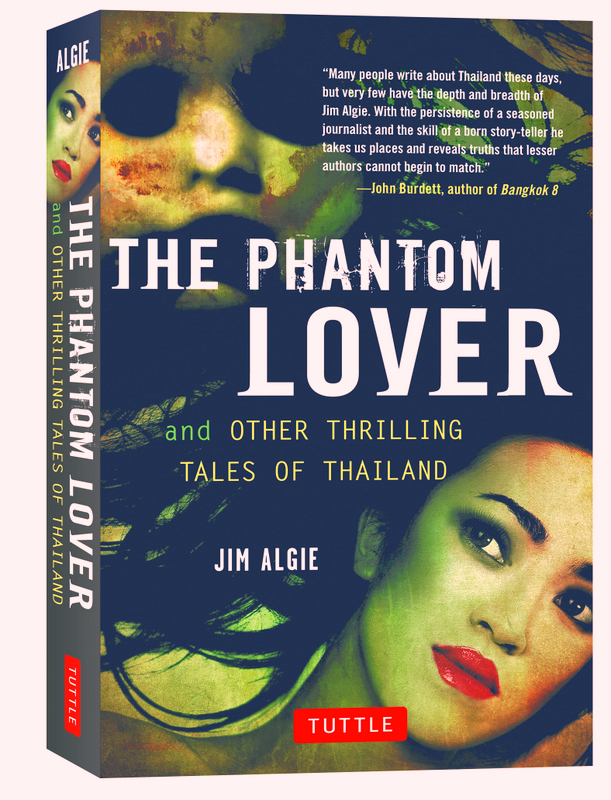
Jim Algie has done what many do not believe in and fewer still achieve. He has reincarnated himself and stayed alive in the process. The former punk rocker from Canada, known in those days as Blake Cheetah, spent eleven years playing bass guitar and touring with various bands before deciding to change careers at the tender age of twenty-eight. An age that Jimi Hendrix and Jim Morrison never reached. After a two year stint in Spain, where his focus on writing accelerated, Algie found himself in Bangkok, Thailand with the intention of heading to Taipei. In Jim’s case the road to Bangkok was paved with good intentions as Thailand has now been his home for over twenty years. During that time he did a lot of observation and investigation of all things not mundane in the kingdom. As with any good detective, he hit a few dead ends along the way. But as the saying goes, patience is its own reward. Jim Algie patiently studied what was in front of him and sought adventures off the beaten path. The outcome produced enough material to publish a variety of short stories, earning the writer several awards, including a Bram Stolker Award – a recognition presented by the Horror Writers Association for “superior achievement” in dark fantasy and horror writing.  Jim Algie has had two books traditionally published, BIZARRE THAILAND: Tales of Crime, Sex and Black Magic (Marshall Cavendish 2012) a collection of non-fiction stories and his recent collection of  fictitious writing, THE PHANTOM LOVER and Other Thrilling Tales Of Thailand (Tuttle Publishing 2014). Jim’s also an accomplished journalist, editor and travel writer; he has contributed to many periodicals and travel guidebooks. Jim  is the author of “Tuttle Travel Pack Thailand.” I am pleased to welcome Jim Algie here today.
.
Algie2000
TF: What makes Southeast Asia a good setting for writing?
.

JA: It’s all the myriad paradoxes and extreme juxtapositions. You’ve got these ancient sites like Angkor Wat and the Temple of Dawn, as well as hyper modern malls; there’s incredible hospitality jostling with every sort of barbarity; you’ve got arcane superstitions counterbalanced by a whole new wave of thinkers and artists; some of the most colourful festivals I have ever seen in stunning contrast to the shabbiest urban blight. And then there’s the hotpot of ethnicities and all sorts of eccentric expats. So you’re never short of stories, backdrops and characters.

TF: What books and or music  influenced you growing up?

JA: My first writing influences were Edgar Allan Poe and Jack London. My taste in tunes also strayed towards the darker side of the spectrum, with Alice Cooper, Black Sabbath and the New York Dolls leading the savage wolf pack. Even today I still revere those bands and authors.

TF: What’s the last record you can remember listening to?

JA: I’ve been listening to Wilco again, and their scandal-plagued magnum opus, Yankee Hotel Foxtrot. It’s one of those rare instances when a group actually took no shit from the corporate rectums of the music business. Their label dropped them because they thought the album was anti-commercial, then the band sold it back to a different subsidiary of the same company for even more money and it became the biggest-selling album of their career. To my ears, Wilco is the best American band of the past 20 years, and Jeff Tweedy is America’s greatest singer and songwriter since the late Kurt Cobain and Paul Westerberg of The Replacements.

TF: Tell our readers about the musical chapters of your life. Your ability allowed you to travel a bit. Where did you go? What did you experience that stays with you from that time?

JA: For the first out-of-town shows we played with a surf-punk band called the Malibu Kens, we had to drive 200 miles to the city of Calgary in western Canada, to play four sets a night for seven nights in a row at a skidrow tavern called The Calgarian to largely hostile or indifferent crowds of truckers, junkies, alkies, wretched-looking prostitutes and a few punks who also hung out there. All four of us stayed in a small, mildew-smelling room, full of silverfish and other vermin, in the hotel. During one gig, a guy got stabbed to death in the bathroom and his bloody handprints could be seen on the walls for months afterwards. Another night there was a 20-men-and-4-whores brawl in the bar with people smacking each other over the head with chairs and tables while we played. For a bunch of middle-class boys, still only 18 and 19, that was our indoctrination – our baptism of hellfire – and real life on the dark side of the street.

Blake Cheetah

Jim Algie (far right) during his Blake Cheetah days

TF: Is there a book laying around your home that you haven’t gotten around to reading?

JA: Many, but the new biography of China’s Great Reformer, Deng Xiaping, is especially huge and daunting.

TF: Complete this sentence.  I write to

JA:  … communicate something to the world and myself that cannot be communicated in any other way or through any other medium.

TF: Make the case for fiction over non-fiction in 207 words or less.

JA: What’s missing from so much journalism and non-fiction is a sense of humanism and heart. When journalists strain for superlatives they resort to the same geriatric clichés about “triumphs of the human spirit” or “tragic demises” or “losing battles against cancer” while labeling serial murderers as “monsters.”  Dead language does not elicit any lively reactions. One of my favorite parts of Timothy Hallinan’s Breathing Water, a superbly suspenseful Bangkok thriller in his Poke Rafferty series, is how the Thai cop and his wife deal with her terminal illness. In journalism these days, human-interest stories are disappearing in place of celebrity gossip and business stories. By contrast all great works of fiction put people first and human concerns at their core.

To borrow another example from Breathing Water, Tim has a great paragraph about how the light in Bangkok around dusk, which is the protagonist’s favorite time of day and mine too, changes about five different times. I sensed that was true, but it really opened my eyes to something that I hadn’t seen before. In this way, fiction and poetry enrich our lives and perceptions. By contrast, in most non-fiction – except for maybe memoirs – the editor would cut all those descriptive details as irrelevant.

TF: Tell us about your latest collection of stories, The Phantom Lover and Other Thrilling Tales of Thailand, and why book lovers should read it?
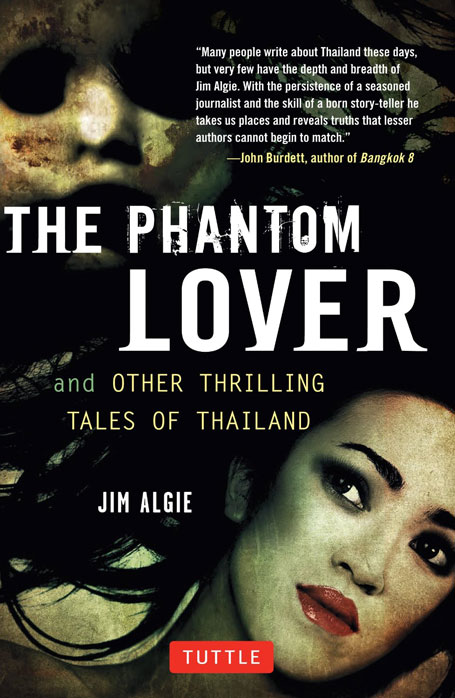
phantom-lover-455JA: If they don’t read it I can’t say their lives will be greatly impoverished or they will come down with any loathsome diseases, but those who are interested in Thailand and SE Asia will find a different set of stories and characters, often with Thai protagonists, that deliver some different insights into the lives of young high-society women, ancient folklore with modern twists, the rural downtrodden, and what will probably remain the biggest natural disaster of our lifetimes, the 2004 Asian tsunami.

TF: Please tell me about your current favorite dead author.

JA: Raymond Carver. I just reread a kind of greatest hits’ collection of his short fiction called Where I’m Calling From. He was the most heralded short fiction author when I was studying Creative Writing in the late 80s. So I wanted to revisit those stories to see how he achieved those incredible effects with the most unadorned prose and lack of sensationalism combined with very ordinary characters caught up in entirely plausible situations. “Errand,” his story about the death of Anton Chekhov, whom was the writer he was most often compared to, and which he wrote while dying of a similar disease, is one of the great masterpieces of contemporary literature. It’s most likely way beyond anything I could ever achieve, but there’s no point in aspiring to mediocrity. There’s already enough of that on TV as it is.

TF: What is your approach for a book launch? You’ve had two now – for Bizarre Thailand and The Phantom Lover. Were they similar or different?

JA: I am not an orator. I don’t do readings or impersonations. So my approach is similar. I present a slide show of travel pics, book covers, personal shots, “Hell Money Banknotes” from the Chinese Festival of the Hungry Ghosts, and talk about all sorts of influences that were melded together to form some of the stories, from serial slayers like Ted Bundy and Jeffrey Dahmer, to lesbian erotica, European artworks, snake-handling shows in Thailand and black magic from the time of Angkor Wat.

Jim Algie Shadow

Jim Algie and shadow at The Phantom Lover Book Launch at WTF Bar

TF: Let’s talk about shadows and demons.  Just because they are fun to discuss. How important are they to a writer? Are they one and the same thing? Should a writer have demons of his own in order to create fictional ones? If a writer hasn’t struggled with his shadows or demons is he/she in denial? 

JA: Everyone has their own shadows and demons. Since we can’t talk about them in polite company we have to find other outlets like books, music, TV shows and films. From any artist’s perspective the demons are slippery and the shadows immaterial, so they are not easy to write or sing about. Either it comes off like macho bravado or like self-pitying whining. Ultimately, you need to strike a balance between the two and not give any easy solutions or sermons about conquering them. For the most part, I try to stay away from those first-person confessional sorts of stories, though I did write one long novella, “Obituary for the Khaosan Road Outlaws and Imposters,” in the last book that features some demon wrestling and shadow hunting.

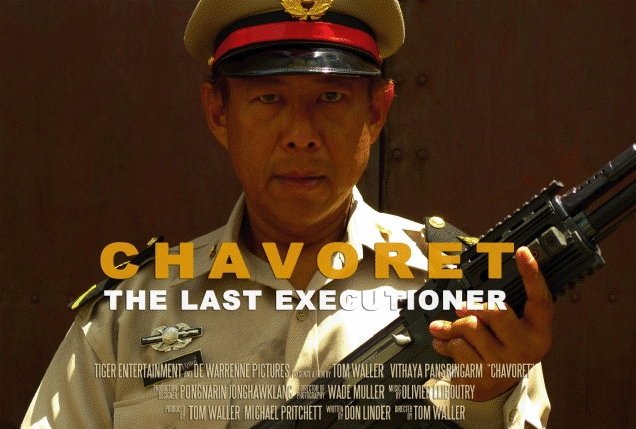
TF: You were a drinking buddy of Thailand’s last executioner, Chavoret Jaruboon and attended his funeral in 2012 after he died of cancer. Chavoret was personally responsible for executing 55 inmates. I understand a movie about his life has just been released; can you tell me about it?

lastexecutioner

JA: I just reviewed the film for the Bangkok Post. (Biopic Takes No Prisoners) It’s a pretty accurate depiction of his life from being a teenage rock ‘n’ roller to becoming a prison guard, so he could take care of his family, and then working his way up to executioner. As I mentioned in the review, “conflicted characters make the best protagonists and hinges for dramatic tension,” so that’s why I’ve written about him in Bizarre Thailand: Tales of Crime, Sex and Black Magic, as well as the Phantom Lover collection. He was a fascinating man,  deeply tormented by guilt and karma, but in Thailand, and this is not mentioned in either the film or in my books, the executioner can be seen as an heroic figure, too, freeing prisoners from their bad karma to be reborn again. Tellingly, the death chamber at Bang Kwang Central Prison is referred to in Buddhist terms as the “room to end all suffering.”

TF: Any plans for the Year of the Horse?

JA: As with every previous year I am trying really hard not to die, and to finish some new books and a bunch of stories. Here it is July already and I’m still breathing, making toast and typing words on a keyboard, so I take these gifts as good omens.

TF: I’ll toast to all that. Thanks, Jim.

ALgie One Foot

An inquisitive Jim Algie

For more information about Jim Algie and his writings go to: www.jimalgie.club


CityLife
This post may also be seen at Chiang Mai City News by clicking the above banner


Leave a comment

MWF Ang_portrait (1)s

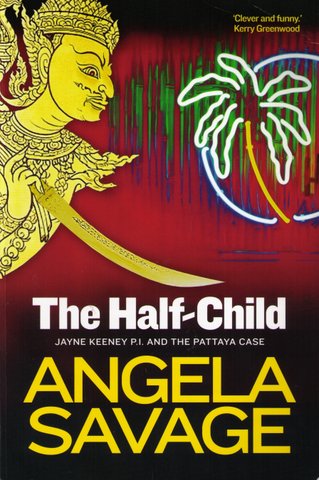
Thailand Footprint is pleased to welcome Angela Savage to our Fast Track interview. Angela has strong ties to Thailand that go back almost thirty years. Like inaugural Fast Track interviewee, Andrew Nette, she resides in Melbourne, Australia. That’s not a coincidence as Angela and Andrew are partners and they chose The Lucky Country in which to raise their daughter. Angela has three novels set in Thailand in the Jayne Keeney P.I. series. They are: BEHIND THE NIGHT BAZAAR, set in Chiang Mai, THE HALF CHILD, set in Pattaya and THE DYING BEACH set in Krabi. She is a writer with a social conscience. You will get a good crime story and at least one message in an Angela Savage novel. Here is how Andrew Nette described Angela’s work ethic:

“She works incredibly hard to give readers an insight into what it’s like to live in Thailand, for foreigners and Thais, with all the blood, sweat, tears, beauty and – as is usually the case for expatriates – embarrassing social faux pas that this can entail.”

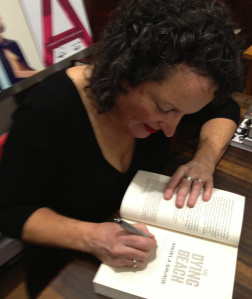
angela-signing_ellie-marney_crop

Angela Savage at the book launch for The Dying Beach

Welcome, Angela Savage:

TF: Is Australia still The Lucky Country and if so, why?

AS: The simple answer is yes – provided you’re not Indigenous, homeless or an asylum seeker. Among the non-Indigenous population, Australia’s health and wellbeing indicators are up there with the best of them; life expectancy is among the highest in the world. We’ve weathered the GFC better than most – all of which begs the question, why are we so damn mean? Our current treatment of asylum seekers is shameful. Peace and prosperity appear to have made Australians paranoid rather than comfortable, a situation not helped by the absence of visionary political leadership.

End of rant.

TF:  What book(s) or music influenced you growing up?

AS: My grandfather, nicknamed ‘Banjo Savage’, worked as a musician on cruise ships in the 1920s, and taught me to sing what my mother referred to as ‘drunks’ songs’ – ballads about passion, pain and death – when I was still a toddler. Mum attempted to counter these early influences with liturgical music, but somehow Kenny Rogers managed to slip through the cracks, bringing more songs about passion, pain and death. The ideal musical education for an aspiring crime writer, really.

TF: What’s the last record or book you can remember listening to or reading?

Among my most memorable recent reads are two collections of short stories: Sightseeing by Rattawut Lapcharoensap, set in Thailand; and Holiday in Cambodia by Laura Jean McKay, set in Cambodia.

Music-wise, I’ve been listening to Bruce Springsteen and the E Street Band live at the Hammersmith Odeon in London, 1975. They sound remarkably like they did in Melbourne in February, 2014.

TF: Is there a book out there or laying around your home that you’ve been meaning to read but haven’t gotten around to it yet?

AS: I’ve been meaning to read Vikas Swarup’s Six Suspects, the sequel to his excellent Q&A, which was made into the film Slumdog Millionaire. Timothy Hallinan’s The Queen of Patpong is also towards the top of my TBR [To Be Read] pile.

TF: Complete this sentence: Amazon.com is …

AS: …a convenient place for Kindle users to buy books. I do use a Kindle for travel, but I still read mostly paperbacks.

TF: Make the case for fiction over non-fiction in 100 words or less.

AS: Non-fiction is only ever as strange as the truth, and can only take you places that exist. Fiction is not bound by such limitations. Fiction sets you free.

TF: Please tell me your three favorite dead authors? Or if you are feeling confident you can throw some live ones into the mix?

AS: Favourite dead authors: Angela Carter, Raymond Chandler, Oscar Wilde.

Favourite authors still living: Barbara Kingsolver, Simone Lazaroo, Honey Brown, Wendy James, Megan Abbott, Garry Disher, David Whish-Wilson and Andrew Nette.

TF: How important is setting in a crime novel? What is it about Thailand in general and Chiang Mai in particular that makes it such a great setting for a crime novel?

AS: I think it was the events of 1992 that first fired my imagination about Thailand as a setting for crime fiction. After spending several idyllic days on Koh Samet, my partner and I happened to be in Bangkok in May when the Thai army opened fire on demonstrators at Sanam Luang. The fact that the surface calm and beauty of the country could erupt so suddenly into violence proved irresistible to me as a writer. In addition, the coexistence in Thailand of old and new, tradition and modernity, religion and consumerism, parochialism and globalisation provides so many riches for a fiction writer to mine.

Thailand is not merely the backdrop to my crime novels, but a character. the stories I write couldn’t take place anywhere else.

As a non-Thai writer, I challenge myself not to only expose Thailand’s seedy underbelly but to also showcase the beauty of the country. Chiang Mai was the setting for my first novel, Behind the Night Bazaar, because it has both. My Australian expat PI character, Jayne Keeney, alludes to this towards the end of the novel when she reflects that, “while Chiang Mai might have an ugly side, the light that afternoon was at its most flattering.”

Behind the Night Bazaar cover (1) (1)s


I set my second novel The Half-Child in Pattaya, which is not the country’s most attractive location—one character refers to it as ‘Thailand’s own Sodom and Gomorrah’. I balanced this by having a character come from Kanchanaburi, allowing me to take the reader to some Thailand’s ‘wild west’.

The Half Child cover (1)s


By contrast, my third novel, The Dying Beach, is set in Krabi, a stunning location. I don’t know what it is about crime writers that sees us visit beautiful places and start mentally populating the landscape with dead bodies, but that’s what happened when I visited Krabi on holidays. I guess it’s our way of paying tribute to a place.

The Dying Beach_large_cover (1)s


TF: What does The Year of the Horse have in store for you?


AS: As someone born in The Year of the Horse, I am looking forward to 2014.

Angela in Krabi 2011 (1) (1)s

 Setting is important to crime fiction author, Angela Savage

AS: I’ve recently enrolled in a PhD in Creative Writing in order to spend the next three years writing full-time. I’m working on a novel set in Australia and Thailand that deals with commercial surrogacy between the two countries. I’m also hoping to finish off the fourth book in the Jayne Keeney PI series, set in Bangkok during the financial crisis of 1997.

TF: Thank-you, Angela for being our guest at Thailand Footprint. I hope you get a chance to put your feet on Thailand sand again in the near future. 


Angela Savage is a Melbourne-based crime writer, who has lived and traveled extensively in Asia. Her first novel, Behind the Night Bazaar won the 2004 Victorian Premier’s Literary Award for an unpublished manuscript and was shortlisted for the Ned Kelly Award for Best First Book. Her second novel, The Half-Child, was shortlisted for Best Crime Fiction. Angela is a winner of the Scarlett Stiletto Award for short crime fiction. Her latest novel is The Dying Beach.

Leave a comment
Can you picture your favorite Thomas Kinkade painting? That was a trick question. Can you picture ANY Thomas Kinkade painting? If you can do either, you’ll need to deviate 180 degrees from where you are to enter the bleak, dark world Jim Algie has painted, with brutal honesty, in his fine collection of short stories, THE PHANTOM LOVER and Other Thrilling Tales of Thailand. (Tuttle Publishing, Singapore 2014). ​The book has been available in Thailand bookstores since the beginning of the year. The Amazon.com release date was February 4, 2014, available in paperback or ebook format.
.
The Phantom Lover and Other Thrilling Tales of Thailand by Jim Algie
The Phantom Lover is composed of 9 stories; the shortest being a mere 10 pages about a love affair regarding a male feline temptress with a hair fetish – The Vicious Little Monk. The longest and last is, Tsunami at 113 pages or over 1/3 of the book’s 319 total pages, detailing the devastation – physical and emotional – of the 2004 earthquake and subsequent destructive waves, set in Phuket, Thailand. While the first 8 can  be read in any order, Tsunami is best read last as it uniquely serves as an epilogue, returning many of the previously read characters we have gotten to know in an ambitious, imperfect and entertaining novella-like finale.
.
The book starts off well, with a personal favorite: Death Kiss of a King Cobra Show, featuring a Thai snake charmer, Yai. For this dear farang reader Algie’s writing style is refreshing in that he creates believable back stories for the Thai people we may have seen many times but never gotten to know or sadly, made no effort to know. Algie’s prose makes us glad we finally did, whether it is a fictional or semi-true tale – the blanks are filled in beautifully. It came as no surprise to me that the two blurbs on the book are from Thailand’s A List of fictional prose, John Burdett and Christopher G. Moore. Yes, the book has the occasional jar head, bar girl, writer/English teacher that doesn’t stretch the reader’s imagination much, but even they tend to be rougher, tougher and more emotionally intelligent than your standard fare. It is the unique Thai characters, like Yai, that stand out for me in this Haunted Mansion ride of a book.
.
The Legendary Nobody, creates a believable character and biography for Thailand’s infamous mass murderer, See Ouey. Mr. Ouey is now famously preserved at the Songkran Niyomsane Forensic Medicine Museum located in Bangkok’s Siriraj Hospital. Another real life character that stands out is found in, Life and Death Sentences. A story about Chaovaret Juruboon, whom Algie memorializes in the beginning as: a rock n’ roller, a drinking buddy and Thailand’s last executioner. Both characters are fascinating based on information anyone could Google but it’s the details, some imagined and some true, filled in by Algie, which gave this reader such an entertaining ride. You may feel nauseated on occasion but you’re glad the ticket stub is in your pocket.
.
Algie’s brush strokes include a once innocent bar girl who connived retaliation for all the wrongs inflicted upon her by the sordid, perverse and deviant behavior that exists in the Land of Smiles. It ends badly for one customer. Others describe fruit fornicators, necrophilia jokes, criminal philanthropists, a conflicted photojournalist, an honest but corrupt Bangladeshi human trafficker, and farangs living with their illusions and denials. Or worse yet, not living with them.
.
Carl Jung was purported to have said, “Knowing your own darkness is the best method for knowing the darkness of other people.” If true, Jim Algie’s shadow must be pitch black and if not a constant companion a friend he can call upon, when needed. In all that darkness are characters trying to make sense of what appears to be a senseless world, sometimes with sardonic wit, sarcasm and black humor other times with the old reliable’s of kindness and caring coupled with an occasional bout of optimism and faith.
.
My nit with Algie’s story telling is that he places some great lines in the narrative that would read well in dialogue. As a result the book is dialogue light. An example in Tsunami, a paragraph starts out with: Big tragedies ask huge questions. It concludes with more narrative around a crackling campfire scene about: God and country, death, democracy and in the end what it all came back to was good friends, family loyalties, and the simple dignity of doing an honest day’s work for an honest day’s pay.  Those are moments that convey good values but where I would have liked to have seen more conversation going on as you can read later in the story when Wade confronts a gloomy Yves:
.
 “No offense, bud, but I’m kinda getting the feeling that you’ve, uh … lost it.”
.
The exchanges from that point on are great at recapping the effects and affects a mass tragedy like the Tsunami of 2004 had on hundreds of thousands of people. Of all the stories my favorite was, The Obituary for the Kaosan Road Outlaws and Imposters. It recalled a time on Khaosan Road in Bangkok, before it became trendy, when people still used pay phones. The back packers, adventurers and petty crooks who lived there found the living was cheap but not always easy. The 47 page story is a ripper of a yarn about the lives and inhabitants of what is now mostly a bygone era in Bangkok. The scene at the airport depicting the commission of an international felony in a pre-technology boarding pass scam is superb. You feel the fear as you read about the knocking knees.
.
The Phantom Lover and Other Thrilling Tales of Thailand has something for almost everybody. If you’re the one with the Thomas Kinkade painting above your couch you’ll probably want to give it a pass. But if your tastes run closer to an oil painting by an artist with a severed ear, a Henry Miller watercolor, a Dali pen and ink, a Chris Coles acrylic or even a thumb-tacked poster of Dogs Playing Poker, these thrilling tales are framed beautifully and make for a great read.
For more information about Jim Algie and his books go to: www.jimalgie.club
.
CityLife
This post may also be found at Chiang Mai City News by clicking the above banner
Leave a comment

AnonymousManBKK

Oh well, I’m the type of guy who will never compromise

When I whistle and I yell, you know that I’m around

I hate ’em and I hate ’em ’cause to me they’re all the same

I squeeze ’em and I squeeze ’em and everybody knows my name

They call me the yammerer

Yea, the yammerer

I roam around, around, around, around

Oh well, there’s Lek on my left and there’s Noi on my right

And Jasmine is the girl that I’ll be with tonight

And when she asks me, which one I love the best

I tear open my shirt, where my face is tattooed on my chest

‘Cause I’m the yammerer

Yea, the yammerer

I roam around, around, around, around

Oh well, I roam from street to street, I go through life without a care

And I’m as happy as a clown

I with my two fists of iron but I’m going nowhere

I’m the type of guy who likes to meet and greet

I’m never in one place, I roam from street to street

And when I find myself a fallin’ for some facts

I hop right in that ‘Benz of mine, until I’m back on track

Yea, ’cause I’m the yammerer

Yea, a yammerer

I roam around, around, around, around

‘Cause I’m a yammerer

Yea, a yammerer

CityLife

This Thailand Footprint post can also be seen at Chiang Mai City News by clicking the above banner.

2 Comments

CGM

Reading good crime fiction is like listening to good music. Some novels are like putting on an album. Others are the whole concert going experience for the true fan, which includes anticipation. Once there, you get: the musicians on stage; the loud speakers; the big screen; the characters in the crowd; the lyrics and the music. The songs include old favorites and new tunes that take time to appreciate. Reading, The Marriage Tree, (Heaven Lake Press 2014) a Vincent Calvino crime novel by Christopher G. Moore, #14 in the series, falls into the concert going category.

The Marriage Tree comes one year after the 13th in the series, Missing in Rangoon, which left Moore, if not Calvino, at the top of his game. I was pleased to learn The Marriage Tree begins with longtime fictional Bangkok private detective, Vincent Calvino haunted by a series of deaths that took place in Rangoon and Bangkok. Vincent is hurting as we have never seen him before. This is not the Calvino in SPIRIT HOUSE when he was left bleeding by a knife wielding katoey and a gun toting, lottery ticket seller. Nor the one in COLD HIT when Vincent got cold-cocked and wound up with a broken nose while delivering a birthday card. Or the many other times the pro problem solver has been shot at, punched at or threatened. This time the tough guys beating up on Vinny are the very ones his longtime friend, Royal Thai Police Colonel Pratt routinely diverted him from. Pratt is still Calvino’s friend but no longer his protector. And Calvino is beating himself up too. Just two reasons you know straight away, The Marriage Tree is different from any previous Calvino novel.

Despite his difficulties, Calvino stumbles upon a new murder to solve with ties to dangerous old foes. They lead to an underworld network of human slavery, corruption and abuse. The scene about the destruction of a Rohingya refugee camp near the Myanmar border is vivid in its description and inhumanity. Moore is a risk taker. It is one of many qualities I like about his writing. Christopher G. Moore has his critics. The more adamant ones might cite the Rohingya history lessons in the middle of the novel as unnecessarily long and not essential to a fictional crime story. I disagree. The benefits of reading Moore’s writing are varied and diverse. He gives the reader a murder mystery that is top notch. But Moore also provides a good story within a good story. And that story is on the front pages of the newspapers at times, even if some important people would like it buried forever, like so many bodies at sea. That’s harder to do than it sounds. Moore moves those dual stories forward with colorful settings, characters you care about and plot points difficult to guess correctly. Woven into the mix are Moore’s observations about humanity, power, corruption, illusions, culture, technology, wealth, the spirit world, rituals, privacy, individuality, relationships and the upside of being a farang in Thailand as well as the downside of being a Rohingya refugee caught in no man’s land. It’s all there, streaming on demand in The Marriage Tree.

One of the more interesting characters is Calvino’s love interest, a brilliant mathematician who made a fortune in the algorithm information gathering age, Dr. Marley Solberg. She helps Calvino in more ways than one all the way up to the believable, well written and satisfying ending. Longtime readers of the series will also enjoy the return to prominence of Calvino’s crude talking, hard drinking and chain smoking buddy, McPhail. The Marriage Tree stands up perfectly well as a stand-alone murder/mystery, mystical/thriller, but those who read Missing in Rangoon first will benefit. The Marriage Tree is a top tier crime novel set in a top tier city, Bangkok, to be enjoyed by crime fiction readers everywhere.

Christopher G. Moore is an accomplished novelist. If you like staying at home in your cozy chair, listening to your music on low, he may not be the read for you. If you don’t mind a live venue with the sound a bit loud, compound but satisfying with a slight risk you may get a drink spilled on you, then he may well join your list of favorite crime novelists for good, if he is not already among them.

The-Marriage-Tree2cover

Mr. Moore is appearing in Chiang Mai on Saturday, December 28th, 2013 at Suriwong Book Center on Sridonchai Road, where he will be available to sign copies of The Marriage Tree from 2:00 p.m. to 4:00 p.m. Phone: 053 281 052 for more details. Paperbacks of The Marriage Tree are available now throughout Thailand. Ebooks will be available in January 2014.

This review ran previously at Chiang Mai City News and can  be read there by clicking the banner below:
CityLife

Leave a comment

With the year of 2557, 2014 or the Year of the Horse fast approaching I list my favorite novels of fiction, which I read in the past 12 months. This list was composed in true Thailand style democratic fashion. I nominated myself to make these decisions. I then appointed myself to a committee of one because I know what is best for you, the common reader out there. I also handle the appeals process. Don’t think of me as an elite. Think of me as your democratically elected leader, without the hassle or cost of an election. Herewith find Thailand Footprint’s Fiction Favorites for 2013. Any of these books would make a fine holiday present for yourself or any fiction fan.

Angry Birds by James Austin Farrell

Angry Birds

The Cambodian Book of the Dead by Tom Vater

The Cambodian Book of the Dead by Tom Vater

The Fear Artist by Timothy Hallinan

Fear Artist

Killed at the Whim of a Hat by Colin Cotterill

untitled

Missing in Rangoon by Christopher G. Moore

MissingInRangoon2

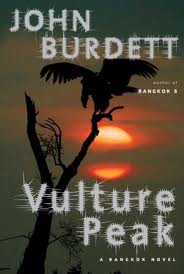
Vulture Peak by John Burdett

VP

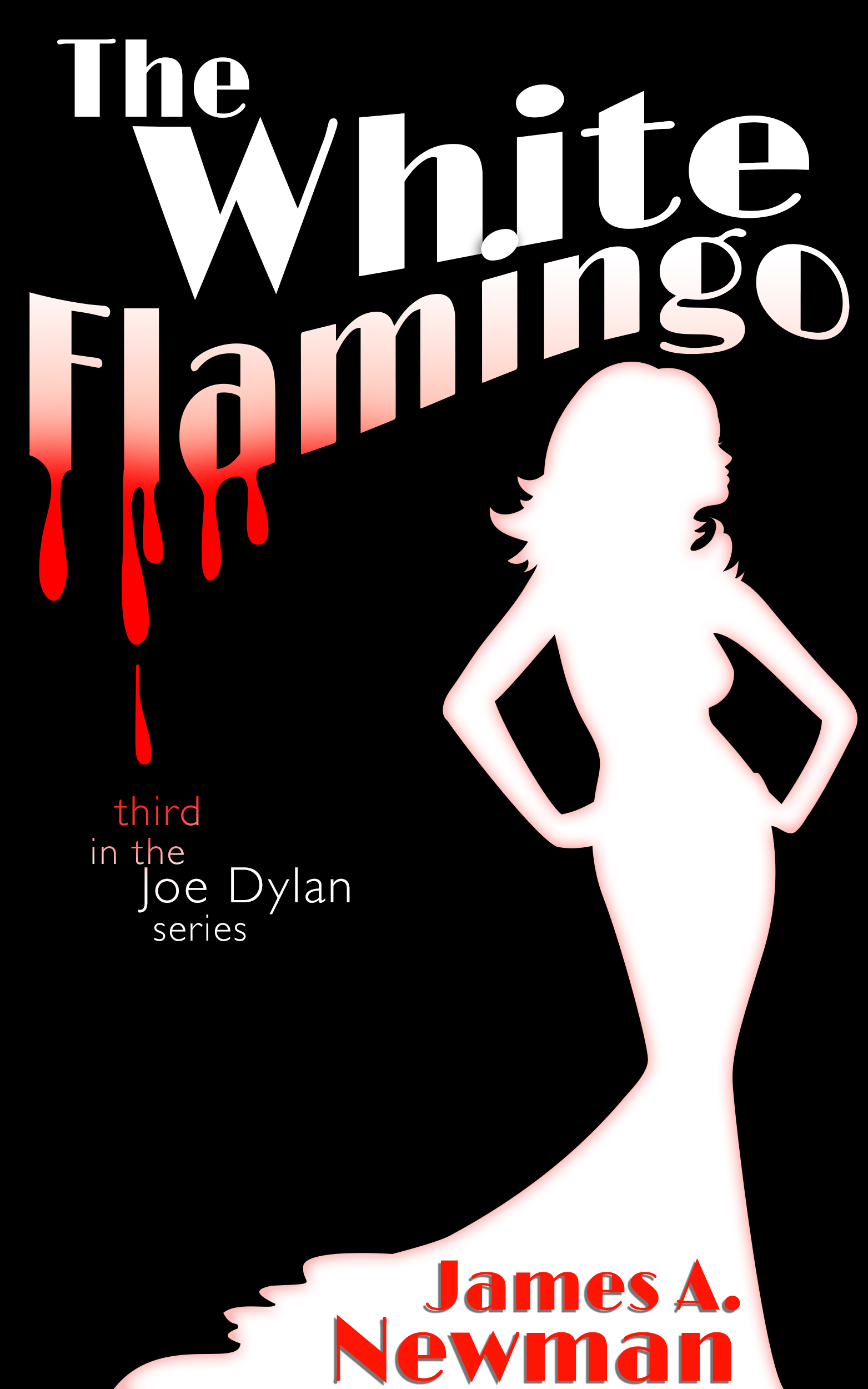
The White Flamingo by James A. Newman

The White Flamingo by James A. Newman - Third in the Joe Dylan Noir Crime Series

You can find book reviews of all of these books by performing a search at this site.

Happy Holidays and Merry Christmas from a recovering consumer.

4 Comments

Dean Barrett was one of the first two authors, living in Thailand, whose name I knew and could spell for you when I first arrived in the Land of Smiles in the early 21stCentury. He was not, however, one of the first ½ dozen “Bangkok authors” that I read. I can explain: let’s face it, Dean seemed like he was having too much fun in Bangkok to be a good writer. From the first time he was pointed out to me in a second story Nana Plaza establishment 10 years ago, to his five minute YouTube video: Dean Barrett’s Guide to Soi Cowboy, to a few years ago when he climbed into a boxing ring for a charity event, at a time when a lot of guys his age were playing shuffleboard in Florida and collecting their Social Security checks, Dean enjoys life. Not to mention that one of his two web sites, with the dominatrix on the Enter page, will trigger the porn blocking software on any computer in China.

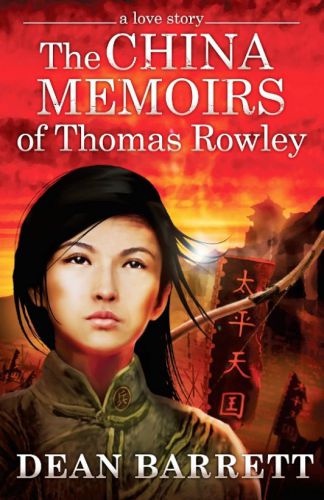
RowleyCover

The first time I saw Dean’s Star Ratings on Amazon, I was surprised how highly his books were rated. I’m not sure why I was surprised, I still hadn’t read any of his books. I suppose I wanted my authors pudgy, with pale skin, bottle rimmed glasses and home alone, writing 12 hours a day for my benefit. Stephen King, I knew, was a good writer, even if not a personal favorite. Dean Barrett, I still had my doubts. One should not judge a book by its cover but I made some judgments, based on the titles of Dean’s books. If Groucho Marx didn’t want to join any club that would have him as a member, I wasn’t sure that I wanted to allot my valuable reading time to any author that liked so many clubs. Hey, we all have our biases. I was wrong. Dean Barrett writes well.

Let’s take a look at some of the names and the star ratings of Dean’s books on Amazon:

Memoirs of a Bangkok Warrior – 18 reviews.  Average rating: 4.53

Kingdom of Make-Believe – Thirty-five reviews. Average rating: 4.55

Permanent Damage – Six reviews. Average rating: 4.66

Skytrain to Murder – Nine reviews. Average rating: 4.44

The Go Go Dancer who Stole My Viagra & other Poetic Tragedies of Thailand – Six reviews. Average rating: 4.66

Murder at the Horney Toad Bar & other Outrageous Tales of Thailand. One review. Rating: 5.0

Murder In China Red (set in NYC). Twelve reviews. Average rating: 4.91

I have since read three of Dean’s books from the above list and have enjoyed them all. I also like his poetry. Keep in mind, Dean Barrett is old school. These reviews are real reviews, written by real people who actually took the time to read the book they reviewed.

There are other aspects about Dean’s writing not as widely known as, say, his YouTube video. Dean was a professional writer in New York City for many years as a librettist and lyricist. His credentials are too long to mention here. I have a theory about talent and self-deprecation: only the talented are good at it. Dean Barrett is good at self-deprecating humor. He is also a first class public speaker. If you have an opportunity to hear him speak about literature, go. He is well read, well-traveled, erudite, honest and humble. He’s John Grisham with a more interesting personal life and a few less books sold than John.

Another lessor known aspect to Dean’s writing career are his historical fiction books set in China. His talent coupled with his background as a Chinese linguist with the Army Security Agency during the Vietnam War made his China novels a fun discovery. The first Barrett novel I ever read in the Chinese historical fiction genre was, Hangman’s Point. And, in case you are wondering, sixteen Amazon reviews. Average rating: 4.93. As James A. Newman once pointed out, Dean’s work has been studied in libraries and read in bars. Hangman’s Point is a great, 533 pages in hardback edition, historical fiction novel, which will be read 100 years from now, probably in both.

Dean’s latest book is one I read recently: THE CHINA MEMOIRS OF THOMAS ROWLEY. (Village East Books. New York 2013). It is unlike any previous Dean Barrett fiction I have ever read. It is a historical fiction, love story, with plenty of erotica. I’ve never been a particular fan of reading erotica fiction, since I stopped reading, The Penthouse Letters thirty-five years ago. Some of the erotica scenes I enjoyed more than others. Set in 19thCentury China and finishing in early 20th Century New York City – 1922. It is a story that takes place during a tumultuous period in China’s history – the Taiping Rebellion. Women warriors were common, known as “the silken armies.” I always enjoy the historical and literary aspects of Dean’s novels, which pay close attention to detail. The love story was fascinating in how it evolved. Dean also has a knack for writing female fight scenes better than any author I can recall, perhaps because he finds a way to have women fighting. Why not? It was realistic and well written. The ending was believable and satisfying. There were no loose ends. If you want to try an outside the box Dean Barrett novel, read: The China Memoirs of Thomas Rowley.

Dean Barrett writes mysteries, among other novels. But he is not mysterious. He is as straight a shooter as you will find. You may not like what he tells you, but you can be sure he will tell you the truth, according to Dean. Be prepared.

Author Dean Barrett

Dean Barrett, author of The China Memoirs of Thomas Rowley and many others

 If you are in the area, Dean Barrett will be giving a breakfast talk this coming Sunday, December 8th, on THE CHINA MEMOIRS OF THOMAS ROWLEY at Tavern by the Sea, Amari Orchard Pattaya, 240 Moo 5, Pattaya Naklua Rd. Bang Lamung, Chonburi (Pattaya) 20150. Breakfast starts at 9:30 a.m. Dean Speaks at 10:30 a.m. For more details contact Dean via his Facebook site or atwww.deanbarrettmystery.com    

This author profile was originally published in the Chiang Mai City News and may be viewed there by clicking the banner below:

CityLife

Leave a comment

The electronic media age has made it possible for almost anyone with the motivation to become an author. The pros and cons of that reality have been well documented and we continue to see the results play out in the Amazonia region of the book world. Likewise, nowadays almost anyone can be a book critic or if you prefer a neutral tone, a book reviewer. A case in point would be me. Again, there are pluses and minuses to leveling the playing field when it comes to the book review process.

I am an amateur book reviewer. Some may have other adjectives to describe what I do. Once I was told, “Writers and prostitutes have to compete against those who give the product away for free.” That would again be me, in the case of book reviews. My audience is small. I do not have nor will I ever have the clout of a major book critic. Some people are fortunate enough to get paid to write book reviews. Other times book reviews are done by other authors. I enjoy reading book reviews written by professionals, a lot. I try and learn from them and glean what I can from the pros so that I can do a better job in the future.

Some very good authors that live or spend a lot of time in Thailand are among my favorite book critics. They include: Tom Vater; James A. Newman; Jim Algie; Christopher G. Moore and Timothy Hallinan. I enjoy reading what they write and I respect their opinions about what they read.

Vulture Peak77

One of my favorite authors of Bangkok fiction is John Burdett, creator of the Sonchai Jitpleecheep series among others, which consists of 5 novels: Bangkok 8; Bangkok Tatoo; Bangkok Haunts; The Godfather of Kathmandu and his most recent in the series, VULTURE PEAK.

I have yet to review a book of John’s here, despite the fact that I have read, enjoyed and recommend the Detective Sonchai series without hesitation. Of the five novels, I have read four. Only Bangkok Haunts has escaped my radar. John is a top tier author, published by Knopf, which still has panache in the age of the Big 5 publishers. As such, there is no shortage of book reviews about John Burdett’s novels. As it should be. Of the four Burdett novels in the Sonchai series, which I have read, my two favorites are Bangkok 8 and Vulture Peak. One of the primary reasons I never did a book review at Thailand Footprint on one of John’s books is that others have done it much better than I ever could. Vulture Peak, I highly recommend. And I am going to link three book reviews, which might further convince you to consider it:

Bangkok 8

Click the picture above to take you to an excellent book review by A.J. Kirby of the New York Journal of Books. What makes it a good review? For one thing, you can tell Mr. Kirby read the book, which always helps. In addition he includes excerpts and quotes from the protagonist. And he talks about the tone of the book. Little things add up in a good book review. Here is the concluding paragraph:

But, of course, there are real villains whom Sonchai must chase, in an increasingly dangerous game of cat and mouse that stretches across the continents. Vulture Peak is a modern morality tale with all the requisite bells and whistles and much more: a salutary warning for the Internet age. “It’s a beautiful, global world, so long as you keep your eyes shut.”

Two Bangkok based authors have also reviewed VULTURE PEAK. Jim Algie’s review first appeared in The Nation Newspaper, regular and online editions, dated August 6, 2012, with a headline, THE PEAK OF THE FLESH TRADE. You can Google it to read it there or click the picture below to read it on Jim’s web site. It was, in part, because of Jim’s review that I decided to read, VULTURE PEAK.

BangkokTatoo

One of the things I liked about Jim’s review is that he takes John to task a bit. He doesn’t pander toward the author, which is probably one of the easier things for a book reviewer to do, particularly an amateur reviewer. I know I am guilty of it, at times. Case in point being this paragraph from Jim:

Not all the Buddhist details ring true, however. The way that the detective talks about his previous incarnations – an ancient Egyptian in “Bangkok 8”, an American Indian in this book – sounds more New Age Californian than Thai Buddhist. – Jim Algie

Christopher G. Moore also reviewed VULTURE PEAK and, like Jim, I thought he did a great job of explaining to potential readers what they had in store for them in the book. The review can be found on the International Crime Author’s Reality Check web site.  Here is a passage from the review:

When I open a crime novel my wish is to plunge inside, a full headlong immersion into another world of events, characters and drama that carry me on a white water raft of sheer joy, wonder and adventure. Once the raft is pulled from the river and you think about the experience, the rush of letting one’s self go and be carried away is the memory imprinted.

Reading John Burdett’s Vulture Peak is that kind of literary white water rafting rush I alluded to above. For those who seek the safe comfort of categories–genre and literary–Burdett’s novel will cause you to rethink such a flat, arbitrary and meaningless distinction. – Christopher G. Moore

The Complete review can be found by clicking the picture below:

GodfatherKathmandu

So now you know why I have never written a lengthy book review of a John Burdett novel. It is not because I don’t like them; I like them a great deal. It is just that others have written excellent reviews already. Why reinvent the wheel when the wheels out there are rolling along so smoothly?

But I was pleased to come across an entry I made about VULTURE PEAK on John’s FACEBOOK page, the morning after I finished reading the 306 page hardback edition, in December of 2012. I write my best reviews when I write the review within 24 hours after I have finished reading the book, for all the obvious reasons. Here is what I had to say less than one hour after reading VULTURE PEAK:

Just finished Vulture Peak this morning. Burdett blends his imaginary world with the real one in cynical fashion as good as anyone. Told with a Buddhist slant through the narrative of Thai detective Sonchai. Vulture Peak is about organ trafficking run by two identical twin Chinese sisters. I’d tell you their names but like Burdett’s imagination and his accurate commentary on the global world, it really doesn’t matter much what your preference is; it’s all entertaining. For expats living in Thailand his breakdown of the Thai word kikiat (lazy) is worth the read alone. Here is a passage I liked that sums up your typical human living with failing organ(s): “Now you have a true citizen of the twenty-first century, a totally confused human soul with no identity, no direction, no faith, no religion, no politics, no instinct other than to survive.” Burdett’s not for everybody but I enjoy him a lot. Body parts everywhere in this book, along with ample commentary on east vs. west. I find myself laughing out loud at the accuracy of the human condition John describes, which aren’t at all funny. That’s the beauty of his writing to me. Bangkok 8 still my favorite in the series.

So there you have it. A review of VULTURE PEAK from a top level literary journal, two well known Bangkok based writers and an amateur blogger. Take your pick. Anyway you look at it, Burdett and VULTURE PEAK go four for four.

John Burdett

John Burdett reads from Vulture Peak at Check Inn 99 during Bangkok Night of Noir
on January 5th, 2014

This post may also be seen at Chiang Mai City News by clicking the banner below:

CityLife

3 Comments