The Election According to Gop, The Frog in the Coconut Shell, Three Dogs, and a Big Man with a Gun
Click to Enlarge

Click to Enlarge
Last week I published a long interview with Christopher G. Moore where we discussed a variety of subjects, including his recently released novel, Jumpers. If you missed it you can read that interview here. This week I review Jumpers.
JUMPERS
A Book Review

Christopher G. Moore is a master message teller as he crafts his crime tales. Jumpers is #16 in the Calvino series and as a long-time fan I am familiar with the cast of characters: Vincent Calvino, Bangkok P.I. and his cover my back, retired Royal Thai Police General Pratt – not many friends have matching bullet entry wounds for looking after each other. Ratana his loyal secretary, and the cranky and pleasure seeking pal, McPhail. The One Hand Clapping Massage Parlor also makes a cameo appearance or two.
Jumpers features the complex, questionable suicide of Raphael, a young and talented artist who likes to paint the working girls of the Bangkok night. Raphael has a voracious appetite for painting and women with a little Muay Thai on the side. His appearances are a mixture of flashbacks and memories. I liked him better alive than dead but as suicides go he went out in style. Jumpers came across to me as a straight mystery with plenty of components, including a freedom portrait art series that Calvino takes part in, painting forgeries, counterfeit money, Bitcoins, the omnipresent secret notebook that contains incriminating info, a well written Chinese heavy named Sia Lang, and a Hong Kong billionaire who could prove problematic for Calvino.
We learn that, “What an artist looks for is what other people hide.” But it turns out the artist is hiding a great deal himself not the least of which is a cool $750,000, which he has left in his will to the suicide hotline group where he used to volunteer. Calvino, of course, is the executor of the estate. Vincent is more brainy than tough guy these days, more likely to be found cleaning his gun than firing it in junta ruled Bangkok. Pratt, likewise, cannot be found playing the saxophone but he gets in plenty of appropriate Shakespeare quotes, at one point musing that the Bard must have been a Thai in a former life. There is still plenty of action as Calvino manages a good head slam for a TKO in a bar with four sharks swimming in a tank overhead. Justice eventually gets carried out noir style, by the other bad guys and there are plenty of them. But as Calvino concludes, “Dig deep enough down and you will find some good in everyone.” That is certainly true of the philandering Rafael and the many models who drop by to shed their clothes at his busy studio.
There were times when a story board would have been helpful to keep track of the characters and plot points but the author does a good job of tying things up at the end and we find out a recurring question for Vinny that many an expat has asked himself: should I stay or should I go? Moore excels once again at deciphering the culture clash we call Bangkok. While the story is the best since Missing in Rangoon it’s all the message points that make a Moore novel worth the time for me. As when Calvino goes to visit a psychologist and counselor named Gavin who runs the Bangkok Suicide Hotline. It’s like a cerebral shootout at the I’m OK, You’re OK corral.
I like the way Vincent thinks nowadays. Whether he has changed or I have changed I am not sure. As is written late in the book, “In the noir landscape of Bangkok, the default was tragedy; things rarely ended well.” A possible exception is Charlie, a Golden Retriever featured throughout the novel. Charlie loses two owners to suicides in Jumpers, but I see a good future for him, and Vincent Calvino too.
Jumpers is a dense read full of great messages and those messages will be different for each reader. That is Moore’s strength. Jumpers takes you on a personal and cultural journey. It leaves you with as many questions as answers but that is quite alright with me. Dig deep into Jumpers by Christopher G. Moore and you will find plenty of good messages sitting right alongside the default tragedies that find everyone, whether you live your life as a work of art or not.
Christopher G. Moore is a Canadian author who has lived in Bangkok, Thailand for nearly 30 years. His first novel, His Lordship’s Arsenal was published in New York in 1985. Since then he has published 33 books, including the Land of Smiles trilogy, three books of essays including Fear and Loathing in Bangkok, and 16 novels in the Vincent Calvino Crime Series. Asia Hand in that series, won the Shamus Award for best original paperback in 2011. In addition he is the editor and contributor for the anthologies, Bangkok Noir and Phnom Penh Noir. His latest Calvino novel, Jumpers was released in November, 2016.
Christopher was first pointed out to me several years ago as he sat at a large horseshoe shaped bar, drinking an orange juice and staring up at the colorfully decorated ceiling. I introduced myself that evening and asked him a couple of questions. I have been asking Christopher questions at every opportunity since then and paying attention to his answers.
All good artists, whether they be a portrait artist or a novelist look where others fail to look. They see what few others see. They take the back roads and document the journey. Christopher’s books over the years are now frozen portraits in time. And for me there have always been plenty of brush strokes that, while not particularly flattering, painted things as they were. About society, about Thai culture, and about us. He writes books worthy of reflection and he has done it again with his most recent entry in the Vincent Calvino crime series, Jumpers. The novel, Christopher readily admits, is part of a creative loop inspired by a portrait sitting he did for acclaimed new art movement painter Peter Klashorst. The sitting itself was inspired by a book Christopher read, The Man in the Blue Scarf by Martin Gayford. He later wrote an essay by the same name which you can read here. I hope you, as a creative consumer, are not in a hurry. You are invited to read this lengthy interview, and at the conclusion there is a one hour video titled The Impatient Artist which films Moore interviewing and sitting for Klashorst. Please enjoy them both.

The author Christopher G. Moore with his portrait painted by Peter Klashorst
Interviewer: John Irving said, “Writing a novel is actually searching for victims.” Do you agree with Irving? There are many kinds of victims found in fiction: murder victims, victims of power, victims of circumstance, exploited victims, and victims of society. What do you think readers search for in a novel?
Moore: I admire John Irving’s novels. Though, I am not certain I’d agree that writing a novel is a search for victims. Our lives are filled with contradictions, paradoxes, and confusion. Does that make us victims? If it does, then the concept of victims needs substantial redefinition. The search in a novel is the same for everyone who seeks answers to questions: Who are we? What are we doing here? What is a satisfactory life? How to reconcile the creature like person we are with the symbolic self that seemingly travels outside of our bodies? Seriously, no one has the answers. Never have had and likely never will have any better answer in the future.
Rather than looking for the elusive and definitive answers, we cling to cultural illusions that appear to provide answers. In that way, maybe John Irving is right—we are victims seeking refuge in beliefs and myths because the alternatives are too terrifying. The current discontent, suggests people are waking up to the fact they’ve been lied to; it is becoming more difficult to set the ambushes and traps by business, politicians, government, media, and our rivals.
We look to books as we once looked to religion for self-transcending drama, heroic models and a worldview that creates the illusion that the human condition is loaded with purpose and meaning.
Interviewer: To live an adventurous life in Thailand often means not conforming to societal norms. Can you put your finger on any particular influences that caused you to leave the relative safety of Canada as a university law professor to go first to New York City and later to Bangkok where you now call home? Did you have mentors along the way?
Moore: There is a built-in tension inside all of us between experience and reflection. A life of exploring the back roads, and a life contemplating the meaning of back roads and why we bother to explore them. The back roads, are the ones that lead out of town to parts unknown. It doesn’t mean you must resign your job and leave your country in order to write. Those back roads loaded with new experiences are everywhere. But you have to search for them. And remember adventure is not risk free, and the more you plunge into the world the more likely you will run into some sharp edges and dangers. Experiences aren’t always good. They can be fatal. Most of us are cowards who do what is expected and narrow our lives down to a bite sized comfort zone that is safe, predictable and seemingly stable.
Take a jump and plunge into experience and climb out of that pool and reflect on matters of fact—the nature of what has been experienced. We know the world through our experience of it. All reflection and no experience is arid, dull and lifeless exercise in futility. All experience and no reflection and we forgo meaning of how lives are shaped, our relationships formed, and our values tested. Burn the candle at both ends and then reflect on the pool of wax dripping on the floor of life, and know that is you with a flame at both ends.The most valuable life hack is to discover your own balanced combination of experience and reflection. A university tenured position grants status, access to power, money and influence. It is also a kind of luxury prison where the trustees are honored and admired. That said, I loved the academic life. It was a difficult decision to leave. I wanted to roll the dice. It was a gamble. The odds were not something I rightfully calculated or understood at the time. I was lucky. Let me say that again, for some random set of events, it turned out well for me. If it hadn’t, you wouldn’t be interviewing me. That’s why interviews like this are a distortion of the odds. You’re not interviewing a thousand other writers who tried something similar but it didn’t work out.
My mentors came after the breakout. Most mentors look for that act of courage that risks a great deal before bothering to nurture another writer.
Barney Rosset and Stirling Silliphant filled the role but that was after I’d arrived in Thailand and had published a few novels. Barney taught me about the literary sensibilities upon which good fiction was built; Stirling taught me the Hollywood décor that the vast majority of people find holds their attention. I started out in a very different time. Those were the pre-Internet days. Mentors who worked with me for years are gone; they belong to another age. Technology has disrupted the idea of a mentor, apprenticeship, isolation, publishing, and author. Writers now turn to workshops and reading groups for support.
A case can be made, that in part, globalization and the Internet has made us more selfish and there are fewer established writers and publishers willing to put in the long hours to mentor a writer. The world of legacy publishing is brutal: either a writer hits with a book or he or she is dropped. No mentors left in that world. And in the self-publishing world where hundreds of thousands of people are hoping for a breakthrough, who do they have as a role model? It is likely to be Sisyphus.
Interviewer: Is it possible to get bored living in Bangkok?
Moore: One lifetime isn’t long enough to get bored. There is enough to experience in life for several lifetimes. Trust me, I know. Take to the road. Lose yourself to the experience of living. At the same time, re-read Darwin’s Origin of the Species and every AI report, study and finding you can lay your hands on. What happens when you reach the end? No one knows. But I have a theory: Prepare yourself for an infinite journey of imagination to a place where you mingle with all the characters spilling out of all of the books in Borge’s Library of Babel. And they know you by name and you become part of their never-ending story.

Interviewer: There are two words that often come up in your writing. They are cooperation and competition. May you talk about these two subjects? What have you learned about cooperation and competition in your lifetime?
Moore: What little I’ve learned about the pendulum swing between cooperation and competition is it acts as a kind of cultural yin and yang. As a species, we couldn’t have scaled to the level of providing food, transport, education, medical care, and communication to billions of people without cooperation. The problem is cooperation appears to work best in small groups where everyone knows everyone else. They all have skin in the game and it is in their interest to cooperate. Over the past 20,000 years we competed not so much with each other but as individuals and groups against the forces of nature and predators.
If you look at infantry squads in the military, they are twelve men. To stay alive they bond, they cooperate, they look after each other’s back. These tight fighting units, deployed by politicians, are psychologically closer to our original bands of brothers. Those who make the big decisions are in competition for votes, popularity, and status, and they have no problem putting a knife in someone else’s back. We fight in pre-Dunbar numbers; we govern in a post-Dunbar number political system.
We live inside this contradiction without being fully aware of how group size has changed our relationships with one another. We are post-Dunbar number casualties. When is the last time a politician threw himself on to a grenade to save those around him? Get back to me on that one.
Our fears were, in other words, different from modern fears. We needed to balloon the population to go to the next stage. Once the group expanded and disappeared into large cities, the walls protected against the old enemies but they didn’t protect us against ourselves. We saw ourselves differently. The world wasn’t us against a tiger or lion; it was us against others like us but different. We came to view outsiders with different beliefs, values, ethnic and racial profiles as a threat to group identity. Once the dynamic driving fear changed, our behavior changed.
The irony of this shift is apparent when you look at the way we process climate change. We are back 20,000 years ago where the most immediate threat is from nature. That requires cooperation. So far all the evidence is that cooperation is difficult to scale at a worldwide level to meet the challenges of climate change. We are too busy competing for resources and it is too profitable to shut down. If climate change reduces our species to pre-agricultural society numbers, it will be because we were frankly too good at arguing the virtues of competition.
We have forgotten how we began and how our original fears were triggered. Nature is giving us a lesson in humility and teaching us that cooperation is not a code word for loss of liberty and freedom.
Interviewer: In addition to be being a novelist you are an accomplished and prolific essayist. Your essays have appeared in the Evergreen Review among other places and can be found on your web site www.cgmoore.com. Your latest essay is about Artificial Intelligence. May you talk about writing essays in broad terms? What do you get out of it personally and what do you hope to provide to those who read them? Which essayists do you read regularly?
Moore: Essays are my diversion from the world of fiction. Imagination shouldn’t be contained to the realm of make believe. They are a way to reach out to others with descriptions, explanations, and speculations about a range of subjects that interest a writer. For me, my interests lead to me to: AI, climate change, crime, culture, or science. A good essay is a conversation with a friend about a matter that opens us to a better understanding of our limits, potentials, and the dangers and obstacles to living and dying.
The term essays, like the term fiction, covers a broad area. My essays tilt toward cultural, political, and scientific inquires. They don’t try to change anyone’s opinion or influence larger debates. An essay might be on my experience at the Jaipur Literary Festival (“Drinking From A Silver Urn” to the “High Cost of Badly Paid Cops”. I’ve also written about the writing and publishing process as I thought it might be helpful for other writers to share my experience and ideas.
George Orwell’s essays are an inspiration. Given his background in Burma and Spain, his combining novel writing with essay writing, Orwell showed the way a novelist can take useful detours into the realm of essay writing. On first reading (and they bear re-reading) Orwell’s essays are like a sniper’s bullet that goes straight through the heart. Before you feel the pain of the wound, he reloads and the next round slams into you. Before long you realize you are reborn with a heart better adapted for living world where no one is watching our back unless it is to figure out how to lift your wallet. We become atomized. That condition in itself makes cooperation more difficult. People are basically afraid. Orwell explains the background of how these conditions emerge and will likely continue as long as we are a species.
I also like reading and have learned from essays written by Christopher Hitchens, Geoff Dyer, Pico Iyer, Annie Dillard, Tony Judt and Michael Chabon.
An essay is a clue to a writer’s interests and preoccupations if not his obsessions. My essays are written during periods when I am writing a novel and arise from my research. Sometimes an essay is a good test run for ideas to see if they can make a supercharged, foot against the accelerator lap around the track without the wheels falling off or the engine blowing up. Other times, the essay is a way for me to organize and structure my thinking around an idea as I am curious as to what the final construction will look like once I step back.
One of my novels takes at least a year to write. By contemporary standards, that is a slow dance. An essay takes a few hours. If it takes much longer, it means I’ve not thought through the problems sufficiently. The feedback from readers (there are a handful) has been positive. A few people read them. With so much competition for awareness, the long essay, which I tend to write, are not in favor. That should never be a concern as the flavor of the month shifts: fast dance, slow dance, no dancing allowed. You can never predict what will happen next on the dance floor. Most of the time you are dancing with yourself. So take the time to make certain that public display rewards the observer with a memory worth returning to now and again, as a cloak against what life throws at all of us and teaches us when to duck, when to weave, when to run and when to lie low.
A reality check is also in order. An essay in the tradition of Orwell will draw a fraction of attention that goes to videos of funny animals, or photos of food, as we seek out what makes us laugh, what makes our mouth water. We’d rather watch funny animals than read Animal House. An essay about crime is like the last straggler in a marathon and only his mom and best friend are there to cheer him across the finish line.
I recently posted on FB something called the Cognitive Bias Codex, a chart of the hundreds of biases that everyone has and can’t cure or avoid or overcome. Understanding the meaning of that chart may be the single most important thing anyone for insight into their own limitations and those of others. It can change your life in all kinds of ways. Maybe nine people liked it. A group photo of me at a dinner table with three friends registered five times as many FB likes. And so it goes.

Interviewer: Your latest Vincent Calvino crime novel, Jumpers has recently hit the cyber-stores. What can you tell us about it?
Moore: Hardly a week goes past without a report of a farang suicide. A “jumper” is local slang for jumping off a balcony or rooftop.There is often a question as to whether the death was suicide. That small bit of doubt creates suspicion of the police and other authorities are covering up a murder. Why does someone jump off a balcony? There is no one explanation that fits all. Death, like life, is complicated. Jumpers is about the leap between belief and faith, art and commerce, the chasm between what we wish to be true about life and its ultimate meaning.
Every writer, if he or she lasts long enough, writes his version of the Tibetan Book of the Dead. After all, death is the ultimate mystery; it is the one act of nature that awaits us all. The fear of death is buried inside all of us. When a private investigator looks into a suicide victim’s life and death, he is finding emotional layers that we don’t often talk about. Once these issues are exposed, there is a new way of approaching the meaning of death.
Jumpers is number 16 in the Vincent Calvino crime novel series. A modern day Caravaggio, a young artistic genius from Quebec, is painting a sex worker in his Bangkok studio where Calvino finds him. Raphael, the artist, begins as a missing person case. For Calvino, it would have been better if he’d not found this artist.
By opening that studio door, Calvino enters into a hidden world of payoffs and local gangsters. What’s interesting is the globalization of art and art collectors. Raphael has a commission for a series of portraits. Most of the women he paints for the series end up as suicide victims.
Rituals of death, the myth of art, and the circulation through the underground rivers of drugs, sex, and guns delivers a look at the convergence of art and human sacrifice. It all starts with a brush, a set of paints, a vision, and the accidental encounters with members of the painter’s childhood in Quebec commune.
The forces that shaped Raphael’s life are powerful enough to draw into their orbit Calvino, Pratt, McPhail, and Ratana who seek to reconcile his artistic vision, underworld connections, and parade of sex worker models with his death.
Crackdown, the previous Calvino novel before Jumpers, came out eighteen months ago. For a series of crime novels, that is a long time between books. With each of the Calvino novels, I’ve sought to capture the zeitgeist of Thailand. I hope that Jumpers will take its place alongside the other books in the series as a record of human struggle where the idea that while the end is always known, the actual date of the end remains a mystery.
The Impatient Artist – An Interview and Sitting between Christopher G. Moore and Peter Klashorst
You can purchase Jumpers at the following outlets:
Kobo:
Gary Rutland has reviewed a book written over 25 years ago and made me want to read it once again. For those who never got around to reading A Killing Smile, the first in the Land of Smiles trilogy written by Christopher G. Moore perhaps it will prompt you to do so. The Land of Smiles series sits high on my bookshelf. It may be time to dust off all three.
Gary assures me that he is not yelling throughout the review, only that his caps key was stuck that day. Gary lives in Cha Am with his lovely wife, books, and music collection. He is either a polite Canadian or an acerbic Brit depending on the day of the week. He also blogs about music and 1-1 soccer matches on Facebook here

CHRISTOPHER G. MOORE A KILLING SMILE AN APPRECIATION
BY GARY RUTLAND
MY MOJO WAS MISSING.
GONE.
AWOL IF YOU WILL.
AND AS THE DAYS GOT HOTTER MY MOOD GOT DARKER WHILE MY MISSING MOJO STAYED STUBBORNLY AWAY.
BY DAY 10 I WAS DESPERATE, STARING DOWN THE BARREL OF A 2ND DIVORCE IN AS MANY YEARS.
I NEEDED A PICK ME UP.
PRONTO.
I WAS JONESING FOR A JAZZ JOINT BUT CHEST PAINS AND S.E. ASIAN LOCATION NIXED THAT NOTION.
ALCOHOL’S NEVER BEEN AN OPTION, AND AS I AGE SEX IS FAST BECOMING AN OCCASIONAL EXTRA.
FOOD FOR ME HAS ALWAYS BEEN FUEL RATHER THAN PLEASURE AND SINCE QUITTING THE NICOTINE THE FAT AROUND MY MID-RIFF HAS MADE A MOSTLY SUCCESSFUL TAKEOVER BID FOR MY MIDDLE GROUND LEAVING ME IN A STATE OF DISCOMFORT AND CONSEQUENTLY ALMOST CONSTANTLY GRUMPY.
I NEEDED A PICK ME UP.
PRONTO.
AND THE DAYS KEPT GETTING HOTTER AND MY MOOD KEPT GETTING DARKER.
FINALLY, ON DAY 14 I LOOKED UP FROM MY DESK AND STARING BACK AT ME FROM MY BOOK-SHELF I SAW CHRISTOPHER G. MOORE’S “A KILLING SMILE”. I SMILED FOR THE FIRST TIME IN A LONG TIME. A SMILE THAT KILLS MY WIFE EVERY TIME SHE ASSURES ME, SWEET-MOUTHED THAI FLATTERER THAT SHE IS.
WAS THIS MY PICK ME UP, I MUSED?
A GOOD BOOK OFTEN DOES THE TRICK FOR ME. AND IF RECENT HISTORY WAS ANYTHING TO GO BY, CHRISTOPHER’S BOOKS ARE GOOD.
THE DAY WAS GETTING HOTTER BUT MY MOOD WAS GETTING LIGHTER AS I STROLLED ACROSS MY STUDY AND EXTRACTED ‘A KILLING SMILE’ FROM MY SMALL, BUT LIKE ME BEAUTIFULLY FORMED, COLLECTION OF BOOKS.
THREE HOURS LATER, THE DAY WAS DEFINITELY HOTTER BUT MY MOOD WAS DEFINITELY BRIGHTER AS I WENT DOWN FOR LUNCH MY OWN KILLING SMILE SPREAD ACROSS MY FACE.
CHRISTOPHER IS A “WRITER”. GRITTY, LITERATE AND PENETRATIVE HIS WRITING IS LIKE AN ONION, MULTI-LAYERED REQUIRING THE PEELING BACK OF EACH LAYER UNTIL THE HIDDEN MEANINGS AND TRUTHS ONLY HINTED AT ON THE SURFACE ARE ULTIMATELY REVEALED.
I WAS IMMEDIATELY DRAWN TO THE CAST OF CHARACTERS. THE SECRETIVE JUNKIE AMERICAN WIFE, HER NEUROTIC LAWYER HUSBAND AND THEIR ENIGMATIC FORMER FRIEND WHO IN HER CASE WAS A FORMER LOVER WHO NOW LIVES IN BANGKOK AND WHOM THE HUSBAND SOON TRAVELS TO CONFRONT AFTER HIS WIFE’S UNEXPECTED AND INITIALLY UNEXPLAINED DEATH IN A CAR ACCIDENT.
THE THAI CHARACTERS ARE NICELY REALIZED TOO, NO CARICATURES HERE JUST COMPLEX TROUBLED SOULS SEEKING TO FIND THEIR WAY BETWEEN THE WAYS OF THE CONTRASTING WORLDS THAT ARE EAST AND WEST. TWAINS THAT DESPITE MR KIPLING’S PROCLAMATION ARE INCREASINGLY MEETING WITH INCREASINGLY INTERESTING RESULTS.
WOVEN INTO THIS TAPESTRY CHRISTOPHER ALSO MANAGES TO EXPLORE COLONIAL HISTORY, CHARITY, SACRIFICE, REDEMPTION, THE DECAY OF THE WEST AS WELL AS EXAMINING THE CYNICAL WORLD-WEARY TRUTH THAT ULTIMATELY WE ALL PAY FOR SEX. IT’S JUST A QUESTION OF WHAT FORM THE CURRENCY WE USE TAKES; CASH OR MORTGAGES, MEALS AND MARRIAGES. CORRUPTION REARS ITS UGLY HEAD TOO THIS IS THAILAND AFTER ALL, AND YET IN ALL THE DARKNESS AND QUESTING FOR MEANING CHRISTOPHER STILL MANAGES TO FIND TIME FOR HUMOUR. ADMITTEDLY IT’S WORLD WEARY AND CYNICAL.
ONE OF THE MOST INTERESTING THINGS I TOOK FROM THE BOOK IS THAT ALTHOUGH IT WAS FIRST PUBLISHED IN 1999 THE TRUISMS AND THE WINDOW ONTO THE THAI WORLD IT PROVIDES ARE PERHAPS EVEN MORE RELEVANT TODAY THAN WHEN IT WAS FIRST WRITTEN. I WOULD SUGGEST THAT THE BOOK IS NO LONGER JUST ABOUT THAILAND. IN THE ENSUING YEARS SINCE ITS PUBLICATION THE REST OF THE WORLD HAS CAUGHT UP WITH THE THAI WAY OF DOING BUSINESS. HOW ELSE DO YOU EXPLAIN THE PANAMA PAPERS THE RISE OF THE BILLIONAIRES AND LAST BUT NOT LEAST THE PSYCHOTIC DYSFUNCTIONAL FIASCO THAT AMERICA HAS BECOME.
SADLY, THE REST OF THE WORLD HASN’T CAUGHT UP WITH CERTAIN OTHER THAI CULTURAL TRAITS THAT ARE SO RARELY PUBLICISED AS NOBODY WANTS TO HEAR NICE THINGS ABOUT ANYTHING REALLY. SO THE THAI PROPENSITY FOR THOUGHTFULNESS, THE IMPULSE TO SMILE FIRST, TO PLEASE OTHERS BEFORE ONES-SELF HAVE BEEN PAPERED OVER AND LEFT MOSTLY UNREMARKED SO THAT WE CAN PASS JUDGEMENT FROM OUR LOFTY WESTERN MORAL HIGH-CHAIR.
“A KILLING SMILE” IS NOT A THRILLER PER SE BUT IT IS A THRILLING READ. ACCORDING TO THE INTRODUCTION IN THE ANNIVERSARY COPY I READ IT STARTED LIFE AS A WINDOW TO THE THAI AND EXPAT WORLD . 20 PLUS YEARS LATER IT STILL PERFORMS THAT TASK ADMIRABLY BUT NOW IT HOLDS UP A MIRROR TO THE REST OF THE WORLD TOO.
READ IT FOR FUN. READ IT FOR A PEAK INTO THAILAND AND ITS HISTORY. JUST READ IT,
THE VANCOUVER SUN CALLED CHRISTOPHER ‘THE MOST IMPORTANT RECREATOR OF THAILAND FOR A WESTERN AUDIENCE.” HE’S ALSO BEEN COMPARED FAVOURABLY TO ELMORE LEONARD AND W. SOMERSET MAUGHAM. I’D SAY HE’S CHRISTOPHER G. MOORE, READ HIM AND HE WILL ENRICH YOUR READING WORLD.
Christopher’s latest novel was released this month. Click the picture to go to the Amazon USA site for more information.

“When you surrender, the problem ceases to exist. Try to solve it,or conquer it, and you only set up more resistance. I am very certain now that, as I said therein, if I truly become what I wish to be, the burden will fall away. The most difficult thing to admit, and to realize with one’s whole being, is that you alone control nothing.”
― Henry Miller, A Literate Passion: Letters of Anaïs Nin & Henry Miller, 1932-1953
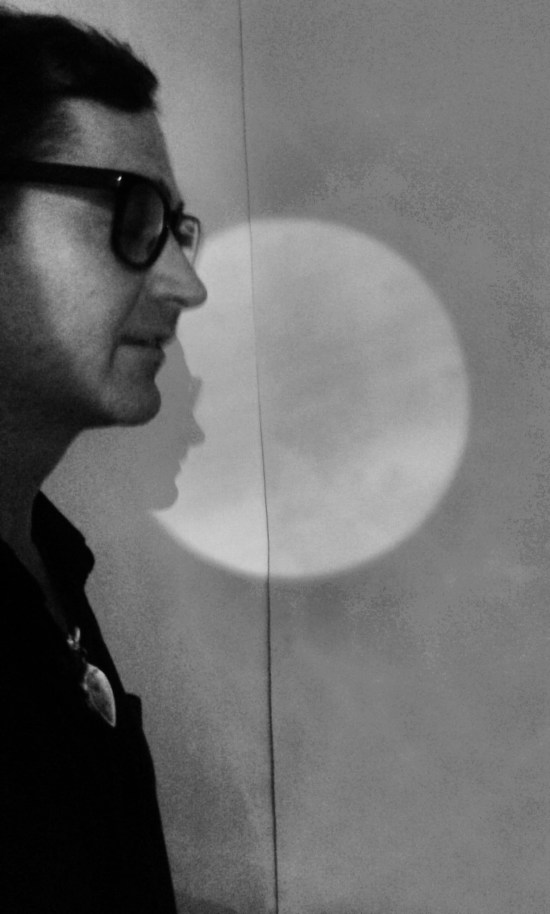
Author Hugh Gallagher
KC: Who is Hugh Gallagher, where do you come from and what makes Bangkok, Thailand the base camp of choice for you?
HG: Genetically I have risen from the soils of Ireland. My grandparents came to the US, landed in New York, and that’s where I started. Then I grew up in the Philadelphia suburbs, returned to New York to attend NYU and lived in NYC for most of my life. I’ve also lived 5 years in Portland, Oregon, and 4 in Bangkok. Although an idol of mine would say “it ain’t where you’re from, it’s where you at.”
Bangkok surprised me when I landed here. I had no preconception of the city, and I was just amazed at how vibrant, funky, and alive it is. I loved that it had almost no artistic or literary tradition in the West. There’s tons of writers who have done Paris, or Mexico, or Italy, or even Japan, Jamaica. Lots of foreign lands fly flags on the expat literary map. Bangkok was just not on that map, as far as I had seen. So it felt like discovery. And it wasn’t like I always dreamed of coming here. So I hit the ground very open minded, expecting very little. What I found is what lots of people love about this town. It’s both fast and relaxed, fascinating and opaque, smokey and bright. Epic party town. Dripping with sex. I met a great bunch of expats through comedy nights and jazz jams, and made Thai friends playing badminton. Add cheap rents and cheap food– which every creative person needs– and you have a wonderful place to work. Plus you have these beaches, very easy to access through trains and there’s cheap hotels everywhere. Love it.
KC: Among your many accomplishments you appeared center stage, alone, at the Apollo Theater in Harlem, New York and completely won over the audience. That has to rank right up there with playing Carnegie Hall. Tell me about that entire episode. What led up to getting that gig; what happened of note during the performance?
HG: Before Von Von Von, I had a writing career which included features for Rolling Stone and Wired, and a novel published by Simon and Schuster. But the planes hit the world trade centers and it really changed everything. The mood was so dark, so depressing, so wounded. The last place you wanted to be was sitting in your room all day alone, tripping on it. Which is what writers do. I just had to be out there, I had to be with people. Others must have felt the same as I did because there was this whole underground neo vaudeville performance art thing happening mostly based in Brooklyn. I put together Von Von Von. I was living on Tenth Avenue, across from the projects but right around the corner from all these high powered art galleries. I went to openings because they had free wine and lots of my friends were visual artists. I think that mix of rich, European collectors, and street culture found its form in vVv. So I wrote some songs, found a faux fur coat went out there. I first performed in some art galleries and bars, and then had a weekly show at this place called Galapagos.

Hugh Gallagher as Von Von Von
It was really fun, but really enormously challenging. I was always hungry. I had no money. I was trying to figure out how to get over in the music industry, which is just the most brutal beast out there. Musicians are the toughest people in the world. Writers have to be strong. Musicians have to be tough. Warriors. There’s so much darkness in the business, metaphorically and also literally, as much of the cash changes hands after hours, when the show is over, and there’s liquor bottles all over the place in the club. Fucked. Crazy.
Anyway, I’m trying to find my way through this low rent, after hours, downtown maze when I heard this ad on the radio one day. I was just lying in my apartment and this voice came on saying “Would YOU like to be on the world famous APOLLO THEATRE?! Come audition for Showtime!” I jumped up, got a pen, and wrote down the address for the audition spot. It was a community center somewhere up on like 144th street. Line around the block. People had flown in from North Carolina, Florida, heads from all over New York. It was like a pilgrimage for black performers and entertainers. It’s such a hallowed hall. I waited in line for about four hours, did my thing, and they sent me a letter in the mail a few weeks later. It was rad. Had the Apollo letter head in big red spotlights. I spent my last money on a good haircut, went up to the Apollo and hit it.

The funny thing about that performance– and what was cut from the show– was that I was booed off the stage TWICE before I even opened my mouth. I walked out there, chalk white, in a fur vest and Harlem Just. Wasn’t. Having. That. Not at all. Finally, the host Rudy Rush calmed them down. I remember him saying– “C’mon Harlem, give this brother a chance, he flew all the way from Antwerp.” Then I went out there and it was all love. Puts a smile on my face just thinking about it. One of the best experiences of my life, hands down. And stakes were high. Back then they still had the Sandman. He would come out wearing diapers, dancing, and shoot you with a toy bow and arrow if you got booed off. You didn’t want that happening to you. It didn’t. I just totally got over. The band rocked, I hit my mark and we lit up Harlem. Felt like walking on the moon. Blessed.
KC: Ever since Kato Kaelin came along, fame has been devalued in the USA. Unlike Kato, you are multi-talented, a traditionally published novelist, comedian, musician, writer, and even have your own apartment. You’ve captured fame and notoriety. You’ve held it and tasted it. More than once. You talk about the fame game at HughGallagher.net and how difficult the rules of engagement are. Tell me about the pursuit of fame, the achievements you are most proud of, and the difficulties that come with taking fame to the household name level.
HG: I feel that finding fame is accidental. You do something, it hits, and Fame on. Once you have it, there are things you can do to build and reinforce it. I do what interests me, and what I love. Because most projects have a really long build. Books take years, so did Von Von Von. You have to stay with it. It takes so much will power and belief and love for what you’re doing that for me, there’s no way I could just do something to be famous. That being said- and tying into your thoughts about the devaluation of fame- we’re in a culture where Fame=Success. If you don’t catch fame, you drown and die. Nobody sees you. Nobody talks about you. So whatever you do, you have to make it famous to really get over. That’s not a science I’ve perfected. I’ve done lots of things that haven’t hit at all. The funny thing is that my college essay is more famous than I am. It’s all over the place. It was the first viral comedy hit of the internet, and it’s one of the most famous pieces of written American humor. I’m amazed at how many people have read it. But not so many people know I wrote it. So it goes.
The great thing about fame is that people want to meet you, and work comes to you. Most of our life– everybody– we’re hustling. We’re trying to get jobs, trying to get paid, trying really hard to fight our way up the slanted landscape. When you’re famous, the landscape tilts towards you. Opportunities, jobs, and women come to you. You don’t have to chase. You get a team around you that handles and manages your business, and that’s great if you have the right people. That part of business gets easier, and it’s a tremendous relief, and a huge advantage that lets you work without stressing the rent. With a steady stream of offers and opportunities, life is great.

Writer Hugh Gallagher in front of the 8 Ball
But it does bring other stressors. People expect you to rock every spot the way your big hits have. There’s less room to make mistakes. Fame moves fast, and you have to roll with it or lose it. I think that’s why lots of popular artists get in a loop with their work. What made them famous is encouraged by their team and their fans. It’s very hard to break off into new territory. And breaking into new territory is a sloppy process. You make mistakes finding your way. Famous people aren’t really supposed to make mistakes. If they do, lot of shit comes down on them, and they lose lots of fans, maybe even their fame.
After I did the Apollo, I had Harlem fame, which was probably the coolest shit ever. I was recording up on 155th street, so I was always up around Jackie Robinson Park, or on the A train uptown. So many people would pass me on the street and be like: “Yo von.” Just that. Or “hey Von.” Real low key and familiar, maybe a fist bump and that’s all. You’re walking down 125 and some real big black dude passes by with a “alright von”, little head nod, it just rocks. I remember one night very late on the train, I was exhausted, had been recording, it was four in the morning probably, and I always wore my shades in the train at night because the lights are so bright and the ride is long. So I’m half falling asleep, and half wondering what the hell I’m doing with my life. I mean, there I am in a fur coat on a train from Harlem at 4 AM in the middle of a pretty absurd recording career. Where is this all going? What the hell am I doing? Then I heard laughter across the train. It got louder, and these kids were just busting up. Three fifteen year old black kids, with the NYC flat brim hats, the tims, big old jeans, everything. And they were just lit up laughing, and I heard one of them say “That’s Von Von Von.”
KC: Pablo Picasso said, “Inspiration exists, but it has to find you working.” What inspires you? Tell me about some of your work.
HG: Great quote. I’m one of those shark writers. You know how sharks die if they stop swimming? I can’t handle reality without writing. I’m wired for it. I have to do it. Whether people are reading or not, it just balances me out. If I stop I get really edgy and unsettled. Not that I’m a lake of tranquility when I’m living as a writer. But I feel in tune. Writing just flows through me. I do the best I can to manage it.
But inspiration to write comes from different places. The inspiration for Teeth came from spending lots of time within the US pop culture machine. It’s this thing that pumps out so much flash but very little introspection. I wanted to trip on it for a while, and explore the reality beyond the facade. My college essay started because I was bored in a high school typing class. They had all this boring shit we were supposed to type and I just started writing all this wild stuff to entertain myself and crack up my friends. At the same time, I was applying for colleges, so the two things merged and found form.
Von Von Von was all about being out there, my love of music, having fun, and creating an idealized life style that I wanted, but was out of reach. I couldn’t fly around the world and make love, but I could sing about it.
Lifted, my lizard people sci-fi book, was inspired after Von Von Von failed. I had failed, 100% for the first time in my life. I had to process it. I dipped into lots of ancient spiritual texts, and realized that very few of them say planet earth is a good place. And I had met a dude talking about lizard people at a Los Angeles UFO convention I wrote about in the nineties. After all the failure I had been through, and all the freaky weird shit I had seen in the music industry, it wasn’t hard to believe this world is run by monsters. Before I had a lot of success and life was fun. I mean, it was still Life, it’s hard, but I was getting paid and getting invited to great parties. When all that fell off I saw life from another angle. I had to find hope for myself, and inspiration, that was entirely free from worldly success or acceptance by the larger culture. These great characters started coming to me, and the lizard people is such a funky funny idea that I rolled with it. The writing process was exhilarating. The characters were very alive for me. They got me through that time in my life by giving me a story to help understand loss, disappointment, and the harder parts of life. Then say: fuck it, I’m still fighting. Maybe that’s all that book was for. Just helping me get through losing everything and starting from scratch.
The ghostwriting book and the doomed time travel thriller were both inspiring because they paid. Then I got into it and it was a blast writing trashy thrillers. Sex scenes, meetings at the Pentagon, shit blowing up… So ridiculous and so fun to write.
YO CHING was inspired by True Player. What he said, and the wisdom he had was so deep for me. It’s a treasure of life strategy. There’s so much in that book about how to flow with reality. And I love the way he phrases things. It’s the only cosmic, timeless truth filled book that uses the word “motherfucker.” Plus I have this huge love of hip hop culture, and uptown NYC culture. I lived way up in Harlem for years, then deep in the Bronx. I was an outsider but I heard stuff, I saw stuff- it’s like this whole other world, as deep as any foreign country. An essential element of black culture that inspires me most is the “show and prove” thing. “You were great yesterday, fine. Show me. Prove it. Right here, right now.” Or: “Oh, you’re doing what you did yesterday and you still think that shit is great today? Next.” No one gets a pass. It shapes their artists into fiercely innovative creators. As a 14 year old kid learning drums, I was listening to drummers like Elvin Jones and Tony Williams, trying to understand how they played with time. Shit they do is wildly sophisticated. As an 18 year old trying to find my voice as a writer, I was having my mind blown by hip hop artists like Rakim and Chuck D. Those men put words together like tapestries. Some of their rhymes should be framed in the Smithsonian. I have gotten so much from their culture that I wanted to celebrate it. True Player, who’s from the Bronx, gave me that chance when I met him. I was also trying to find a way to share the blessing of living in Asia with friends from home. I wanted to bring some of this part of the world to them. Which is another whole other planet. So I guess I went to two different planets and wanted to write it down.
How all this happens is random. I don’t have a defined method, theory, or path. Things hit me. If they hit me hard enough, I run with them.
KC: Let’s talk books. Around the time your first novel, Teeth was published Amazon lost almost $700,000,000 in one year, the Kindle did not exist and previous E-readers had flopped. Fast forward fifteen years and you come out with, Yo Ching: Ancient Knowledge for Streets Today, which you produced in collaboration with True Player, a wise man of the streets. Tell me about the two books. Comment on the tsunami of change that has occurred during your professional writing career.
HG: My writing career started on a very traditional literary path. I was published in Harpers as a young one, did features for Rolling Stone as a teenager, then wrote for Wired, and a few other smaller magazines, and then landed a book deal with Simon and Schuster. They really invested in me. Put me on tour, bought out ad pages, and really put money into the goal of launching me. A first time writer could not hope for more. But the sales didn’t follow. This happens often in publishing, where books and authors can take time to find their audience. Unfortunately, I didn’t have money to wait that out. I had to find work. So I turned down a chance to write another book, because after the taxes, agency fee, and just the time it takes to write, I would have had to leave NYC, which I didn’t want to do at the time. Teeth disappeared and I fell out of the literary world.
Through a man I will always be grateful too– huge shout out to Jonathan Cohen of Critical Mass in NYC– I got into advertising. The release of Teeth had been disappointing, and I was bitching about it while we walked through Central Park on a beautiful sunny day. Jonathon listened about as long as he could. Then he was like “Dude, I hate to break it to you, but having your first book be a best seller is about as likely as us getting struck by lightning right now. If you want to make a living, look into branding and advertising. I can help you.” He did. He knew some people at Arnell, and I met Sara Arnell and started learning branding. Arnell Group was like the inventor of the stuff, led by this DaVinci type visionary Peter Arnell who had helped launch Tommy Hilfiger. There was so much interesting shit flying through that office– designers, architects, writers, installation artists. This was late nineties. Digital culture was just starting. They were really hammering out the future of branding in the digital age. And they paid their people well. Which was great. Everything I learned there and throughout a 15+ year career in branding and advertising that followed came into play when I finally published my next book, YO CHING.

The source material of YO CHING was hugely inspiring on its own: an interactive, decision making tool based on the oldest book on the planet… China’s I Ching. The wisdom from this book has been around for 3,000 years. Things survive that long for a reason. They work. YO CHING has so much wisdom to help people live better. It’s real. It’s not one of these “dream it, you can do it!” life strategy books. Those books sell not because they are true, but because everybody wants to be told they can be anything and have it all. They can’t. We live in reality. It has rules. Go dream of being a multi-millionaire pantomime artist. See what happens. You have to recognize what’s working in reality, and how to flow with it. That might seem basic, but people are moving farther and farther from reality every day. We live in bubbles of entertainment and prepared experiences. We stare at screens and think that’s life. It’s not. Look out the window. That’s life. True Player, the visionary genius behind YO CHING, would reflect on this shit in very entertaining ways. He is deep, funny, and very inspiring.
With my first book, Teeth it had been about me, my feelings, and was based on my life. Many years later, I had been around the block a few times and “escaped the tyranny of self” as Gore Vidal has so eloquently described the process of growing as a writer. What he means– I think– is that you have to get over yourself. Forget your limited view and see the larger picture. YO CHING is definitely about the larger picture. True Player, my collaborator, looks at nature, the galaxy, he references the ocean, the cycle of a star’s life, and then relates that to how society moves, how people interact, how business is done, how eras rise and fall. Shit like that is large. I was into it. I loved it. I was ready for it. What I love about Teeth is it helped me figure myself out. YO CHING helped me figure the world out. And I thought YO CHING would be helpful to others too. It’s ethically and morally strong, without being sanctimonious. It combines an open spirituality with pragmatic realism. The lessons inside provide strategies for managing reality at optimum levels. It’s not a “me” book– it’s a “we” book that shows how to harmonize with others, so everybody improves together.
KC: Managing reality. That sounds useful. I have a friend who could use some True Player wisdom and reality management. We’re close. Same age as me. Same height and weight too. Coincidence.
My friend doesn’t like when people try and get into his rice bowl. He also sees the world as having a set script and when the characters deviate from his imaginary world he sees himself as Oliver Stone and tries to influence the outcome. How would Yo Ching provide advice for my friend?
HG: The first thing we do is take that issue and frame it into a simple YO CHING question:
YO CHING, please tell us helpful advice for Kevin’s friend.
YO CHING was straight up with an answer for your friend. Check this out:

WREXAGRAM 52
Staying Chill
True Player STAYING CHILL in his heart and mind. It’s hard to chill the heart. Near impossible to chill the mind, yo.
THE FEEL
Staying Chill.
Chill so much he stare at the wall.
Out in the yard don’t see his people.
No problem.
Player STAYING CHILL when it’s time to chill. Move when it’s time to move. Brother like that rolling with the rhythm of things.
When a Player STAYING CHILL on deep levels, his mind and heart turn real calm. He sees shit clear. That helps him move right. True Players meditate. Ain’t have to be no monk for that shit. Just sit there breathing, stare at the motherfucking wall. Do it right, the whole world chill out. Drama just disappear a minute. Players STAYING CHILL at a deep level like that tune into rhythm of things. Make the right moves, at the right time. Ain’t ever roll on bust ass plays.
THE LOOK
Buildings close together:
The look of Staying Chill.
True Player
Don’t trip out on what ain’t in his area.
Ain’t no motherfucker ever stop thinking. But a True Player focus his thought. Thinks right here right now. Crab ass have his head all over the place. Tripping on shit downtown, while handling business uptown. Stresses on shit from last week, while dropping the ball today. True Player have his head where he’s at. That’s all.
Part of YO CHING is interpreting the answers. It’s really an art, and the more familiar you get with the text, the more fun you’ll have doing it. Ideally, people should look at YO CHING like a dialogue. The spirit of True Player should inspire them to think for themselves, not tell them what to do. There’s lots in this particular reading that I will point out, which is total YO and why I love the book.
First, True Player has a compassionate view. YO acknowledges right at the top:
It’s hard to chill the heart. Near impossible to chill the mind, yo.
So what your friend is doing is a challenge for everybody. I’m hearing YO point out the need to just think a minute. It’s that choice we have in every situation between reacting and responding. When we react, we don’t think. We’re on automatic pilot from conditioned responses. When we respond, we’re making that choice on how to handle the situation. A helpful way to do that is to meditate; taking that chance to breathe. That could be anything from counting from 10-1 before you speak in a highly charged situation, to taking a few days to really meditate on the smartest play, in a major situation.
Another element cited in this Wrexagram is a central idea in YO CHING. That’s “the rhythm of things”. We are all part of a larger pattern, and situations have a flow and rhythm to them. What a True Player does is feel that rhythm. How he chooses to move in any situation is a matter of harmonizing with “the rhythm of things”; the Tao, The Flow, the Will of The Cosmos, whatever you want to call that. We hit that when a decision “feels right”. It feels right because it’s in “the rhythm of things.” We’re in the groove, and flowing with how reality wants to roll.
Staying Chill finishes with a very simple and strong message: Deal with what’s in front of you. Not what happened last week, or in another area of your life– just what’s up right here, right now. Meditation in a classical sense is real helpful tool for this, as YO points out here. People who meditate get a chance to observe their thoughts as separate from them. You put that little distance between yourself and the thought clouds that are rolling through. That also helps players in the game make smart decisions.
So there we have some spot on YO CHING advice: Staying Chill Even if your friend doesn’t read farther than the two word title of The Wrexagram, it helps. That’s why YO CHING rocks.
KC: Hugh, this interview is running long, but you had me at disappearing drama. And besides, I like The Paris Review interviews. Tell me more.
HG: If YO CHING started with the words “this is what you have to do” your mind would instantly throw up defenses that are hard to get through– nobody likes to be told what to do. But how can you be defensive against six lines of illustration? Or some abstract poetic statement? You can’t– and in fact, the opposite happens. Your mind opens up, searching for reasons, explanations, and the defenses are down. After that, YO slips in the Knowledge. This is highly sophisticated shit. And this structure goes back 3000 years. The most modern arts of Neuro Linguistic Programming use similar tactics. NLP jedi warriors will do shit like lead with statements that make no sense, or have no real meaning. The most famous being “once upon a time” to start stories. I mean, what does that mean? Why does it start every story? For no reason than disarming the listener, and letting the story teller past the subconscious defensive systems we all have for self protection.
That’s why I love YO CHING— there are so many levels to what’s happening in that book. The language is plain and blunt, sometimes humorous, deceptively casual. But there are tremendous depths of knowledge within. The more a reader meditates on YO CHING, Staying Chill with the learning, the more they will uncover.

KC: Any final thoughts on Yo Ching?
HG: People who live YO CHING style will make the world a better place. No doubt. All this made me punch it, regardless of results. I’m happy I did. YO CHING rocks. It’s on Amazon. We’ll see what happens. As True Player says: “Streets decide what’s good and when.”
You can buy YO CHING on Amazon: HERE
You can buy Teeth on Amazon: HERE
Visit Hugh’s sites:
Keith Nolan’s Beyond the Lines Interview of Hugh Gallagher: HERE
“Life, as we all know, is conflict, and man, being part of life, is himself an expression of conflict. If he recognizes the fact and accepts it, he is apt, despite the conflict, to know peace and to enjoy it. But to arrive at this end, which is only a beginning (for we haven’t begun to live yet!), a man has got to learn the doctrine of acceptance, that is, of unconditional surrender, which is love.”
― Henry Miller

In 1945 none other than George Orwell wrote an essay titled, “Good Bad Books”. What did George have to say about the subject at the time and has the definition changed any in the last 70 years?
According to Orwell the term “good bad books” was coined by G. K. Chesterton, an English writer, poet, philosopher, journalist, and literary / art critic.
Orwell characterized good bad books as escape literature and said their existence was due to “the fact that one can be amused or excited or even moved by a book that one’s intellect simply refuses to take seriously.” Among the the books he includes in this category are the Sherlock Holmes novels by Arthur Conan Doyle, We the Accused by Ernest Raymond, Dr Nikola a Tibetan thriller by Guy Boothby, Dracula by Bram Stoker, King Soloman’s Mines by Henry Rider Haggard, which has the honor of being made into a motion picture screenplay five different times. Orwell suggests that the supreme example of a “good bad book” is Uncle Tom’s Cabin by Harriet Beecher Stowe: “It is an unintentionally ludicrous book, full of preposterous melodramatic incidents; it is also deeply moving and essentially true.” Orwell never traveled to the USA during his lifetime but that never stopped him from opining on American literature or culture.
George Orwell concedes the need for the distraction light literature provides and further acknowledges that “there is such a thing as sheer skill, or native grace, which may have more survival value than erudition or intellectual power.” Orwell felt that most of the good bad books were written in the 19th Century and the early part of the 20th century but not at the time of his essay. As he wrote, “A type of book which we hardly seem to produce in these days.”
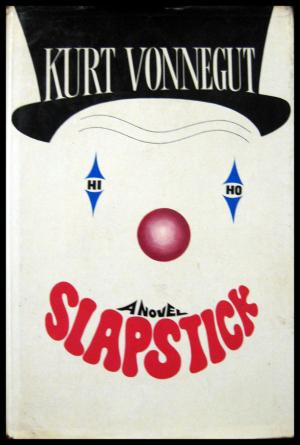
Like many people I enjoy a good bad book on occasion. Maybe too often given the choices available. I think it is safe to say there has been an increase in such books since Orwell’s day. Certainly there has been an increase in bad books, period. Reading a bad book is never a pleasant way to pass the time. When I think of my first good bad book it would have to be Valley of the Dolls by Jacqueline Susann. Some of the tougher critics might include Arthur Hailey’s Airport, Hotel, and The Money Changers. I read all three and enjoyed them all. I read most of Vonnegut’s work but found Slapstick disappointing. Hi ho. Was Slapstick a good bad book or just a bad Vonnegut book? I’m not sure. Vonnegut gave the novel a grade of “D” in his notable report card grades of his books. One of only two D’s he handed out (Slaughterhouse Five got an A-).

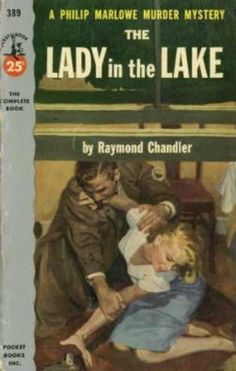
My ultimate good bad book is, The Lady in the Lake by Raymond Chandler. It was Chandler’s first novel and my first and least favorite Chandler. It is well written but I figured out the mystery part in the first third of the book. That’s never a good thing. Chandler is great at describing the outside of a building but less adept at detailing the inner workings of a character’s mind. In that particular novel anyway.
What about you? Have you read any good bad books lately? Drop me an email at ThailandFootprint@gmail.com or leave your good bad book choice in the comments section below if you have a WordPress blog. I’m interested. All authors, dead or alive, are welcome.
To read the entire short essay, Good Bad Books by George Orwell click here.
 Thailand Footprint: Impressions left by the books, people, places and music of Thailand and South East Asia
