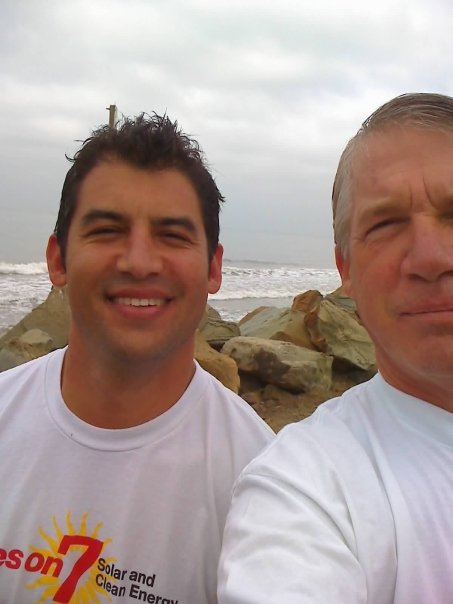
Thailand Footprint: The People, Things, Literature, and Music of Thailand and the Region

Posts by Kevin Cummings

Review (not by Thailand Footprint) of the #1 Film playing in China at the moment – A Comedy called, LOST IN THAILAND – It should translate to ENGLISH Automatically if you click the link first, if not apologies, unless you can read Thai …

Leave a comment

I have always liked this passage of thought by Henry Miller.

PensAleas's avatarThe Eloquent Madness

Portrait of Author Henry Miller

“Writing, like life itself, is a voyage of discovery. The adventure is a metaphysical one: it is a way of approaching life indirectly, of acquiring a total rather than a partial view of the universe. The writer lives between the upper and lower worlds: he takes the path in order eventually to become that path himself.

”I began in absolute chaos and darkness, in a bog or swamp of ideas and emotions and experiences. Even now I do not consider myself a writer, in the ordinary sense of the word. I am a man telling the story of his life, a process which appears more and more inexhaustible as I go on. Like the world-evolution, it is endless. It is a turning inside out, a voyaging through X dimensions, with the result that somewhere along the way one discovers that what one has to tell is not nearly so important…

View original post 146 more words

Leave a comment

Buddha's Brain
There are many reasons why I like the book, Buddha’s Brain. I refer to it often. Author Rick Hanson hails from Northern California and gives a nice introduction to the basics of neuroscience while combining that with Buddhism and dharma principals. A key element to Hanson’s teaching is helping the reader understand the negativity bias that exists in the brain. Being aware of the negativity bias is the best way to shift to a more positive outlook on life and everyday experiences. It didn’t take much convincing for me to believe scientific evidence is out there to prove the negativity bias; one need only engage the world to find the anecdotal evidence to go along with it.

Hanson is a neuropsychologist who has practiced mindfulness for many years. I prefer Hanson’s style to that of Jon Kabit-Zinn, although I like Kabit-Zinn and his books as well. Hanson gives us evolutionary background of our brain and how the brain’s negativity bias was useful at one point in our development but not so much now. As he likes to say, “It was better to think there was a tiger in the bush one thousand times and be wrong each time than to think there was not a tiger in the bush and be wrong one time.”

What Hanson delights in teaching is that the brain can be reprogrammed by focusing on the good to create new, positive pathways in the brain which change the way we think. Why not? His simple task of “taking in the good” I found most beneficial. Because we do not register our positive experiences in the same way or with the same emphasis as we do our negative experiences – but we should and we can. For me it gets back to the footnote tag line in this blog, by Voltaire – appreciation. Appreciating the little, positive things that life offers every day helps reprogram the brain away from its negativity bias. I like that.

Rick Hanson, author of Buddha's Brain and Just One Thing

Rick Hanson, author of Buddha’s Brain and Just One Thing

Hanson reminds us we will have painful events in our life. Those are unavoidable. But how we react to those events is more in our control than we realize. The book is actually a “how to” manual, which is another reason I like it. Hanson doesn’t just tell you why, he tells you what you need to do about it. What I like about his style is he doesn’t preach an hour a day of mediation – although he is not opposed to that – rather he lets us know we can and should be mindful anytime and grab moments of mediation when they are available. And that could even be while you are in your car, waiting for the light to turn green. Minutes add up at the end of the day.

It is the combination of research about the brain along with practical steps anyone can take to increase their sense of well being that I appreciate about Hanson’s writing style. The East vs West angle I always enjoy. Hanson helps explain, scientifically, why Buddha got it right. My kind of non-fiction book. I highly recommend Buddha’s Brain and another non-fiction book by Rick Hanson, Just One Thing. Hanson’s YouTube videos of his lectures are also very good. For a free newsletter and more information about author, Rick Hanson go to http://www.rickhanson.net or click his picture, above.

2 Comments

Anais Nin on Henry Miller and Writing – Picture shows Henry Miller at his studio located in Big Sur, California where he spent much of the later years of his life.

PensAleas's avatarThe Eloquent Madness

Henry Miller

“Henry’s recollections of the past, in contrast to Proust, are done while in movement. He may remember his first wife while making love to a whore, or he may remember his very first love while walking the streets, traveling to see a friend; and life does not stop while he remembers. Analysis in movement. No static vivisection. Henry’s daily and continuous flow of life, his sexual activity, his talks with everyone, his cafe life, his conversations with people in the street, which I once considered an interruption to writing, I now believe to be a quality which distinguishes him from other writers. He never writes in cold blood: he is always writing in white heat.
It is what I do with the journal, carrying it everywhere, writing on cafe tables while waiting for a friend, on the train, on the bus, in waiting rooms at the station, while my hair…

View original post 50 more words

Leave a comment

HEMINGWAY'S
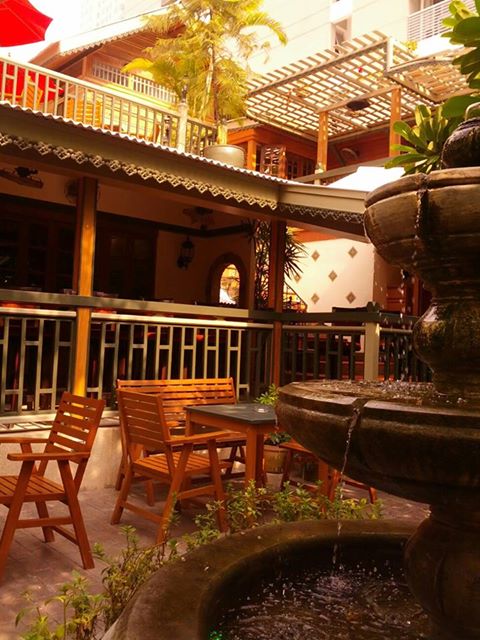
Hemingway’s Outdoor Patio View
HemingwaysBangkokFront Hemingway’s Front Entrance View

Yesterday afternoon and evening I had my first opportunity to check out Hemingway’s Drinking & Dining Establishment in Bangkok on Sukhumvit 14 when I met two friends for drinks and food. It is a wonderful establishment, converted into a large house with a long and colorful history. Almost as colorful as the history of author, Ernest Hemingway, whom the restaurant is named after, which includes multiple bars and event rooms. Before my friends arrived I met the General Manager, Damian Mackay; he hails from Australia and the owner, Craig Bianchini from my home country of the USA. They were both hospitable, informative and happy to share details about the history of the place, which opened fairly recently. Rather than recap what other’s have already written better than I could, find here the link to the well done web site about the eating and drinking venue: http://www.hemingwaysbangkok.com/ Bangkok 101 also wrote an excellent review, which I encourage people to Google if they would like more information.

The ambiance is great, taking many features from Hemingway’s Key West, Florida home, the drinks are great, happy hour is 3:00 p.m. to 7:00 p.m., which included the time we were there. The food we sampled was all good and the prices, even outside of Happy Hour are reasonable for what you get. They’ve also done a nice job of pairing snacks with drinks in a combo pricing deal. By all means, check out Hemingway’s on Sukhumvit Soi 14 if you are in the area. It is well worth seeking out the destination. I wish Craig and Damian much success.

Leave a comment

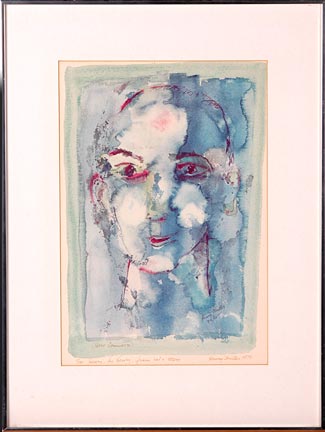
Henry Miller was an artist as well as a writer. Below a letter and tribute from his daughter, Valentine can be found. More information regarding Henry Miller and his art can be found at http://www.henrymiller.info

hm_print_twoheads_sml
Two Heads by Henry Miller

June 7, 2005 marks twenty-five years since my Dad passed away. It seems impossible but I miss him more each year. He was a great listener as well as a fascinating raconteur. He had a very warm persona, treating everyone he came in contact with as though they had something special to say and often they did. His curiosity in his fellow man came across as being genuinely interested in all people. He was generous in every way, from sharing his home, giving to anyone who asked for money (if he had it), he gave his watercolors away, happy that they were admired. He had many friends throughout his life that were true lifelong relationships. He was a loyal friend. He loved to laugh and share meals and wine, always exchanging ideas about literature and art. He truly enjoyed life and made the world a better place by his wholehearted embrace of the world. He was tolerant, kind, inspiring, droll, genuine, loving, intelligent, thoughtful, a wonderful combination of many talents, humble as well as proud.

I love you Dad,

Your daughter,
Valentine

hm_print_abstract_sml
ABSTRACT by Henry Miller

blueface_HenryMiller
BLUE FACE by Henry Miller

hm_insomnia9_sml
From the INSOMNIA SERIES by Henry Miller

Leave a comment

Recently, there was a video making the rounds of the social networking sites. Its title, NEVER GO TO THAIILAND, with a subtitle of Worst Vacation Ever. The quality of the video is highly professional.  A lot of people were choosing to comment without actually viewing the video – making incorrect assumptions, as we all do in life at times. Not surprising, given that we live in a society that has book reviews written by people who never actually read the book. Why let the small details of living a good life get in the way of our desired end result? The video is worth a look, if you have the time, if not, it’s okay.

http://vimeo.com/61561546

The video title is tongue in cheek. The video itself is the antithesis of the title – at least for most people, I would hope. It shows all the many and varied good things about a country I have spent over half my time in, since 2001.

It got me thinking about why I like Thailand. Why I even love it, warts and all. And make no mistake, we are talking about one ugly, wart covered frog, living in a cracked, upside down coconut shell, in the dark, at times. Life may be a beach but in Thailand, murders happen on those beaches, rapes happen on those beaches, yachts are pirated and people are kidnapped not far from those beaches. Tsunami’s even happen on those beaches.

I’ve always believed, whether it is in business or in life, that little things matter. Little things add up to great sums over time.

A jug fills drop by drop.- Buddha

And just as a jug will indisputably fill one drop at a time our lives are filled up one moment at a time. The one common denominator we all share is that we know we are going to die. Unlike the happy and content dog that has no idea he’s being measured for a grave, we humans do. We know we may have a choice between ashes or Mahogany, small, medium or extra large containers but we will all die, one day.

I came to Thailand to die. I needed to be surprised. I wanted to be shocked. Bangkok is unpredictable and it delivers if you give it a chance. Even the small adventures are memorable. – Stirling Silliphant

Bangkok Babylon
The above quote by Oscar winning Hollywood television and screenplay writer, Stirling Silliphant, is from the excellent book by Jerry Hopkins titled, BANGKOK BABYLON -The Real Life Exploits of Bangkok’s Legendary Expatriates in the short story, THE OSCAR WINNER. If you want to look at one of the most impressive writing resumes, ever, go to Stirling Silliphants Wikipedia page. If Bangkok was good enough for Stirling, a man that could choose to live anywhere in the world, it sure seems like a great choice for this former Auburn, California boy. Among the advice one receives from reading Jerry Hopkin’s book is the following quote, which I have practiced as much as is practical: “When in Bangkok, do what your mama told you never to do – talk to a stranger.”

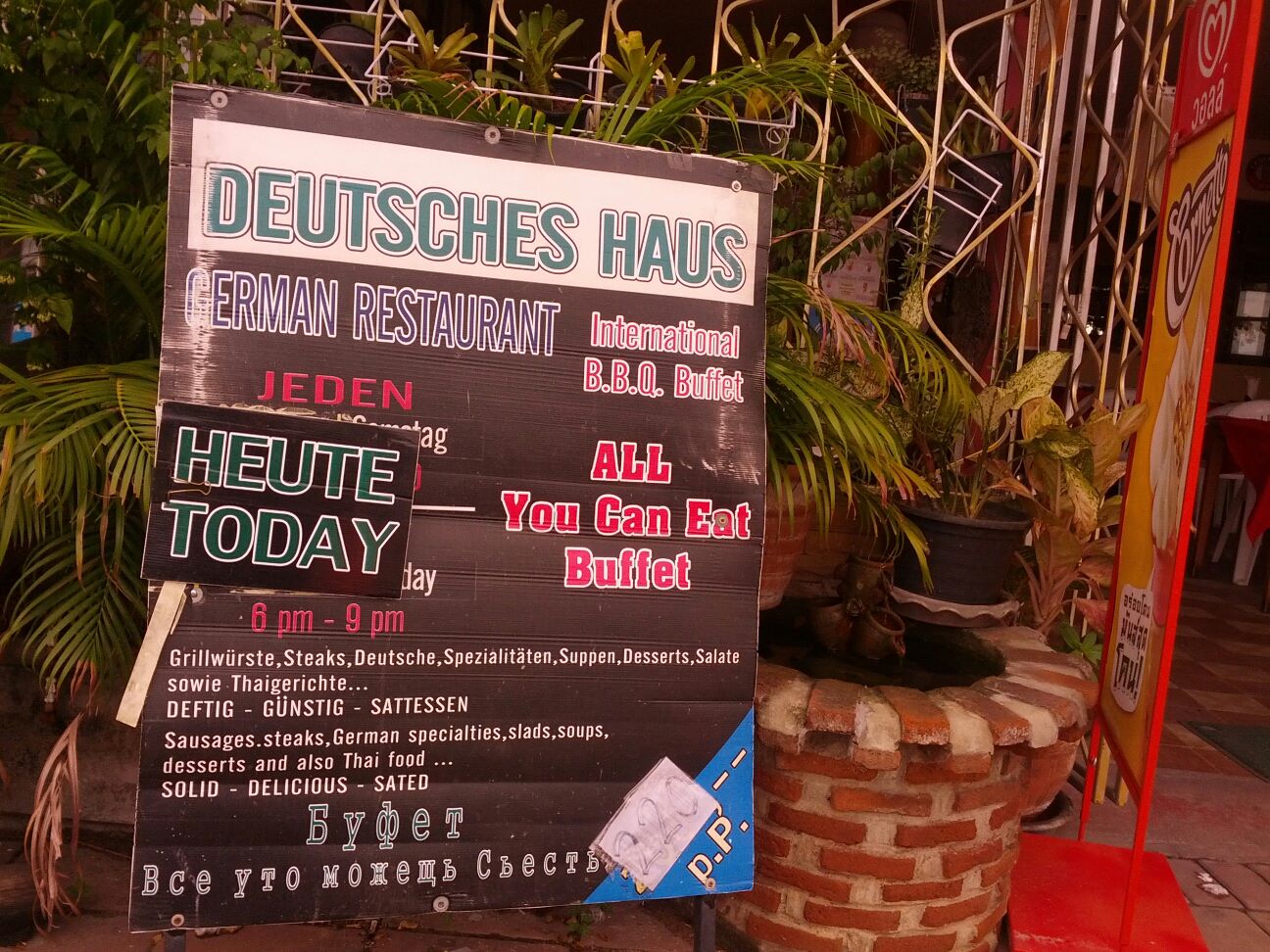
Deutsches Haus Restaurant on Beach Road

Deutsches Haus Restaurant on Beach Road

One of my favorite restaurants on the Gulf of Thailand is Deutsches Haus located on Soi 4 on Beach Road in Pattaya City. I’ve been eating there for 12 years. I’ve eaten there with my wife and daughter; I’ve eaten there many times with a friend and fellow tennis aficionado, whom past away of a heart attack at the age of 61, a few years ago now. The last time I saw him, before I went to his Buddhist funeral, was a breakfast we had at Deutsches Haus on the last day of a trip to see the Pattaya Women’s Tennis Tournament, among other things.

The waitress who works there is named Mook. She has served my food many times. Mook is not a stranger but she once was, until I began talking to her, as Jerry advises.  Mook is skinny, appears shy, cross-eyed, makes about $8.00 a day plus tips and has one of the most beautiful smiles you will ever see. And her crossed eyes always sparkle when she does smile. I asked Mook yesterday what her name meant, because most Thai nick names have an English meaning. Nok meaning, bird and Ped meaning, duck as two examples. She just waved her hands, said, “No meaning, Mook may suay” the latter part translated to, Mook is not beautiful. I don’t concur with Mook, I think she is one of the beautiful souls that Henry Miller talks about in the foundational quote that inspired Thailand Footprint’s creation. If you can forget yourself long enough the Mook’s of the world are everywhere. I was told later by her waitress friend, Da that Mook may mean a small seashell, like those you would find in the sand at the beach. The grace, humility, positive attitude towards work and inner beauty of people like Mook is just one reason I love Thailand.

Mook, my waitress, brings a a soda water ...

Mook, my waitress, brings a a soda water ...

Yesterday I spoke with Mook about how someone snatched my gold chain off my neck at that very restaurant, two days ago – it was Mook’s day off and she wanted to hear all about the big story she had missed out on. So I told her: as I sat at my table alone, drinking coffee, somewhat preoccupied in thought, a man had aproached me and in the blink of an eye yanked off the gold chain I wore around my neck.  A chain purchased for $100.00 in a Kalgoorlie, Australia gold shop after an 8 hour train ride from Perth, W.A., 12 years ago. It had great sentimental value as that purchase came just one day before I met my wife, Ratree, for the first time.  I chased my assailant as quickly as I could, yelling, thief! Police! Repeatedly. The calls did not go unanswered. Four good Samaritans, three of whom are Thai motorcy taxi drivers, answered the calls.  One of those three was a large, strong Thai man with five Buddhist amulets dangling on his chest. He was most responsible for pursuing, capturing and holding the man for the police that arrived shortly thereafter amid a gathering crowd.

The man I call, Good Sam. He was most responsible for capturing the gold snatcher ...

The man I call, Good Sam. He was most responsible for capturing the gold snatcher

One small, very Thai detail: this man who stole my gold chain was a cross-dressing katoey as they are known in Thailand. There are many. And some steal often. The amazing thing was, the transvestite thief could sense the jig was up as the police arrived so he tossed the gold chain on the restaurant floor and then pointed at it, pretending he had helped find it. It was a good ploy on his part as the man in brown that talked to me in English soon after said it would be difficult to press charges with the evidence not found on him. I was so relieved to regain my object of sentimentality that I was okay with that. They did take his picture, 5’8″  150 lbs, red lipstick, real shoulder length black hair and common yellow house-dress. This is Thailand too. Did I mention the restaurant is located just 25 yards from the beach?

The view from Deutsches Haus restaurant on Beach Street ...

The view from Deutsches Haus restaurant on Beach Street …

As I recapped the story to Mook, which was still very fresh in my mind, she smiled the whole time and seemed genuinely happy, which made me happy to see that. Mook repeated in English several times, “You lucky. You very lucky.” On that point, I had to agree with Mook. I am lucky. Lucky to have lived for as many months and years in Thailand as I have. Lucky to have had so many small moments fill my jug. If I am really lucky, that jug is only 2/3 full.

Because I cannot think of a better place to fill the last third of life’s jug than Thailand. A country where lucky is defined as having a man wearing lipstick and a dress, snatch and break your cherished gold necklace. Stirling Silliphant got it right, “Even the small adventures are memorable.” Just another day of collecting seashells (and an occasional pearl, for the lucky) at the beach, in Thailand.

The beautifully smiling, Mook.

The beautifully smiling, Mook.

CityLife

This post was also published at Chiang Mai City News on Valentines Day 2014 and may be seen there by clicking the above banner

14 Comments

Today’s maiden interview at Thailand Footprint is with Malcolm Gault-Williams. He is the father of three grown sons, a husband living up in Baan Noen Soong, Pleui Nong Bua Lamphu, Thailand, an ex- radio disk jockey, a surfer for more than 45 years while growing up around Santa Barbra, CA, a writer and author of LEGENDARY SURFERS – Three Volumes and growing. You can learn more about Malcolm living in the Thai countryside from his Blog, “THE ISAAN: My Life in a Thai-Lao Village.” at  http://the-isaan.blogspot.com .

This interview initially had a working title of, “The Most Interesting Facebook Friend I have Never Met …Yet”. After spending thirty minutes with Malcolm on a Skype video call today, I knew I had to change the title. Not because my opinion had changed. Far from it. It’s just that the new title fits Malcolm and his story so much better.

Living in Santa Cruz, CA as I had have done for all or parts of the past 20 years, I know that surfing is a soulful past time. And Malcolm Gault-Williams, not surprisingly, comes across as a very soulful man. The type of soul Henry Miller tells us is out there, if we look for them. Malcolm has been going in his own direction since he first took to the waves in the mid-1960s and is still going his own way, in an Isaan village near the Laos border in 2013.
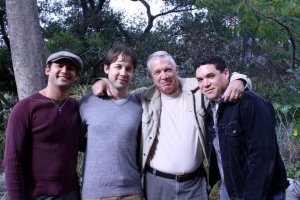
Malcolm with his three sons
Malcolm Gault-Williams, three times proud …

TF: Malcolm, I want to thank you for agreeing to be interviewed. This is my first conducted interview for Thailand Footprint so you are being very gracious.  You are the perfect first guest because you have left a lot of foot prints in the sand.

I’ve never been an investigative reporter, Malcolm but since you have authored books on surfing, and your email contains the words “legendary surfer”, I am going to guess you were pretty good and knew other great surfers. When did you start surfing, how old were you and what memories do you have of that first year in the water on a board?

MGW: Kevin, you are too kind. I am far from being a “legendary surfer.” I just write about them. I have been writing since 1963. I began writing about surfing’s heroes, history and culture, when I was in the midst of a career change. I asked myself: given my abilities and interests, if I had 6 months to live and had to make some money somehow, what would I do?

Well, I knew I could write OK and I loved to surf, plus I’ve always had an interest in history, so writing about legendary surfers seemed like a no-brainer.

And that’s the way it’s been. Of course, I’ve had to have “day jobs” along the way, but I’ve always worked toward who I wanted to be when the chips were down.

I was 18 when I got interested in surfing. My first board was a Weber Performer.
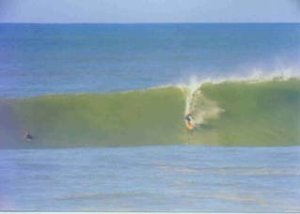
Malcolm Big Wave

Six-foot tall Malcolm Gault-Williams and big wave at a spot between Santa Barbara and Ventura Counties

TF: When did you first begin writing about surfing history. Who or what inspired it? How many books have you written since? Have you written or do you plan to write a book on anything other than surfing?

MGW:  I began research on surf history in 1993 and throughout the 1990s had several notable articles published in surfing’s best magazines. I finally self-published my first volume in 2005, after a decade as a contributor to the online community. Some people have, as a result, dubbed me “the most plagiarized surf writer of all time.”

I was inspired to write about the history of surfing due to the work of surfer and writer Gary Lynch whom I later worked with on the definitive history of Tom Blake. I was also inspired by Steve Pezman,  a former editor of “Surfer” magazine and the genesis behind “The Surfers Journal.”

I have written three volumes on surf history, in chronological order, and will continue working to present day, until my time comes.

Other publications include articles about East Timor and West Papua, and a history book on the student protests during the Vietnam War in Santa Barbara entitled “Don’t Bank on Amerika.”

TF: Most parents, if they are lucky, give their children roots and wings. Most expats that end up living in Thailand have the necessary wings to get here, but not necessarily the roots. Tell me about your roots, your family?

MGW: My foster father is a retired Methodist minister and he was the one who got me into reading, doing well in school, and constantly try to improve my thinking and my actions. These lessons kind of set the tone for my own nuclear family.

I’m fortunate that I have never really had a problem with my (three) sons. My first wife nurtured them well and I give her a lot of credit for how they turned out. Of course, I’ll take some credit, too. I think that if you are true to yourself and treat your kids as your true embodiment, everything’s gonna go good.

I came to Thailand via my third wife Thiphawan, who is Thai-Lao and absolutely the sweetest person I have ever known. We initially met via the Internet and have been together now for 13 years.

Malcolm and family
Malcolm with Thiphawan and family pictures

TF: I have heard stories that you were a bit of an activist in your college days at UC Santa Barbara. And yet now you are the proud father of a California State Assemblyman. What similarities, if any, do you see between activism, which you participated in during the turbulent 60s and present day politics in California.

MGW: During what Americans call “The Vietnam War,” the United States grew very polarized. You had to pick sides. I chose to be counter-cultural and active. In later years I was active in the anti-nuclear movement and much later than that, served on a couple of governmental boards.

My oldest of three sons, Dohassen Gault-Williams (aka Das Williams) grew up with politics part of his daily life. When he grew older, he volunteered in a county supervisorial campaign and saw that a good candidate can lose by as much as one vote (in that campaign it was four votes). That spurred him on to more political involvement and to where he is, today. He serves as the California Assemblyman for the 37th District, which comprises principally Santa Barbara and Ventura counties.His progressive position on issues is excellent. He likes his work and it comes naturally to him. You can imagine how proud I am. I just wish there were more people like him in governments all over the world.

Das Williams and Dad

California Assemblyman Das Williams with Dad after a day of weaving waves

TF: Tell me more about those three Volumes of Surf History. What are their names. How far back did you go and what is the most surprising or interesting thing you learned in your research on the history of surfing? What’s the current volume you are working on? How long did a typical volume take from start to finish?

MGW: With non-fiction, I usually write chronologically.

Volume 1 of LEGENDARY SURFERS  (http://files.legendarysurfers.com/surf/legends/ls00_vol1.html ) covers 2500 B.C. to 1910 A.D.

Volume 2 of LEGENDARY SURFERS (http://files.legendarysurfers.com/blog/2007/12/discount-thru-dec-7.html ) takes it from 1910 to 1930.

Volume 3 of LEGENDARY SURFERS            (http://www.legendarysurfers.com/2013/01/ls-v3-1930s-contents.html ) is all about the 1930s.

I am currently working on Volume 4 and that will cover the 1940s. It’s hard to guesstimate how long a volume takes to write because when I get down to putting it all together, it’s really just a matter of pulling in what I’ve already written and having it make sense as a whole. I’d say a year per volume.

I build my writings on the history of surfing around the quotes of the people who lived it. Not afraid to include excerpts from other surf-writers, my work is heavily footnoted not only for the reader, but for future historians. My stuff is not for the coffee table. I write for surfers who want to know the details of the heritage we are blessed to be part of.

The most interesting thing I’ve learned in all of this is that we really do not know how old surfing is and that it is probably much older than we imagine.

TF: You mentioned being plagiarized a lot.  Discuss the pros and cons of publishing in a digital age. Are your books available in print and E-books or only one format? Is plagiarism always a bad thing? Is there any benefit, like there often is in the music business?

MGW: Plagiarism isn’t a big thing for me, really. I write to be read. If I’m not credited, lao boa die. It would be nice to be credited, but my ego’s not so big that I would go hunting down the people who copy my work and not attribute it. My time is much more valuable to me than to waste it on something like that.

I self-publish paperback books and ebooklets. I haven’t put together an ebook, yet, but plan to, soon. What’s held me back is the lack of control when things go viral. I had a friend once, who asked for one of my books in digitized format, that she could use in her classroom. So, I made it for her and then discovered that almost 100 of her students also downloaded the file and I didn’t get a baht or cent out of it. I felt a bit burned by that.

Nowadays, you can distribute digitized works that have a unique identifier with a unique password, so if you’re careful, it’s much easier to protect your work than it used to be.

Malcolm Gault-Williams is on a mission to record oral histories as told to him by as many of our great surf elders as possible, in scholarly fashion, before they are lost forever.” Steve Pezman, Publisher Surfer Magazine 1971-1991, Editor, The Surfer’s Journal

TF: Contrast your life now with how it used to be, living in a California surf town and talk about your own blog at  http://the-isaan.blogspot.com . What do you like best about Thailand? What do you miss most about California?

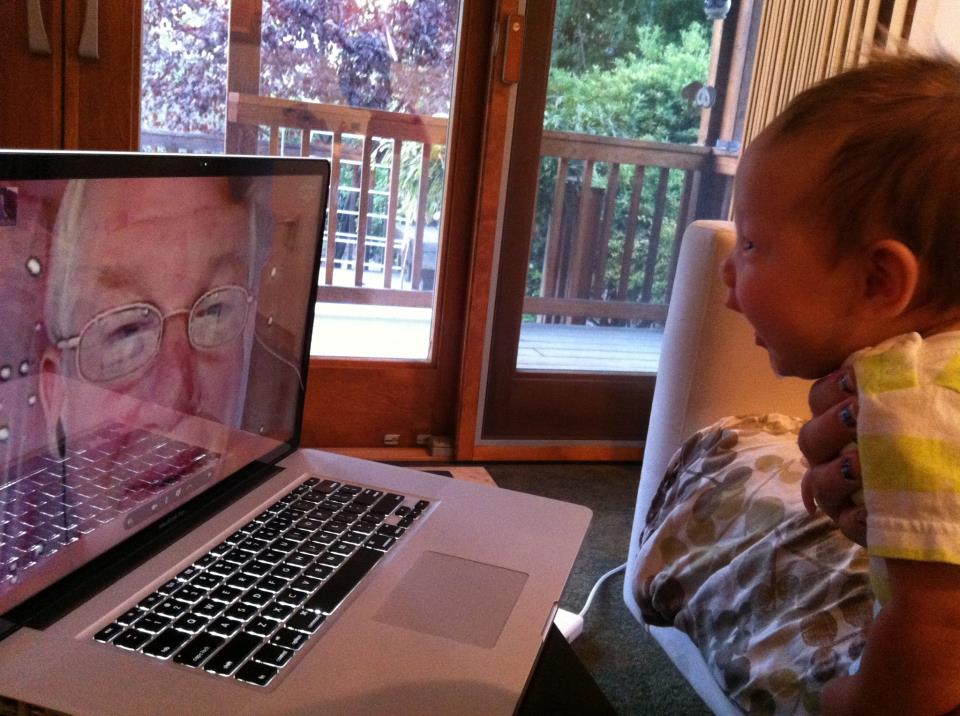
MGW: Well, I used to be a surfer/writer and now I’m a country boy/writer; very different realities. I miss the ocean and wave weaving and I also miss my sons and parents. Not much I can do about the salt-water thing, but with family, I do my best to stay connected via the Internet. I particularly like Skype video calls
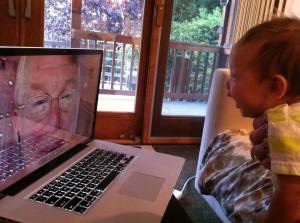
Malcolm Gault-Williams and his first grandchild on Skype video call.

Malcolm on Skype with Grandchild

Yes, I’m having fun with my blog, “THE ISAAN: My Life in a Thai-Lao Village.” I’ve always written biographical vignettes, but this is the first time I’ve ever put personal stuff up for everyone to see. Similar to my surf writings, I like to write about the details of everyday life. They are SO interesting to me because my daily life is so new to me. It’s like the title of one of my posts: “Learning a New Way.”

Malcolm Gault-Williams with monks, upcountry, in back of pick-up

Malcolm learning a new way (or not) to travel in Thailand

TF: Malcolm, can you talk about the benefits of writing, for you.  I started this blog with an idea that came from Henry Miller about how  best to engage the world:

Develop an interest in life as you see it; the people, things, literature, music – the world is so rich, simply throbbing with rich treasures, beautiful souls and interesting people. Forget yourself.”
― Henry Miller

Do you agree with the Henry Miller quote and how would you sum up your own philosophy of living?

MGW: Well, I agree with most of that quote by Henry Miller, except for the very last part. Anybody can write, but not everyone can craft and in order to be a good craftsman, you have to put yourself into it. It has to be part of you in some way. If you “forget yourself,” as I understand the quote, you are not adding that special ingredient that makes your writing unique.

As I mentioned earlier, I’m 64 and have been writing in one form or another for the past 50 years. It’s just something that I’m driven to do. I don’t know why, really, except that the more I did, the better I got and now I really appreciate the skill I’ve developed. I’m not a very creative or entertaining writer, but I can put a story together that makes sense to the reader by the time they’re done reading it. Not everyone can do that.

TF: Who are some of your favorite authors? What authors influenced you growing up? What authors do you read now? What percentage of your time is spent reading on the internet as opposed to real books or even e-books?

MGW: Growing up, I was most influenced by the writings of Jack London, Charles Dickens and Alexander Dumas – in that order. Later, I was very much influenced by the writings of Jack Kerouac, Baba Ram Dass, Mao Zedong, Carlos Casteneda, and James Willard Schultz (Apikuni).

My most favorite writer is David Cornwell (John Le Carre). In recent years, I have enjoyed the Vincent Calvino series by Christopher G. Moore and the Bernie Gunther series by Philip Kerr.

I’m embarrassed to say that I don’t read much, these days, nor do I watch TV. Last year, I think I only read three books. With the exception of “Carthage Must Be Destroyed,” which I read in America on my son’s ipad, I haven’t read anything thus far this year, although I am working my way through “A New History of Southeast Asia.”

I write several hours each day, but am in a phase right now where I’m not reading for fun or pleasure. When I do, it’s most always on paper.

TF: I’ve really enjoyed this. Thank-you again for being the first Footprint Maker to be interviewed on Thailand Footprint. One final question: can we meet face to face some time in the future – either in the Big City where I live or up in the countryside where you live?

MGW: Thank-you, Kevin. Of course.

——————————————————————————————————————————————–

legendary sufrers

For a complete list of writings and interviews by Malcolm Gault-Williams and more about Legendary Surfers, click the banner above.

1 Comment

Henry Miller by Mia Malone Jennings

Henry Miller by Mia Malone Jennings at http://www.miamalonejennings.com

Why are we so full of restraint? Why do we not give in all directions? Is it fear of losing ourselves? Until we do lose ourselves there is no hope of finding ourselves.

Henry Miller

Leave a comment

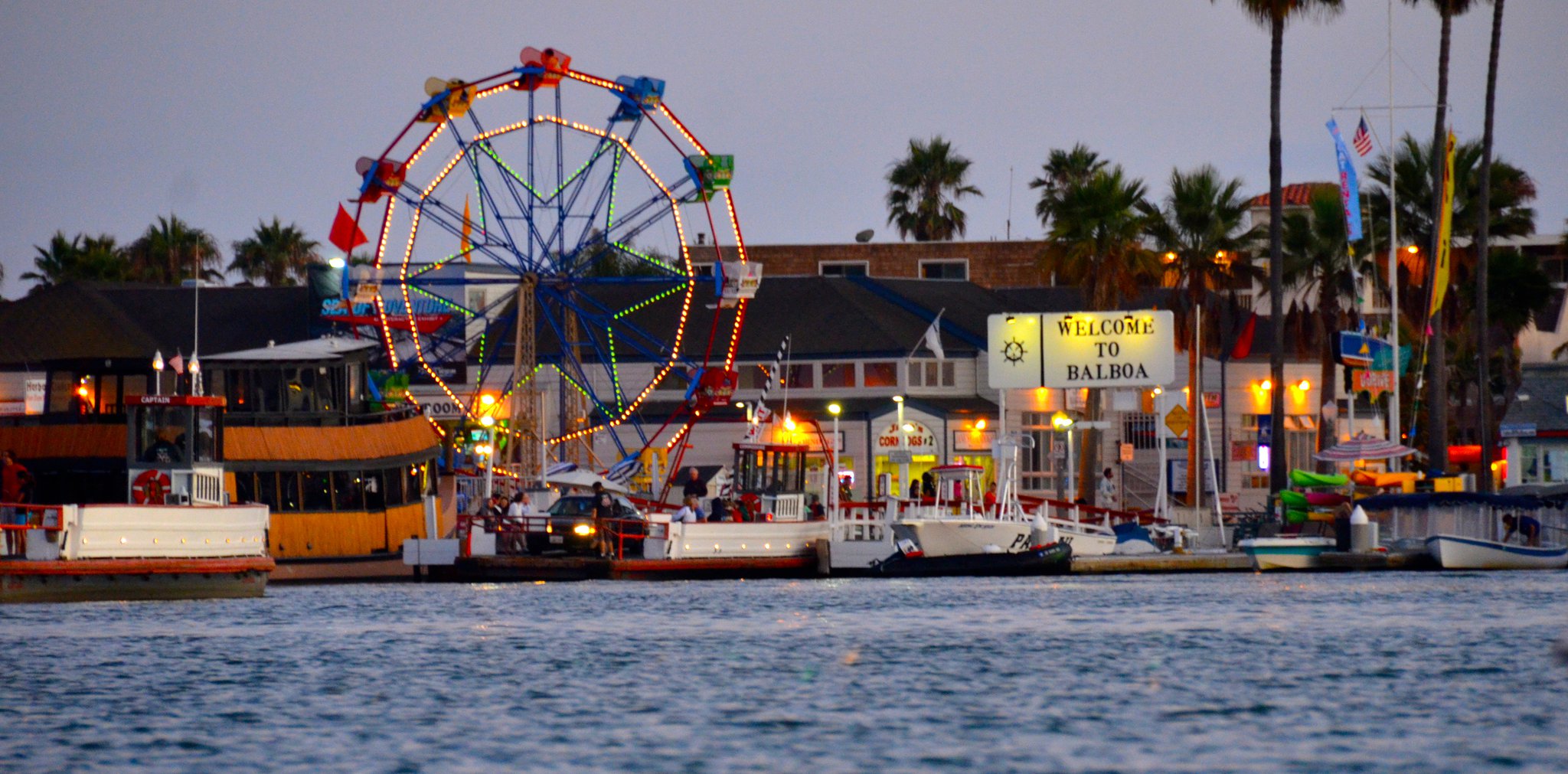
Balboa Island Newport Beach

Balboa Island, Newport Beach, California 

This is where I lived from 1959 until June of 1964, with my two sisters and my mother, Marion. Balboa Island, California.

That’s not entirely true as even back then the rents on Balboa Island would double in the summer time. So every summer we headed over to live in Corona del Mar. And every school year it was back to Balboa Island. Our family lived in five different houses on Balboa Island – all rentals. Four of them were still standing the last time I was there in the late 1990s. Now, why a single Mom raising three kids on her own would choose to do this every year, you’d have to ask her? If she were still alive. I can only guess why. But I can appreciate that she did it 50 years later. In fairness, my Dad, a career Deputy Juvenile Probation Officer with L.A. County, gave $65 per month for each child as part of the divorce agreement. So Mom got an extra $195.00 on top of her salary of maybe $300 a month as an executive secretary to various Newport Beach big wigs back then.

As the twig is bent, so grows the tree.’ Often the values of the influences imposed on us by our mothers and fathers, our teachers and certain friends, are not realized until years later, when we, as a sailor does, look back at our wakes to determine the course we have steered that got us to where we are.   – Buddy Ebsen,  April 2, 1908 – July 6, 2003

Although it was 50 years ago since I lived on Balboa Island, the memories are still vivid. It seemed like a magical place for a young boy at the time and it basically was. Friends were plentiful. I still remember their names: Bill Powers, Johnny Miles and Paul Connerty. We used to run around the Island, literally at times, and we were also blood brothers, having gone through the cut and rub ritual with our thumbs that we saw from watching the Tom Sawyer movie. I lost track of them but not the memories.

Fun Zone

The Balboa Peninsula and Fun Zone.  A 5 cent Ferry ride … 
There are two memories in particular that stand out for me, among hundreds, about that time – and it wasn’t watching Jack Ruby shoot Lee Harvey Oswald on live TV. One was a birthday party. A birthday party for one of my six-year old friends. There must have been thirty kids my age there. There were many fun events that day, including a Pinata bashing. But the most memorable event was an old fashioned scavenger hunt. We were divided into about 6 teams and sent out with a long list of items to bring back. I only remember two of the items on the list that day: a 1955 Lincoln Wheat Ears Penny and a red thumbtack. At the second house we stopped at, this very nice, elderly lady, who was probably all of 35 years old, helped us gather the complete list. We were amazed. We were six. She had everything for us and she helped us gladly at a time when a group of 5 six-year old kids could still knock on peoples doors in the daytime and have someone answer, with a Barbara Billingsley, “Leave it to Beaver” smile on her face – no pearls. She had everything, I should say, except for one item. The red thumbtack. She apologized, saying all she had were white thumbtacks. We were so happy to only need one more item to complete our list, we started to head off to the next house. But before we could she said, “Wait a minute, I have an idea.” And she disappeared for a moment, up the stairs – the kind where Wally and the Beaver had their bedroom at the top. When she returned she had a white thumbtack in one hand and a bottle of red nail polish in the other. She took out the nail polish and expertly painted the white thumbtack ruby red. Then she blew on it a few times, as if we weren’t excited enough already, pronounced it dry to put in the goodie bag and it was off to the races for us, back to the house to see if we had won. We won that day alright, by a good 45 minutes over the next place team. And the lesson that woman taught me has stuck with me for 50 years.
Balboa Island

This way to Buddy Ebsen’s Home … 
The other memory has to do with those friends I mentioned: Johnny Miles, Bill Powers and Paul Connerty. It was a hot early June, if memory serves. The year was 1962 or 1963, making us about 7 or 8 years old. It was a long ways off until late October and Halloween. Now Balboa Island, as you might imagine was a trick or treat’ers paradise. Among the residents was Buddy Ebsen, who was in his Beverly Hillbillies TV show heyday at the time. It was not unusual to see Buddy, shirtless, belly protruding, at the corner market – like any other local. Buddy was also the only resident on the Island that had a diving board on his private pier. Where Buddy also kept his boat and racing yacht. But unlike all the other residents who locked their private piers, Buddy left his open and let all the kids on the island use the diving board. Buddy was as cool as Jed Clampett. At Halloween time the rule at Buddy’s house was, two hand fulls. You got to stick your hands into this huge, Jethro Bodine-like bowl and takeaway as much candy as two handfuls would allow.

Buddy Ebsen Ron Howard

But now we are back to June – 50 years ago. It’s a Saturday and it’s hot. Bill has a bunch of Halloween costumes in his garage. One of us, I am sure it was not me, said, “Why don’t we go trick or treating today?” And nobody could think of a good reason why we shouldn’t. So we did. We got dressed up on that hot June Saturday, in four different Halloween costumes, and went went trick or treating door to door on Balboa Island. Now, we were not exactly sure how we were going to be received. But I know I was a lot cuter when I was 8 then I am now and my friends must have been too. Because you would have thought we had just made the day of everyone whose door we knocked on. And we knocked on a lot of doors that day. If they didn’t have candy, we got cookies, cake, or apples and oranges too. They all gave us smiles. One took our picture, with a camera that used real film. It was a good day for us. I am sure of it because I remember it 50 years later.

So what is the point of this essay you may be thinking? What does it have to do with Thailand Footprint? For me, it’s about self limiting beliefs. My Mom raised her three kids in the early 60s on Balboa Island, by herself, on less than $500 a month because she believed she could. Because she knew it was a good idea. Not an easy idea, but a good idea.

BarbaraBillingley

The nice lady who helped 5 six-year old boys, refused to believe she didn’t have any red thumbtacks in her house. And because she refused to limit her beliefs the world of possibilities became larger for her and a group of boys who won a birthday party contest, fair and square, that day.

And my three good friends, my blood brothers and I could not think of one good reason why we had to wait until October to go Trick or Treating. So we didn’t.

The question I pose for you the reader and me, is, what self limiting beliefs, if any, do you have today? What is out there in the world of possibilities that your belief system may be holding you from? The older I get the more convinced I am that the answers to the questions don’t matter quite so much. What’s important, I think, is that we keep asking ourselves good questions.

SurfMuseum

Steamer Lane. West Cliff Drive, Santa Cruz, CA

This is one of my favorite spots where I live today, when I am in California. It is Steamer Lane in Santa Cruz. It is a good 10 hour drive to Newport Beach. Is it a coincidence I ended up living in a beach community, or did the footprints left behind from those early childhood years have a life long impact? It’s good to live in the moment. It’s also good, as the sailor Buddy Ebsen suggests, to look back at our wakes to determine the course we have steered that got us to where we are. I know the answer to my question but it’s the question that’s important. And when I am not in California, I am in Thailand. Because life is not always about white thumbtacks or waiting for the one day a year you are allowed to wear a costume. Sometimes you need to add a little color to your life on your own. And it’s usually a lot more possible than we realize.

Super_Rainbow_Background

.

.

CityLife

This post may also be seen at Chiang Mai City News by clicking the above banner

9 Comments